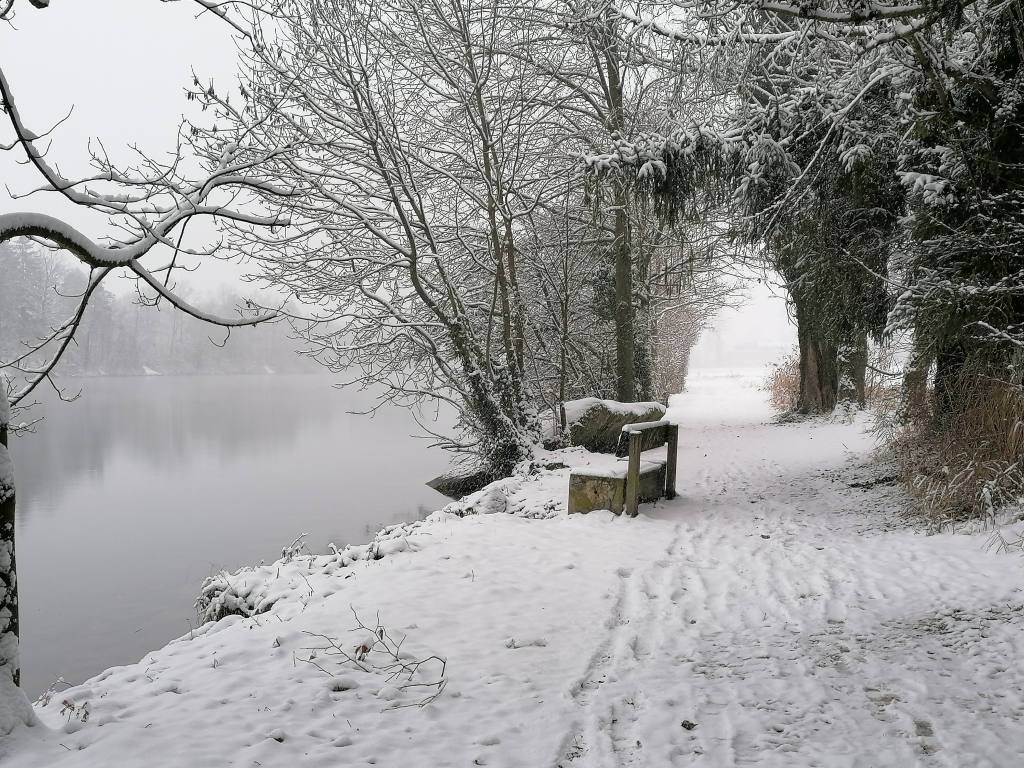
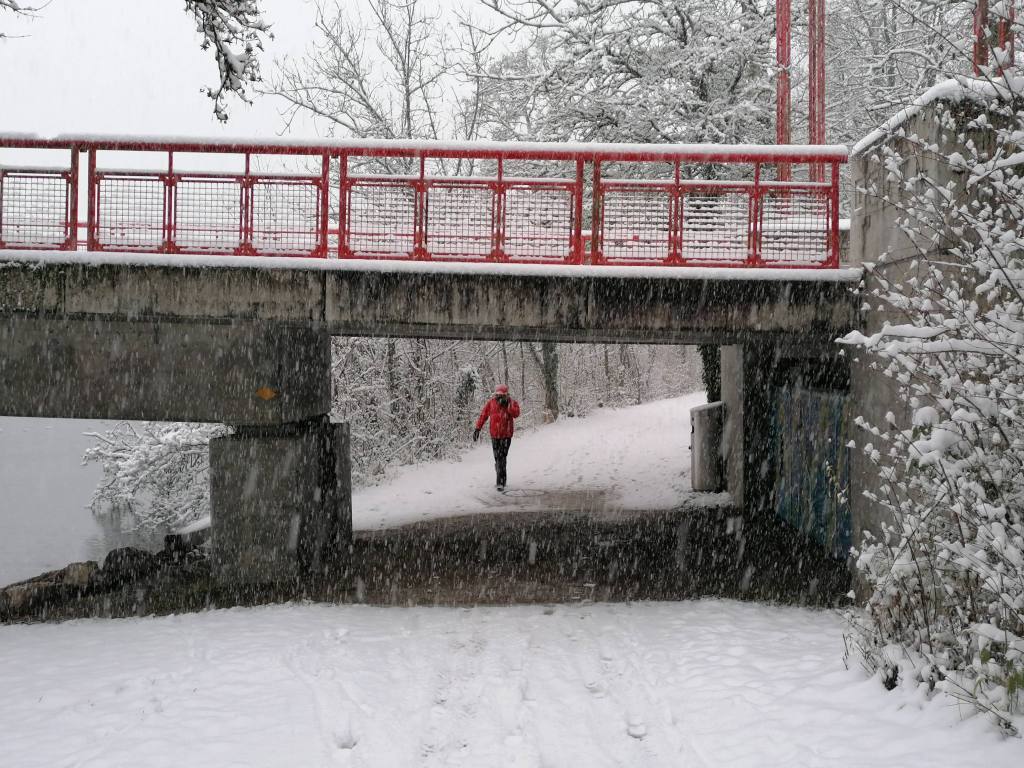
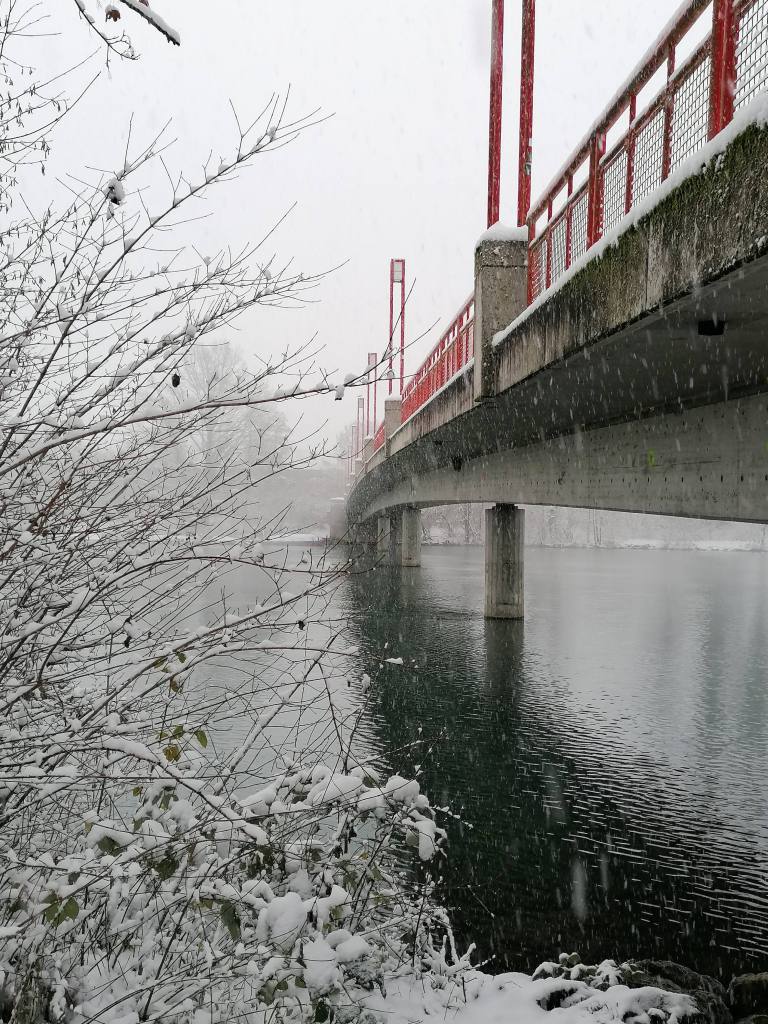
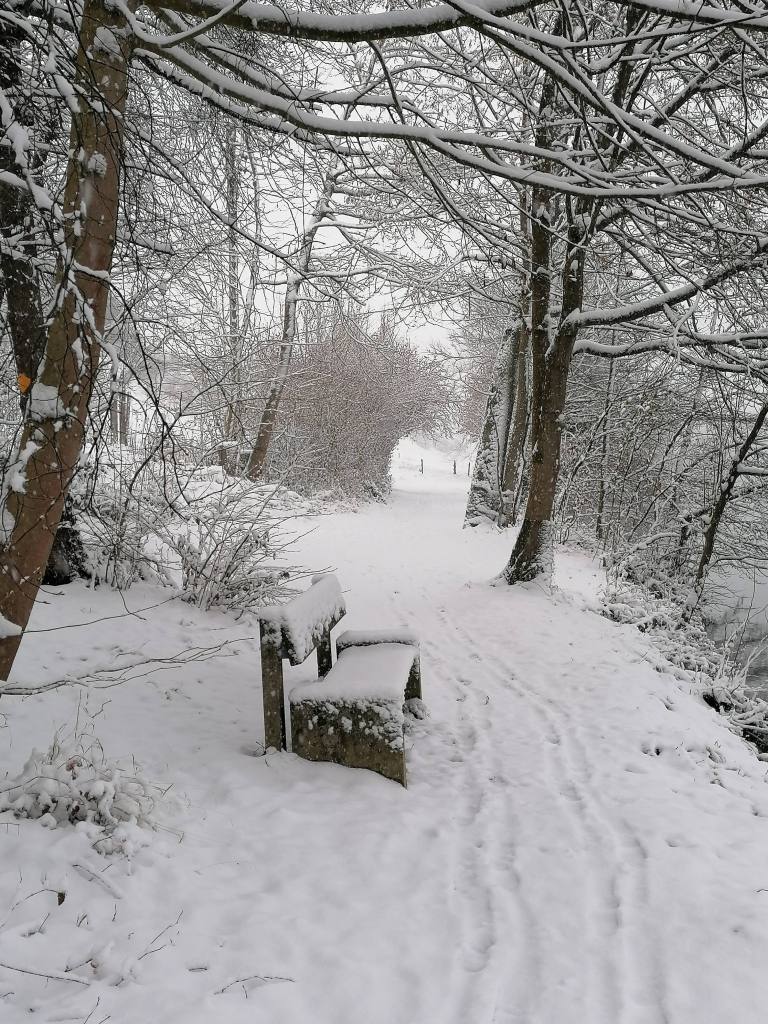
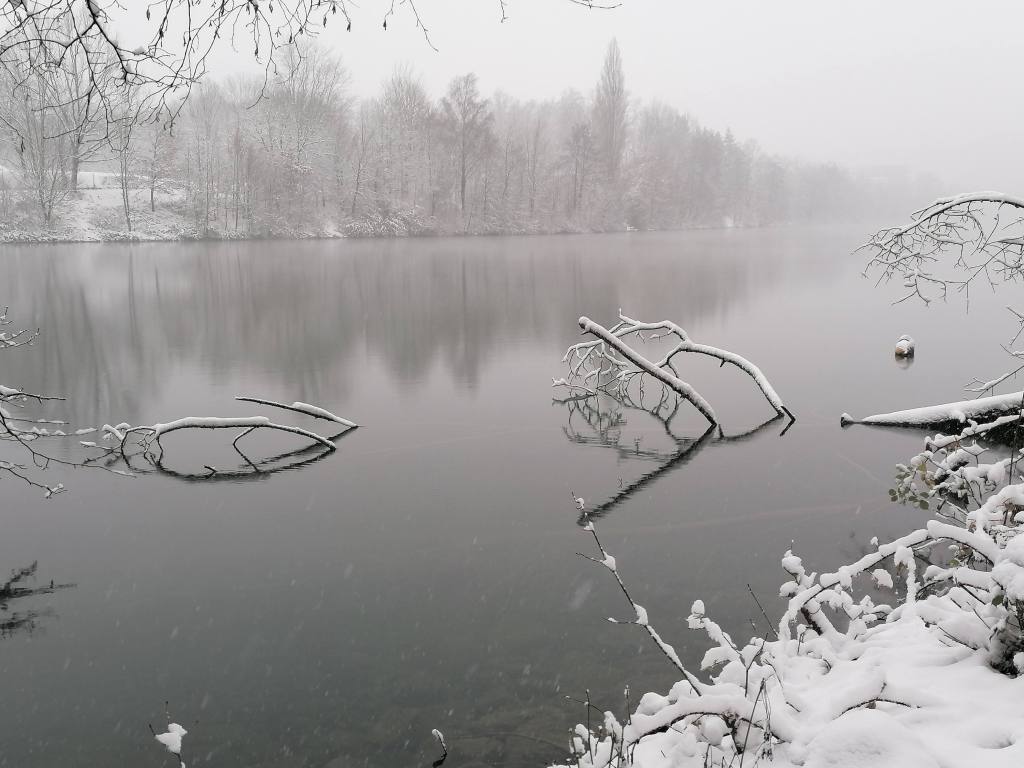
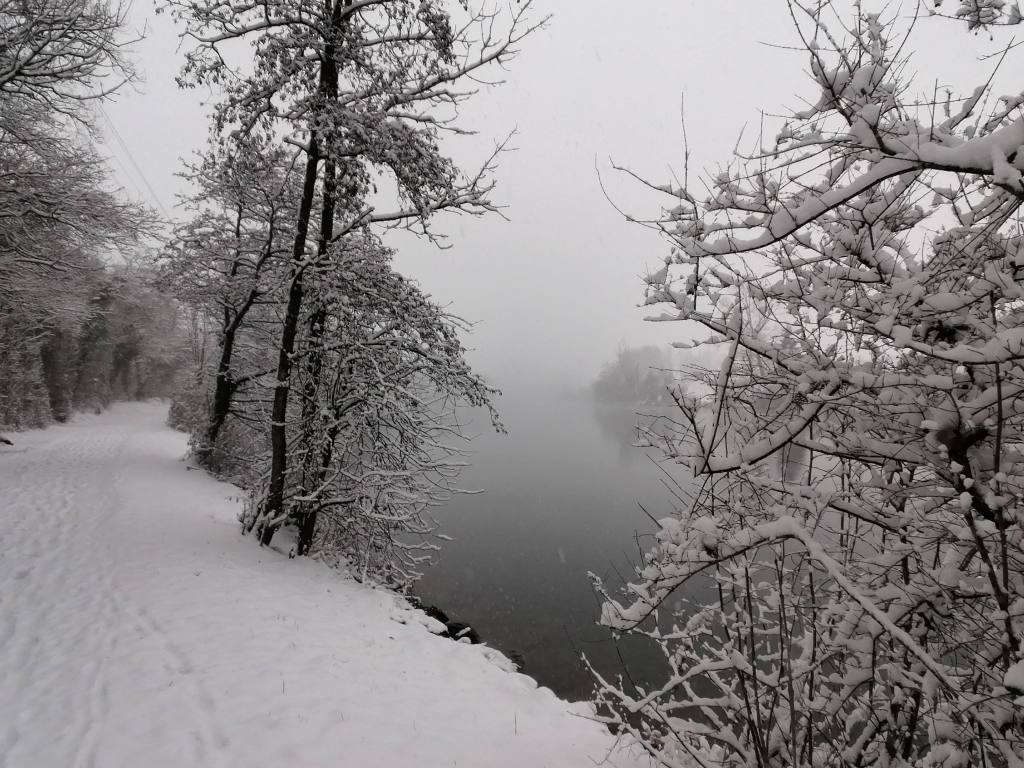
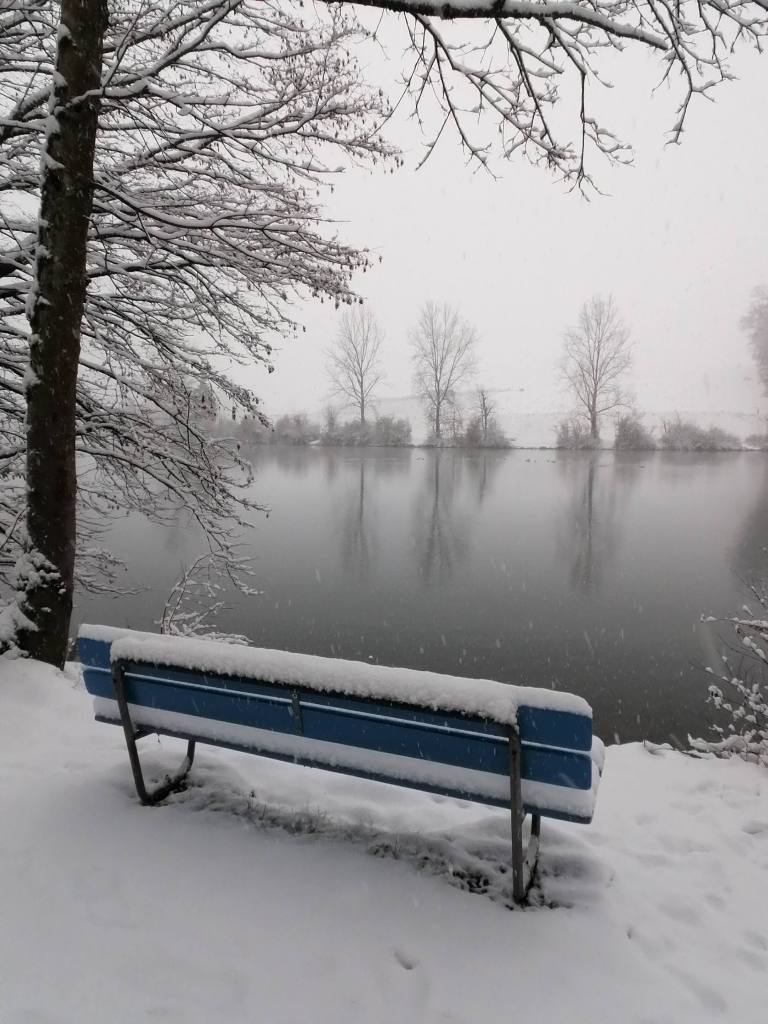
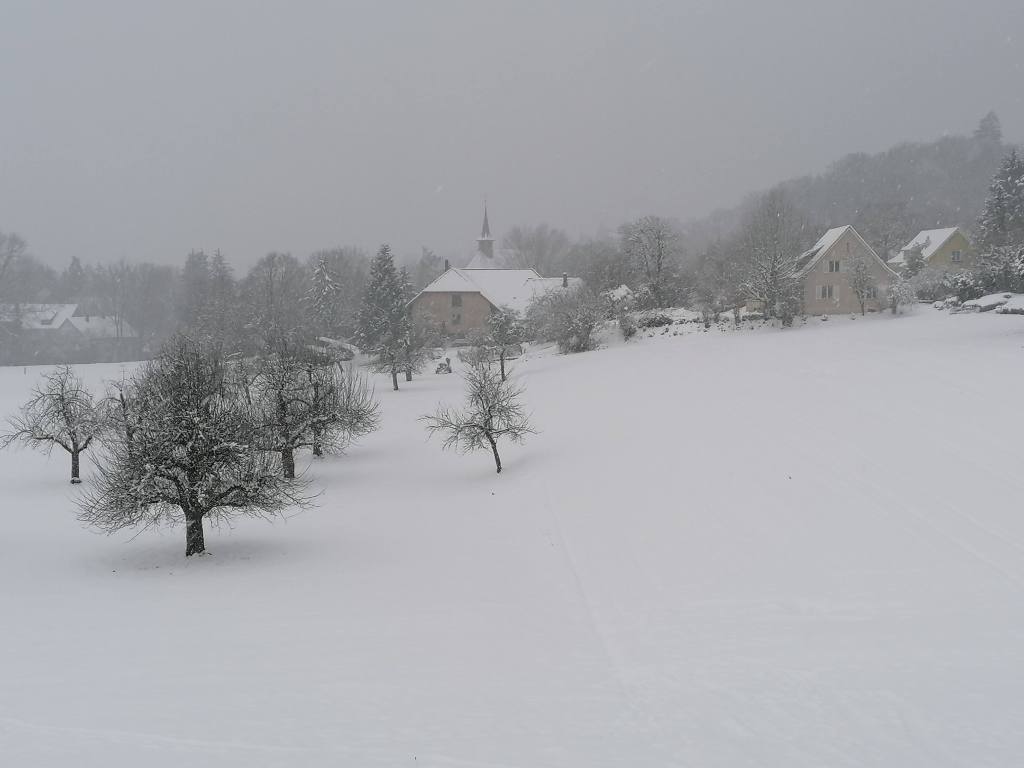
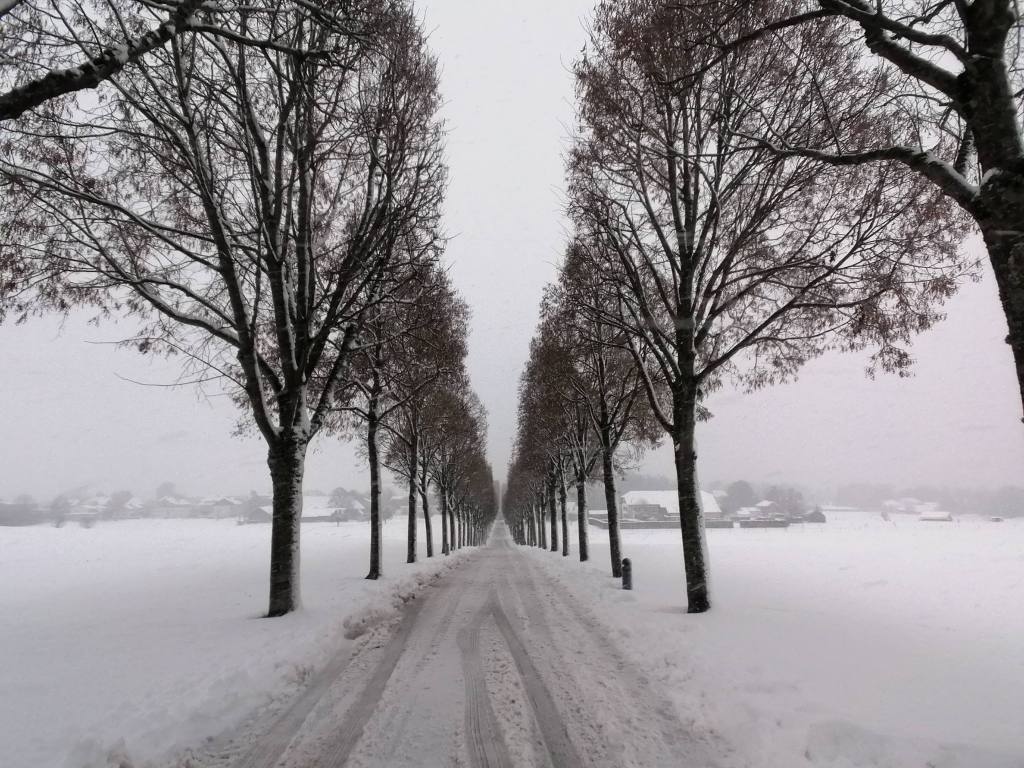
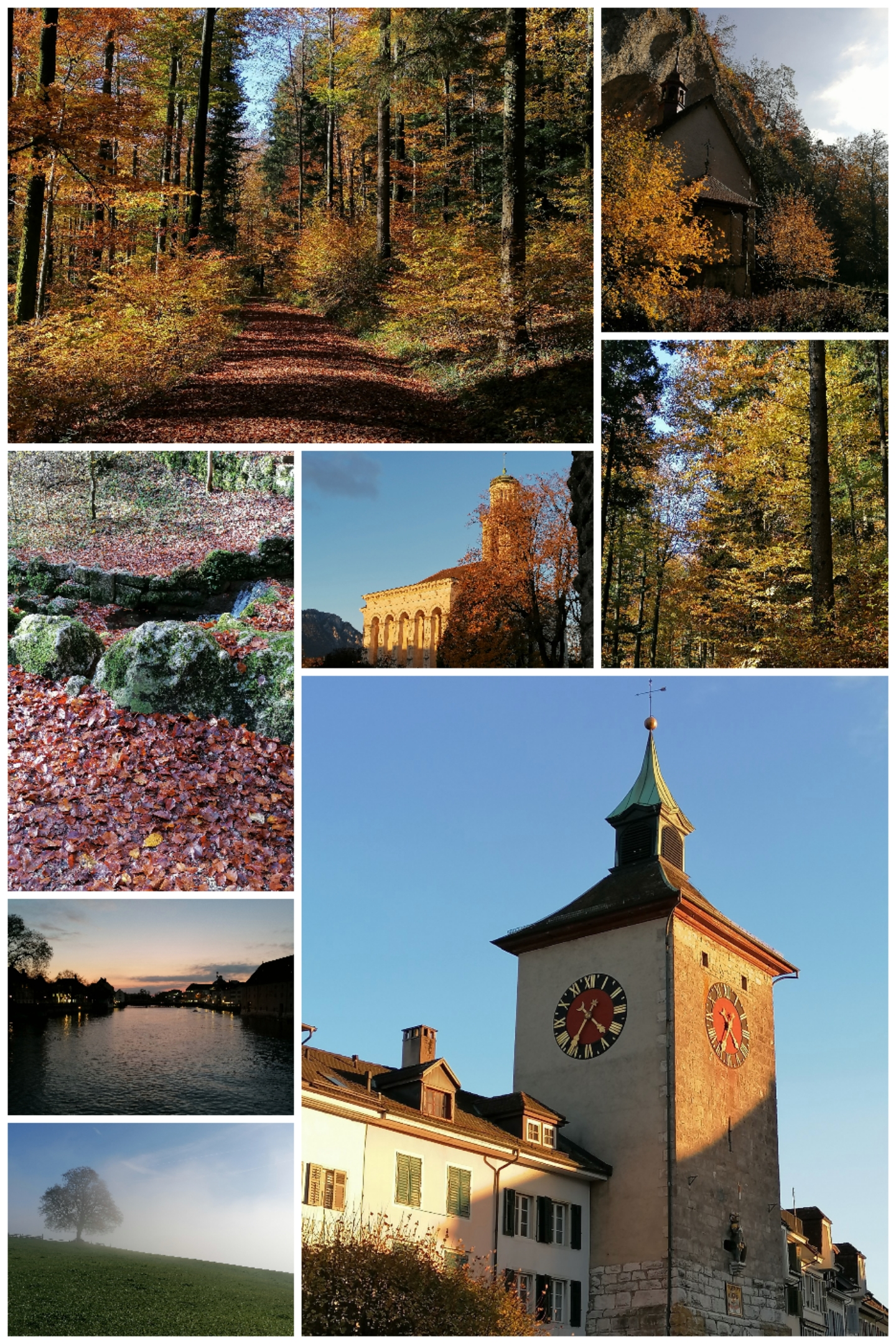
We have had our first serious snow of the season, so we went out on our 7 km loop along the river this morning, so pretty.
L’hiver arrive
Nous avons eu notre première vraie neige de la saison. Nous sommes donc sortis faire notre boucle le long de la rivière ce matin. Tout est beau sous la neige.
Then, could not resist, an afternoon walk to the Verena Gorge and Waldegg Castle.
Puis, nous n’avons pas résisté à une deuxième sortie cet après-midi: les gorges de la Verena et le Château Waldegg.
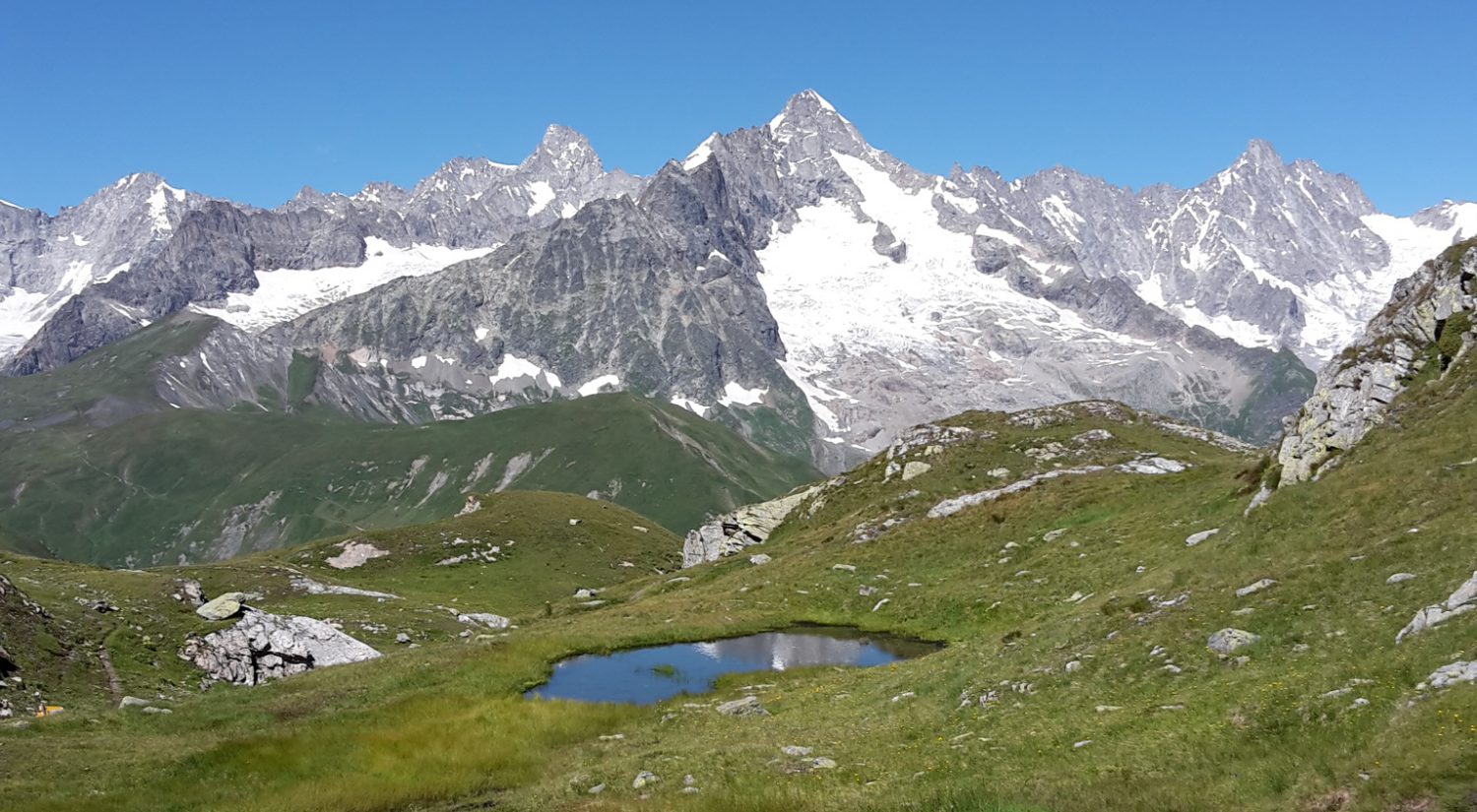
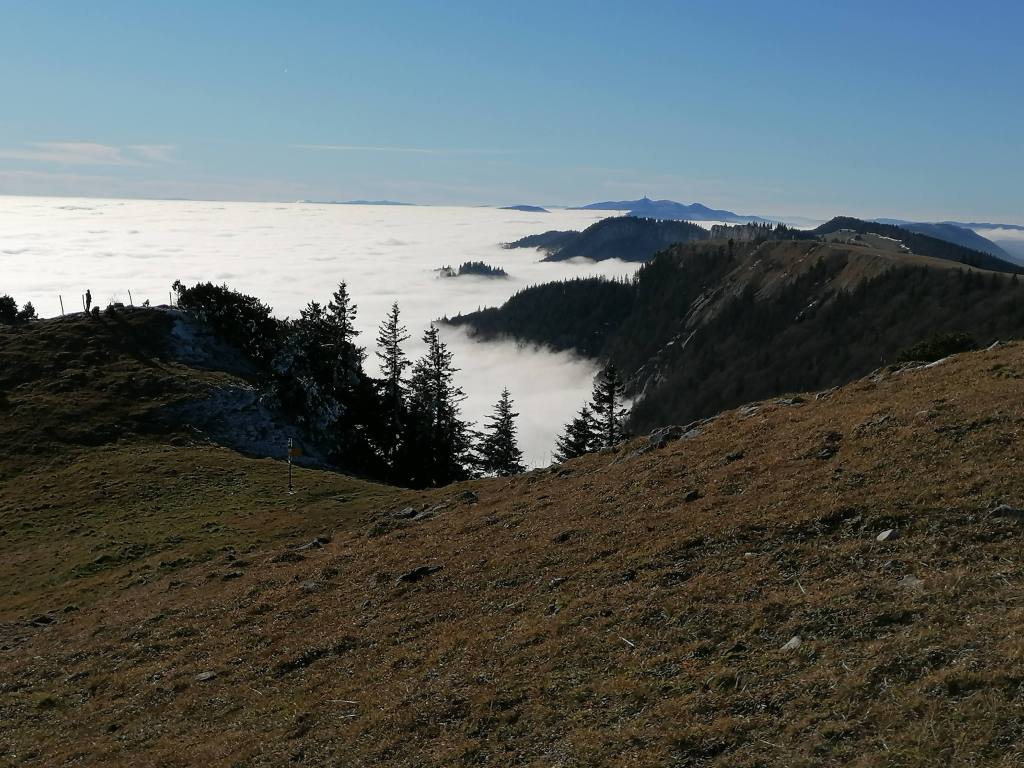
The forecast was for snow to arrive on the nearby summits of the Jura in the next few days, so we thought we would make a last autumn dash up the Hasenmatt. The cloud cover was supposed to be higher than the previous week, at about 1000-1200m.
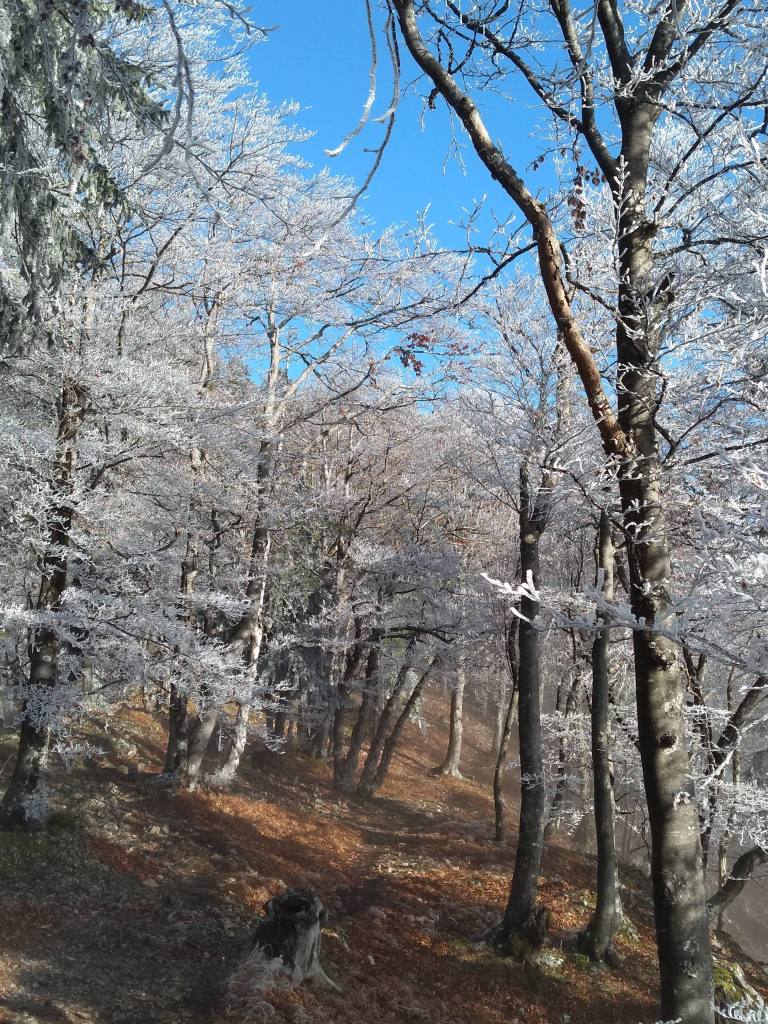
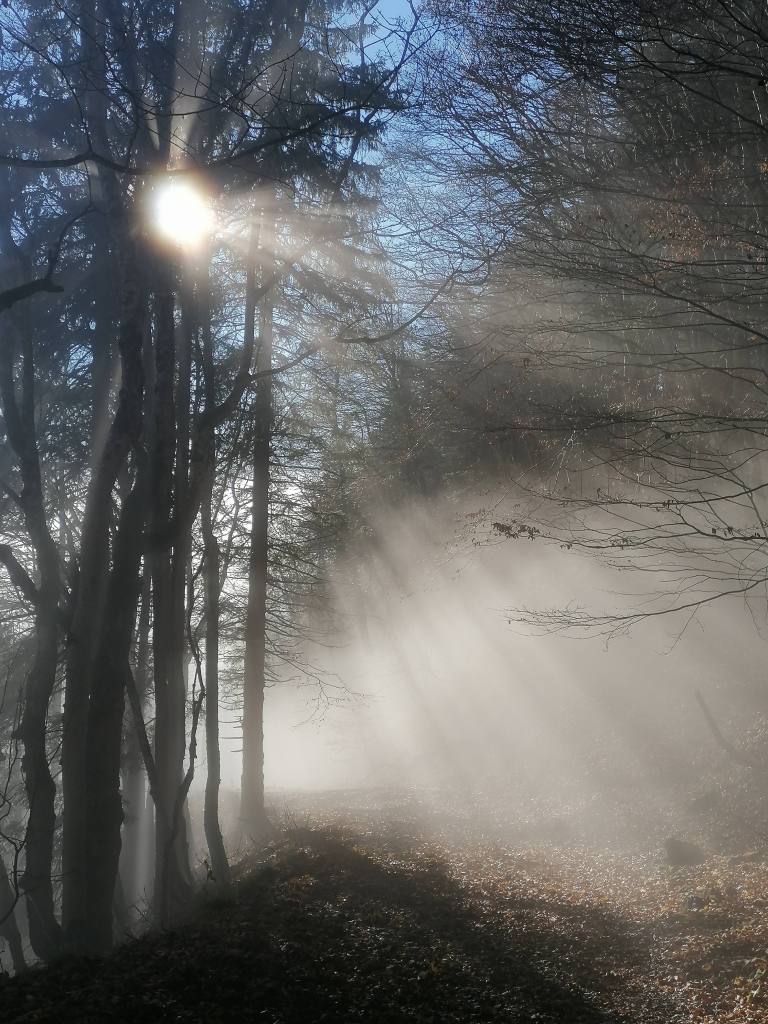
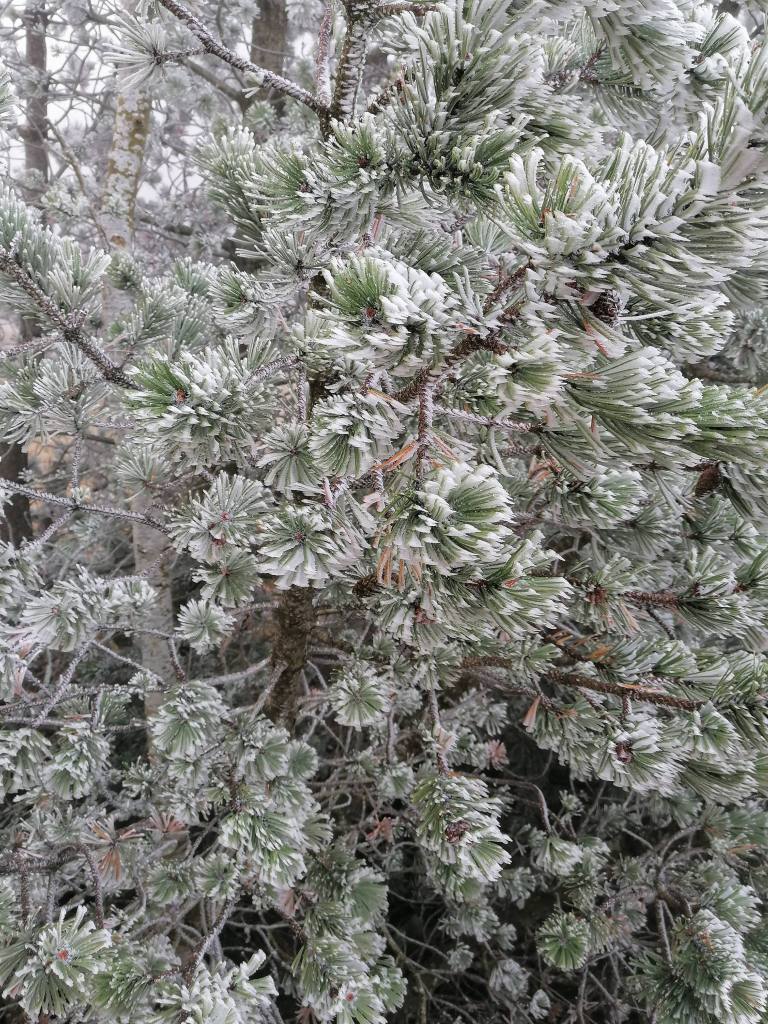
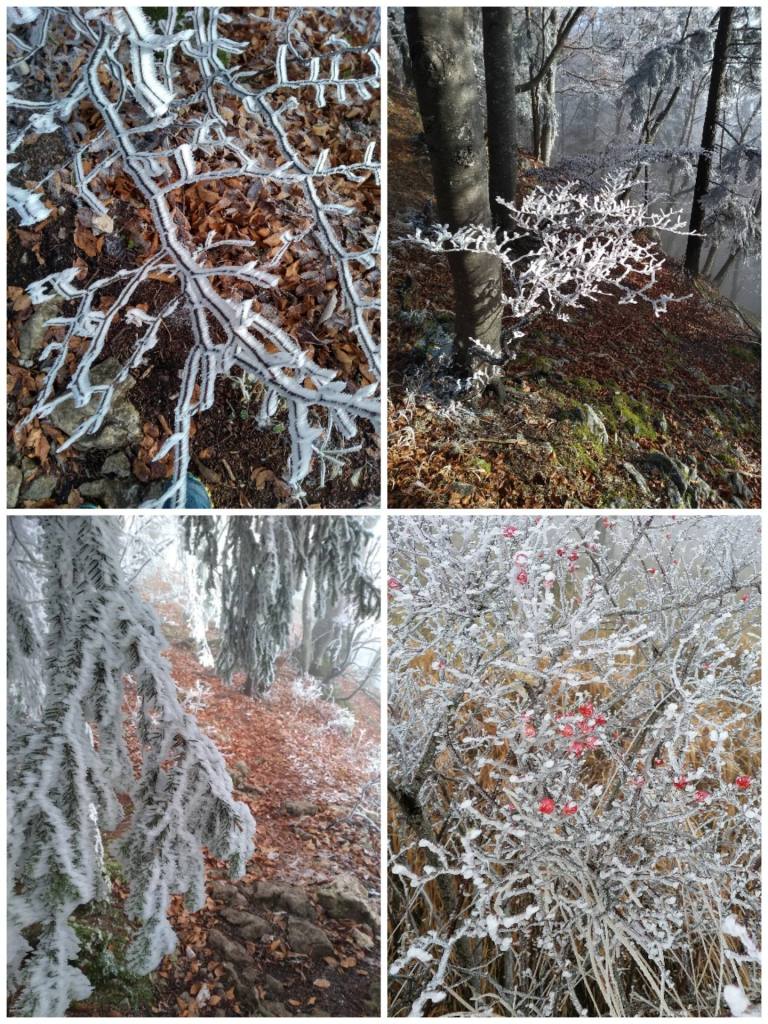
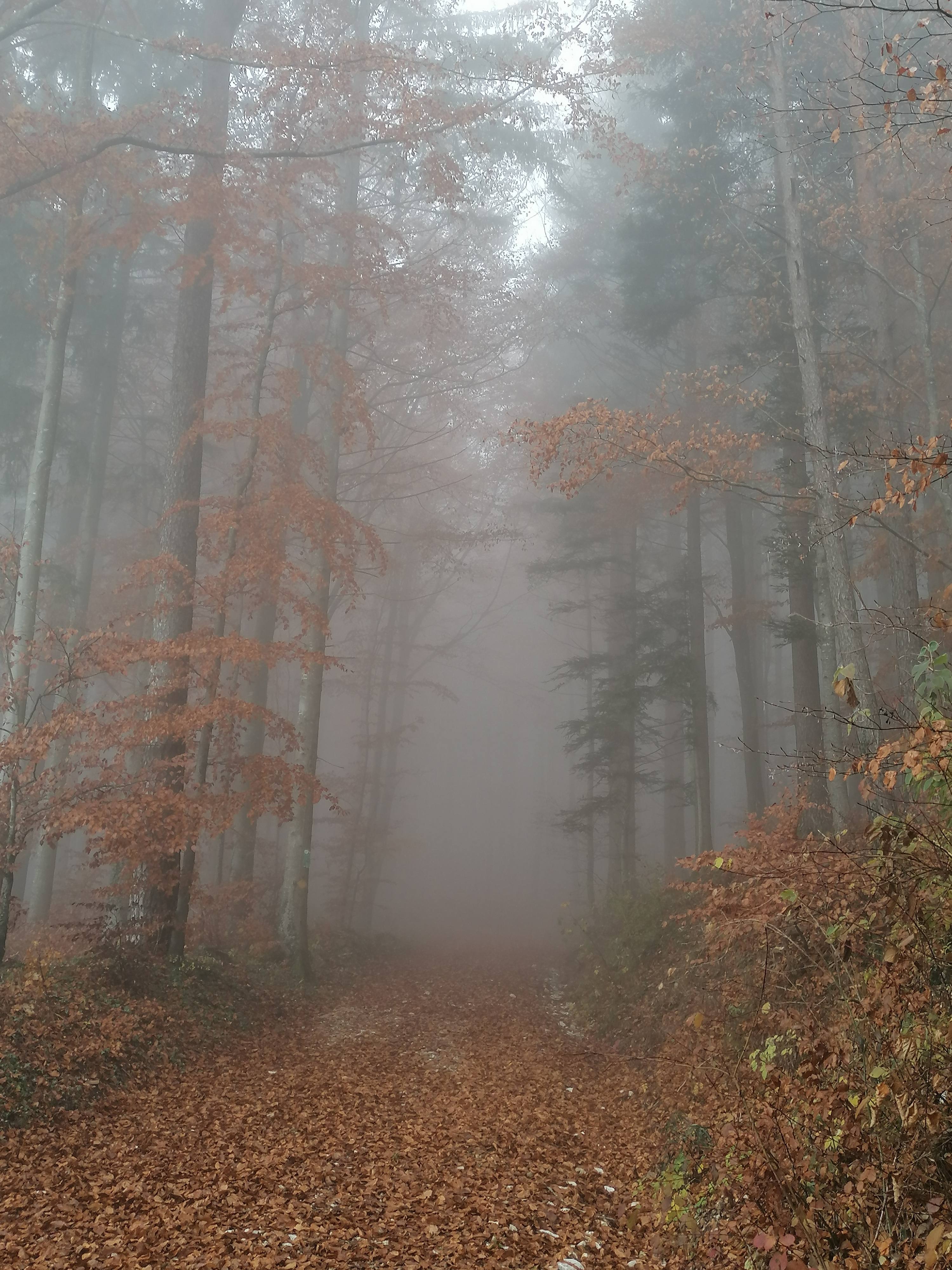
At 1200m, the trees were white with freezing fog and we started wondering whether we would get to see the sun. Yet, just 50m higher, the frost was falling to the ground as the top branches were in the sun and soon we could see a bright blue sky. Still further up, the ground was completely white from all the frost that had fallen off trees.
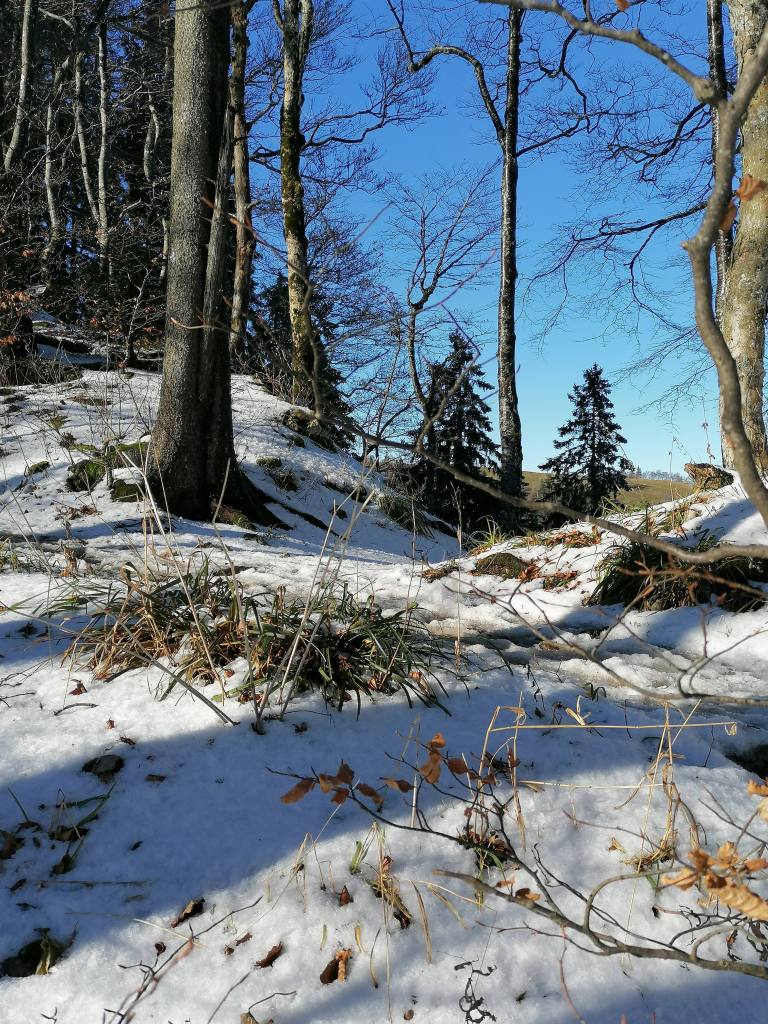
Views were again magnificent but contrary to a few days ago, there was a cold wind at the top. The shady side of the mountain was frosty and we had to be cautious on the way down. We re-entered the clouds and, for a short distance, admired the beautiful frozen nature.
Avant la neige
La météo prévoyait des chutes de neige sur le Jura dans les prochains jours. Nous avons donc décidé d’effectuer une dernière montée automnale à Hasenmatt. Les nuages devaient se situer entre 1000 et 1200 m, plus haut que la semaine précédente.
A 1200 m les arbres étaient recouverts de glaçons dans le brouillard givrant et nous avons commencé à douter que nous verrions le soleil. Pourtant, 50 mètres plus haut le sol était recouvert de la glace tombée des hautes branches qui se trouvaient déjà au soleil. Un peu plus haut encore, le sol était entièrement blanc, les arbres nus et le ciel bien bleu.
La vue était magnifique au sommet mais le vent rendait l’atmosphère glaciale. La partie ombragée de la montagne était gelée et nous sommes descendus prudemment. Nous sommes retournés dans le brouillard givrant et avons pu admirer la beauté des arbres gelés.
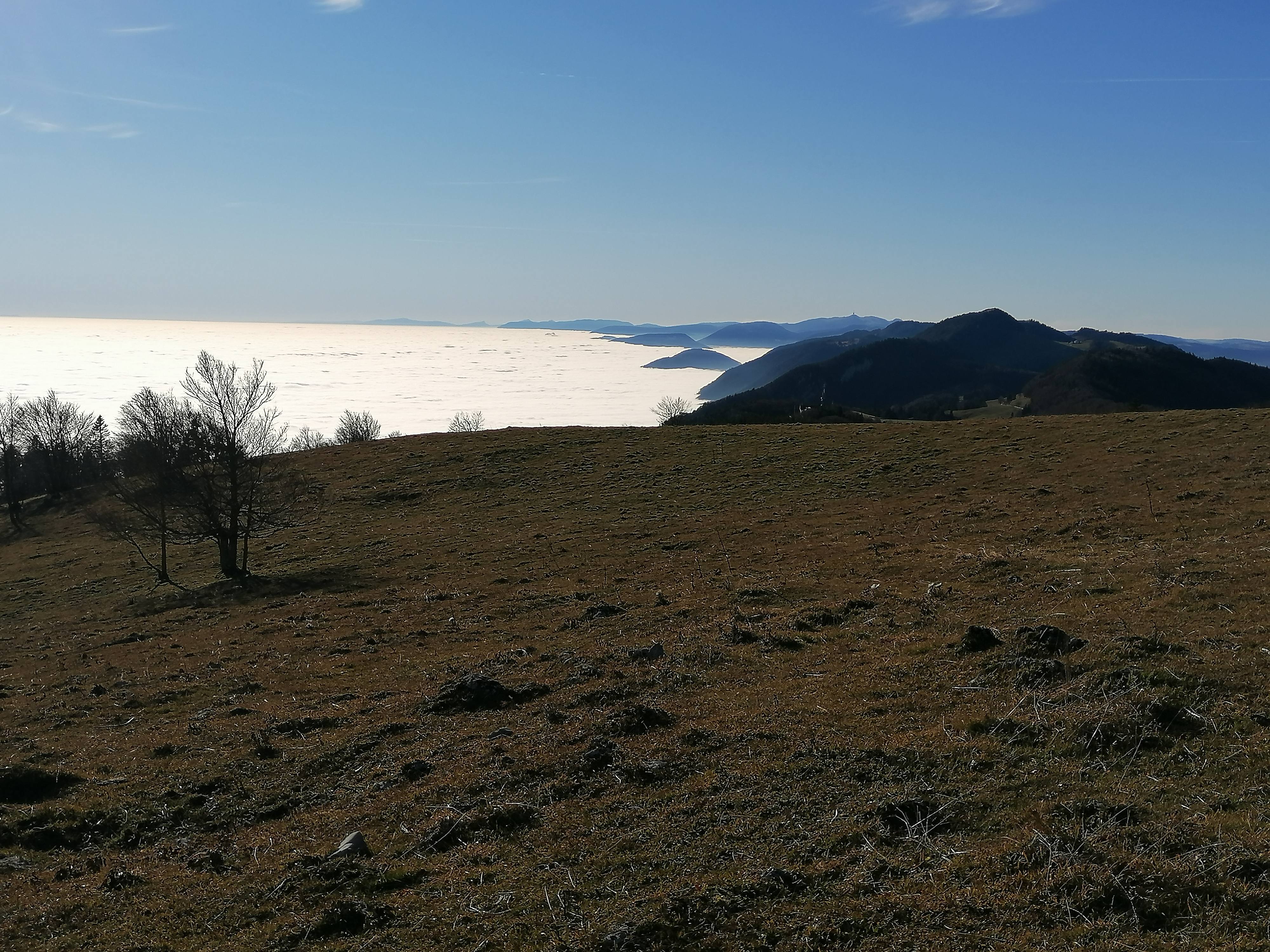
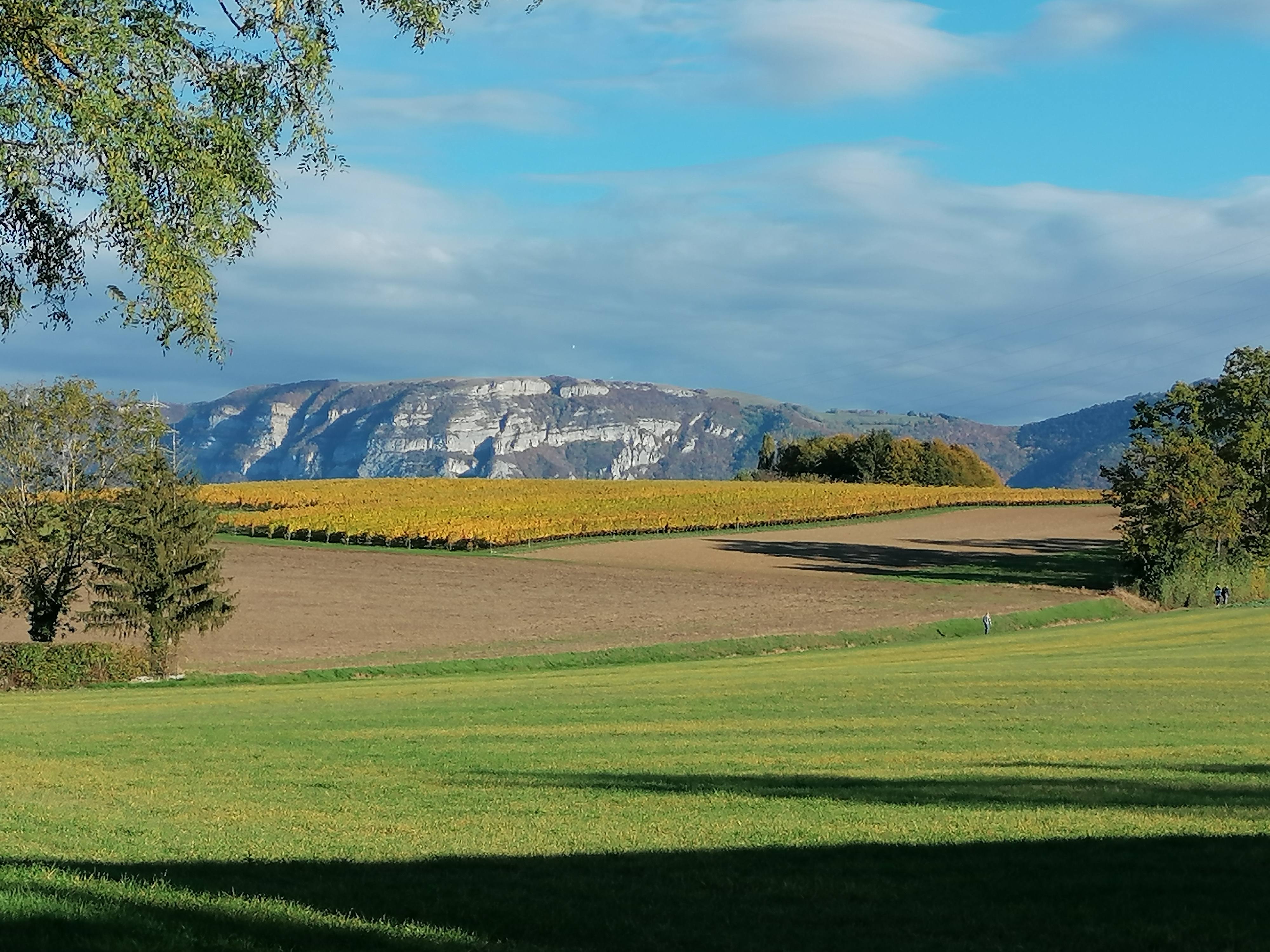
This season sees some episodes of fog, sometimes lifting at around 10-11am, sometimes staying stubbornly stuck over the area. Fortunately, we live at the foot of the Jura mountains and can hike up above the clouds which usually peak at 700-800m.
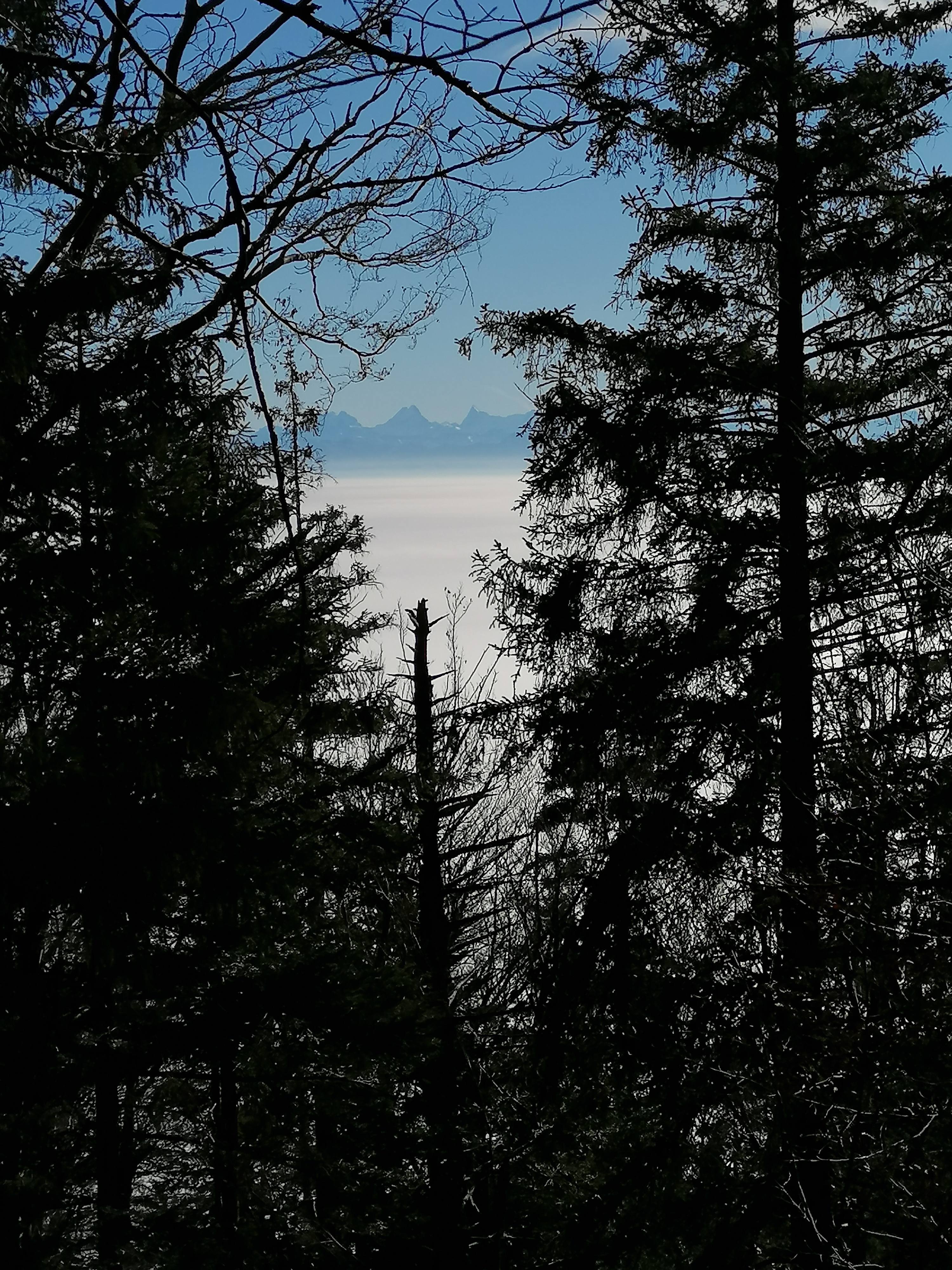
So, yesterday, we walked through town, the Verena gorge, the village of Rüttenen, entered the forest and started our climb. After walking for about 2h30, we reached (gasp) Balmfluechöpfli, a viewpoint where we had a picnic in the sun. The Alps were clearly visible across the sea of fog. Next stop was Röti, at 1395m, on to Weissenstein and back down.
This weather pattern leads to an inversion of temperatures where it might be 12° at 1200m and 4° at 400m which is below or in the fog. As we reached the cloud at 700m, we had to put our jackets, hats and gloves back on as we entered the cold(er) mist.
En cette saison, il n’est pas rare que le brouillard s’installe, quelques fois il se lève vers 10-11h – ou reste obstinément toute la journée.. Heureusement, nous habitons au pied du Jura et pouvons monter au-dessus des nuages dont le plafond se situe souvent autour des 700-800m.
Ainsi, hier, nous avons traversé la ville, les gorges de la Verena et le village de Rüttenen avant d’entrer dans la forêt et de commencer notre montée. Au bout de 2h30 de marche, nous avons atteint le point de vue de Balmfluechöpfli (ouf!) et pique-niqué au soleil. Les Alpes étaient très clairement visibles par-dessus la mer de brouillard. Ensuite, nous sommes remontés vers le Röti, à 1395 m, avant d’entamer notre descente via Weissenstein.
Ce phénomène climatique de plafond de brouillard amène une inversion des températures. Ainsi, les températures sont nettement plus douces (12° à 1200 m) en altitude qu’en plaine (4° à 400 m). Quand nous avons atteint les 750 m, il nous a fallu remettre nos vestes, bonnets et gants pour nous enfoncer dans le froid humide.
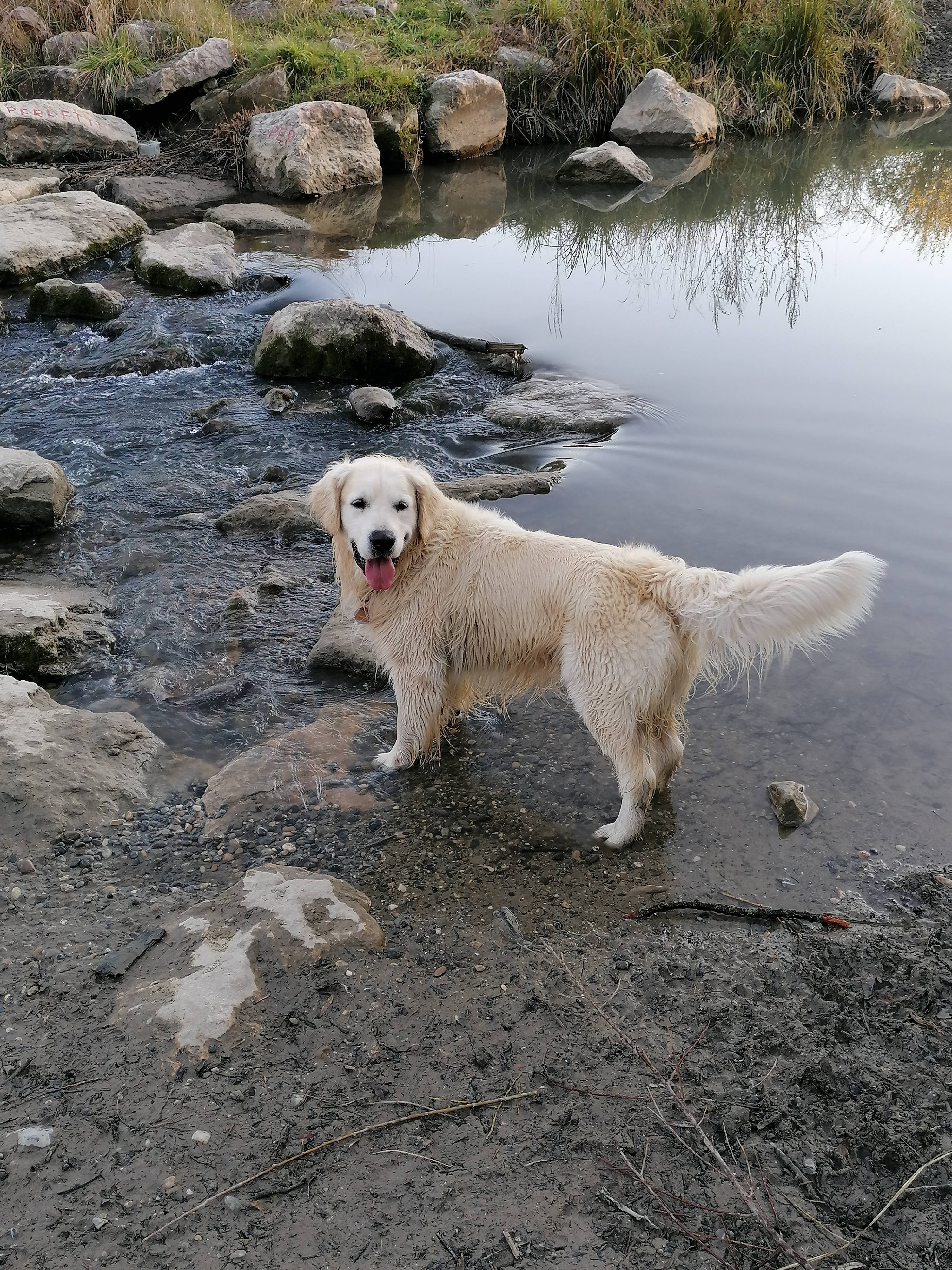
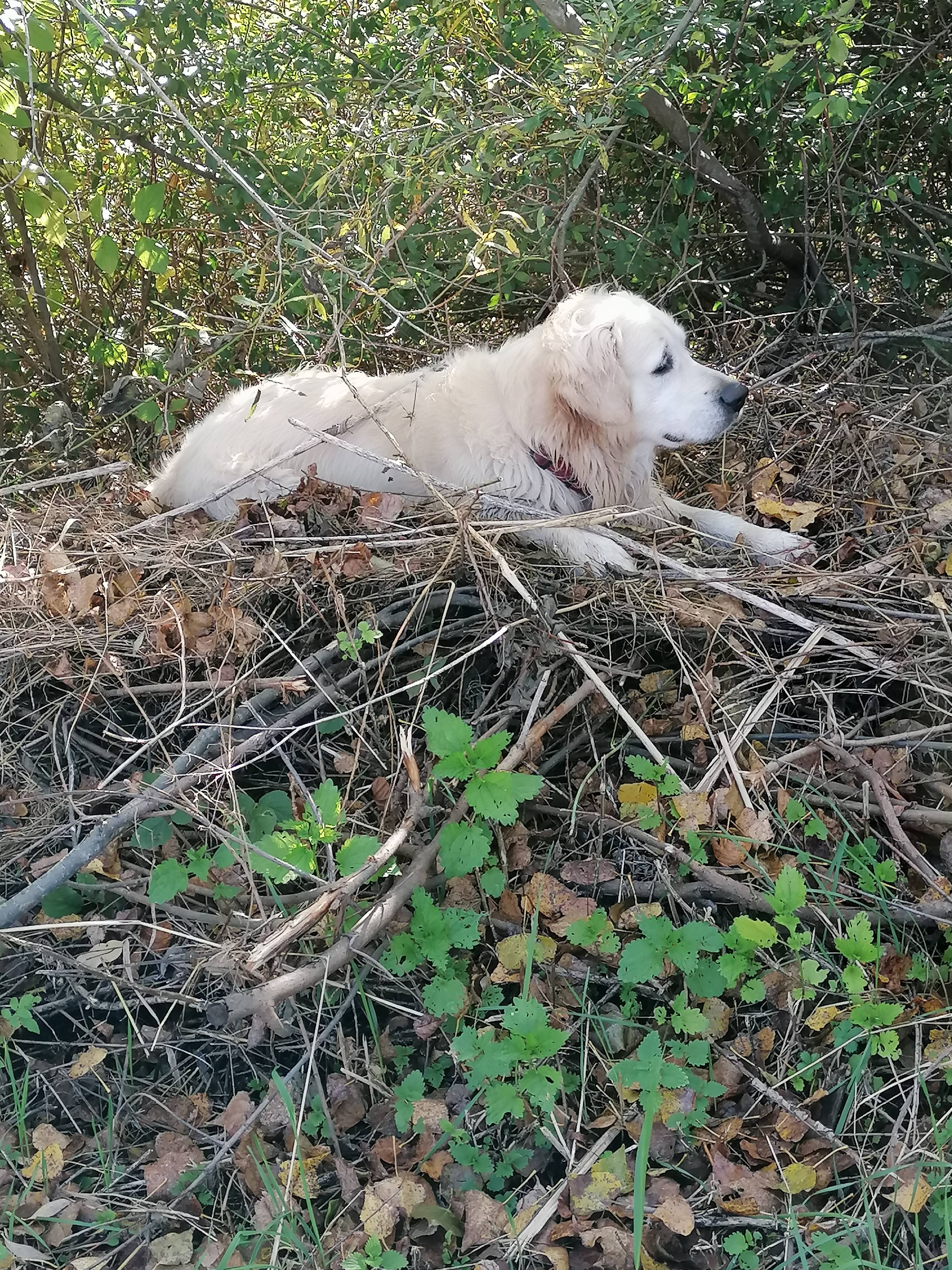
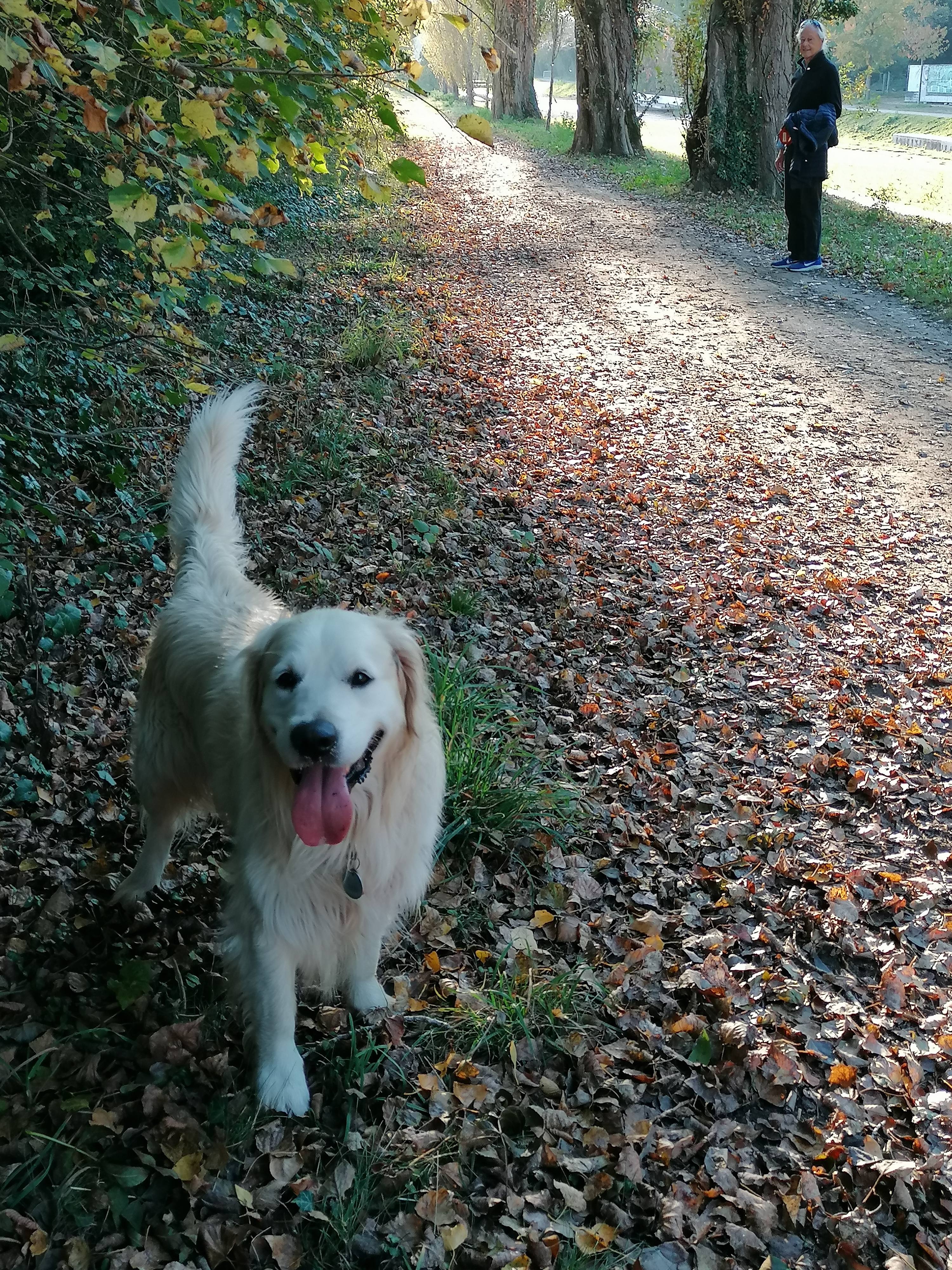
Jenny’s sister and brother-in-law were going on a tour of Switzerland holiday, so we stayed at their place in the Geneva countryside to look after their wonderful, sweet Golden Retriever, Saxo.
He enjoys lengthy walks mornings and late afternoons, running after a ball and chewing on sticks but, most of all, jumping in the river (especially if we have said no).
We were able to catch up with family but ran out of time to see friends.
La soeur et le beau-frère de Jenny partant en vacances, nous sommes allés chez eux, dans la campagne genevoise, pour nous occuper de leur adorable golden retriever Saxo.
Il aime les longues balades le matin et en fin d’après-midi, courir après les balles, mastiquer des branches et, plus que tout, sauter dans la rivière ( surtout si on lui dit non 😉).
Nous avons pu retrouver la famille mais n’avons pas eu le temps de contacter les amis. Une prochaine fois….
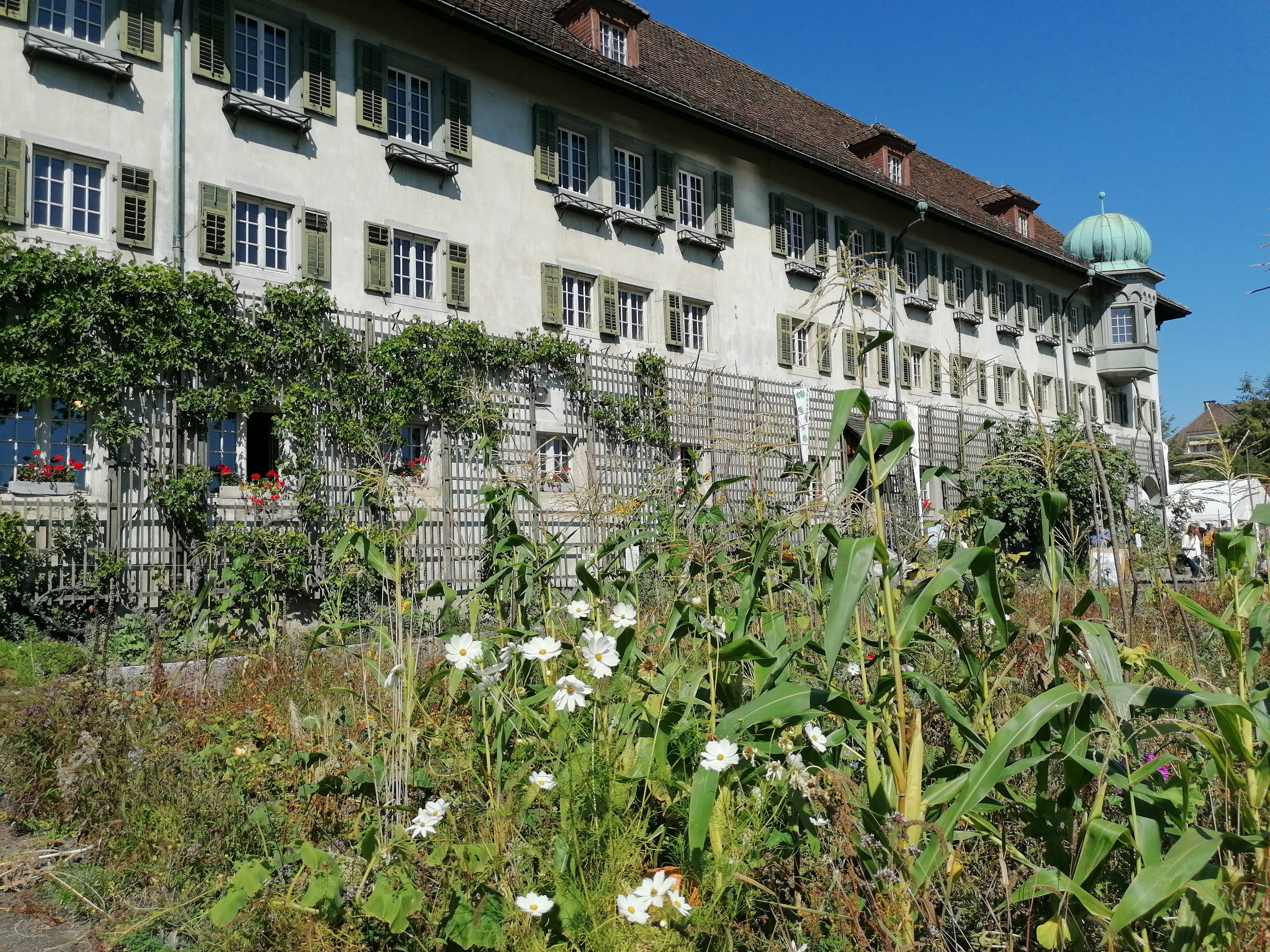
Solothurn has a number of monasteries and convents of different orders, some still working, most hidden by high walls.
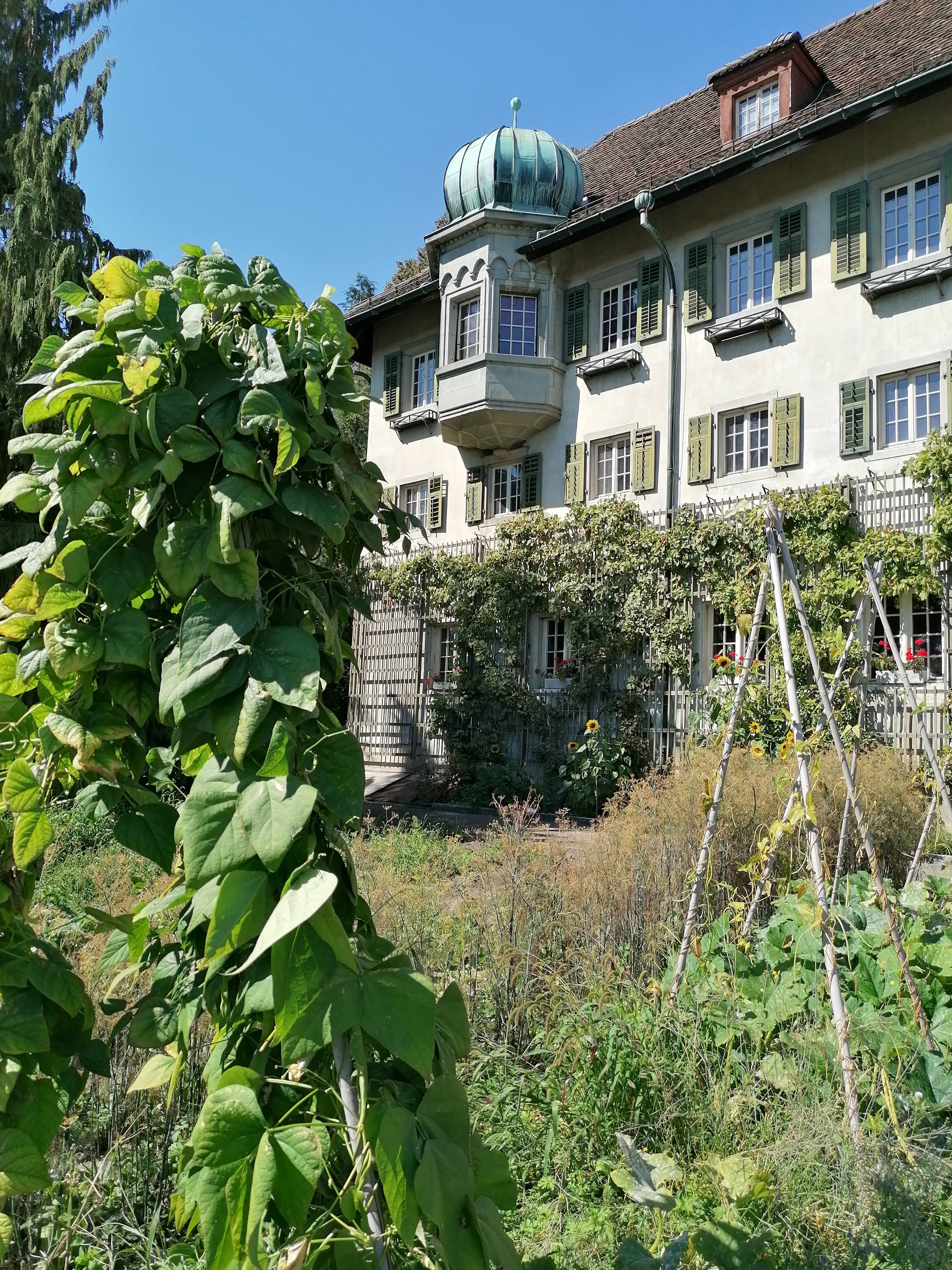
The Kapuchin monastery opened in 1592 and saw its last monk leaving in 2003. After several years of inaction, an association was set up in the Franciscan spirit and the monastery and its garden came back to life and are now open to the public on many occasions. It works closely with the local schools, various foundations and the integration of asylum-seekers and many events are organised (cooking classes, healing plants, Christmas market, concerts, etc.).
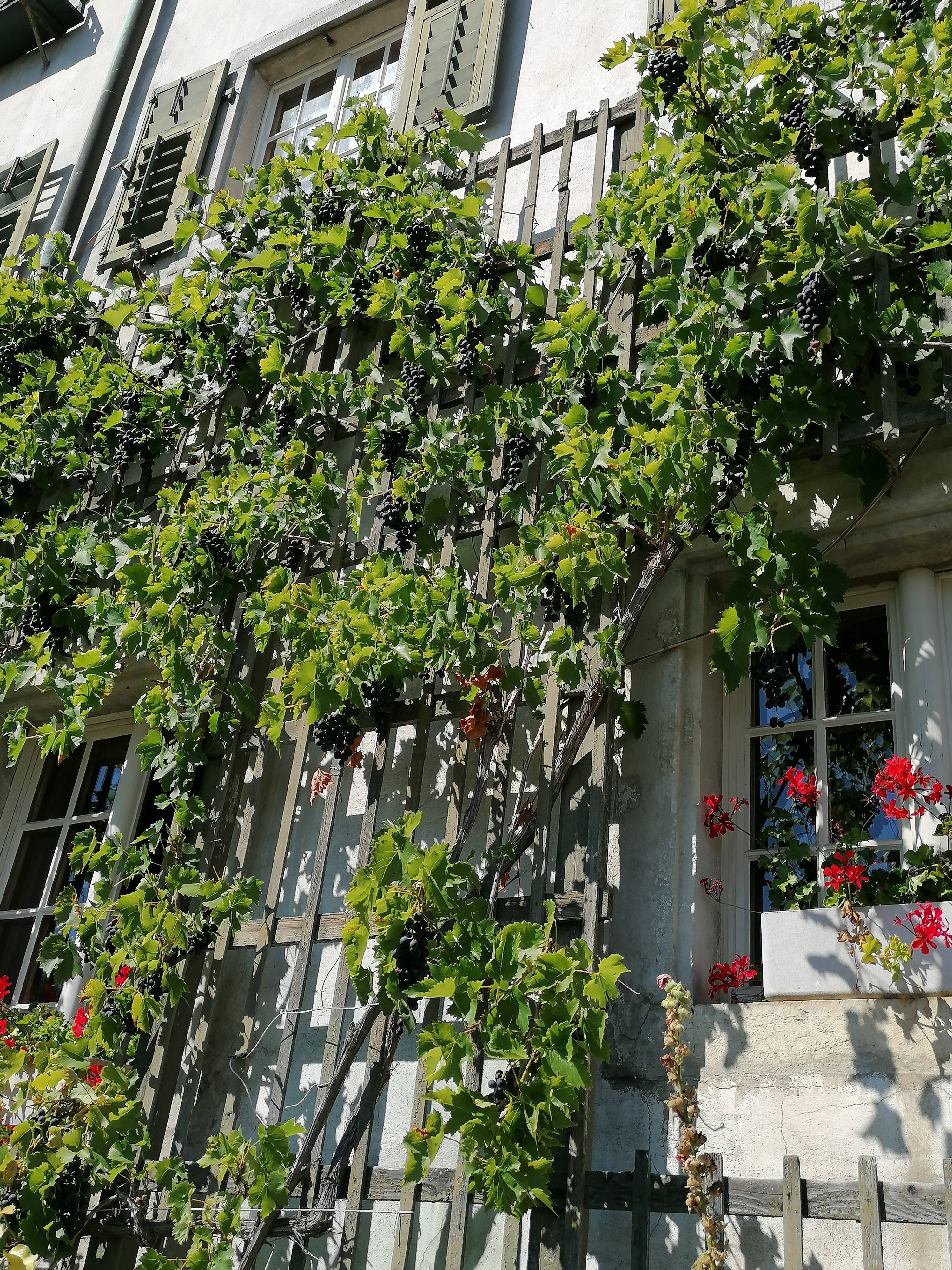
Jenny has volunteered to work in the garden of the monastery and been going several times, harvesting potatoes, picking grapes, hops, collecting the last tomatoes. Each afternoon session ends with grilled sausages, bread, wine, beer and friendly chatter, mostly in the local dialect.
Recently, a class of 9-10 year-olds came and prepared a big soup with the pumpkins of the garden while another was baking breads and brioches. The money collected went to a charity that looks after bereaved families. A good way to teach children about growing food, cooking and empathy.
Jardinage au monastère
Soleure a un certain nombre de monastères et couvents, cachés derrière de grands murs. Certains sont encore en activité.
Le monastère des capucins a ouvert en 1592 et vu son dernier moine partir en 2003. Après quelques années d’inaction, une association a été formée dans l’esprit franciscain et le monastère et son jardin ont retrouvé une nouvelle vie et sont désormais régulièrement ouverts au public. Le monastère et son association travaillent étroitement avec les écoles de la ville, des fondations et à l’intégration des réfugiés. Divers événements y sont organisés (cours de cuisine, notamment par des réfugiés, connaissances des plantes médicinales, soirées fondues, marchés artisanaux et marché de Noël).
Jenny s’est portée volontaire pour travailler au jardin et s’y est rendu régulièrement cet automne pour cueillir le raisin ou le houblon, ramasser les patates, etc. Chaque après-midi de travail se finit autour d’une table sous la tonnelle avec saucisses grillées, pain, vins, bières et conversations enjouées, commencées en allemand mais retournant assez vite au dialecte local.
Récemment une classe de 9-10 ans est venue préparer une soupe avec les courges du jardin tandis qu’une autre préparait des tresses et pains. L’argent collecté (au bon vouloir) a été remis à une association oeuvrant après d’enfants et de familles endeuillées. Une belle manière d’enseigner aux enfants d’où viennent les légumes, la cuisine et l’empathie.
Throughout autumn, there are numerous fairs in Switzerland (Comptoir suisse in Lausanne, Olma in St-Gallen, Foire de Martigny, etc.) and Solothurn also has its own.
This local fair is free-of-charge, on the edge of the old town (races take place in the dried moat) and very child- and family-friendly. As well as the usual displays of garden furniture, saunas, sewing machines and wines, etc., an event brought lots of fans every day after school : the piglets race. Children volunteered to introduce each piglet (18 of them in 3 races), then they also ran and every child was rewarded with an apple.
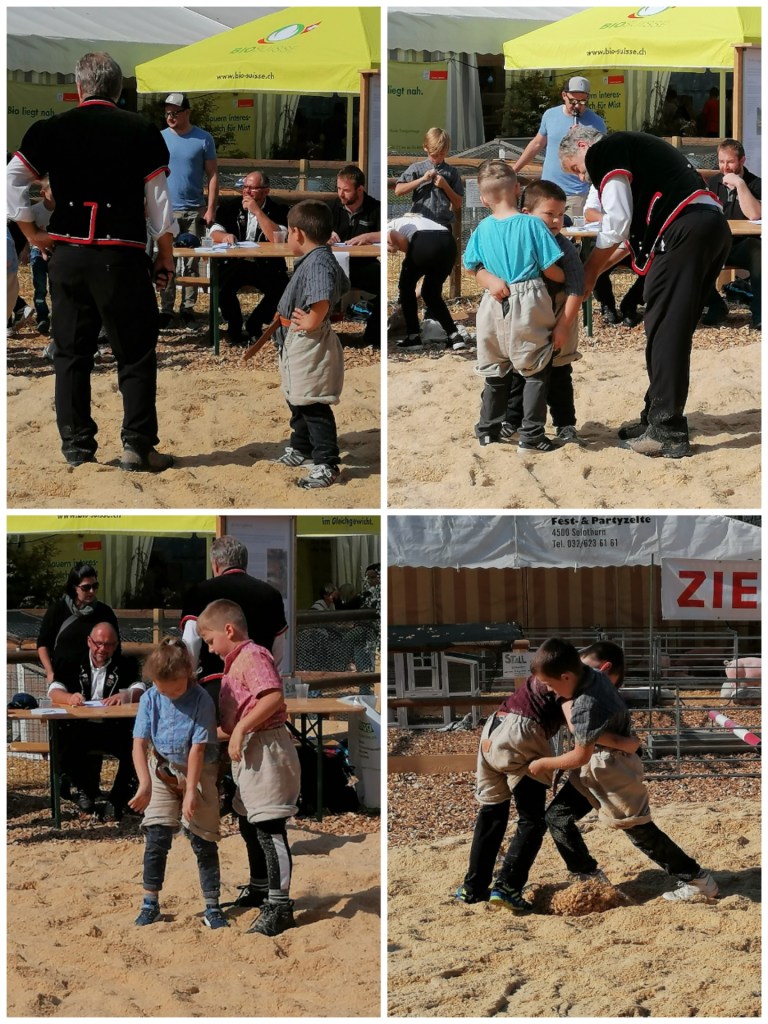
On Saturday morning, there was a junior competition in Swiss wrestling. They can start practicing as early as 4 years old. There were different age brackets but the physiques can vary a lot within a group. There is an emphasis on respect for the adversary, shaking hands and the winner brushing off the dust off his unlucky opponent. The little ones were cute, had to have their clothes adjusted and did not seem to enjoy too much rolling in the sawdust. There were also two little girls.
Foire d’automne
Beaucoup de villes proposent des foires en automne (Comptoir suisse à Lausanne, Foire de Martigny, Olma de St-Gall etc) et Soleure ne fait pas exception.
La foire ici est gratuite, à l’orée de la vieille ville (les courses ont lieu dans les douves asséchées) et très axée familles et enfants. A part les exposants habituels (meubles de jardin, saunas, machines à coudre, vins, etc.) un événement journalier attirait beaucoup de monde à la sortie des classes : la course des petits cochons. Les enfants se portaient volontaires pour présenter chacun des porcelets affublé d’un dossard et sponsorisé par une entreprise locale. Il y avait 3 courses et 6 cochons à chacune. C’était ensuite au tour des enfants de courir et d’être récompensé d’une pomme.
Le samedi matin, il y avait le tournoi de lutte suisse (dite “à la culotte”) des enfants qui peuvent commencer ce sport dès l’âge de 4 ans. Il y a différentes catégories d’âge et les physiques sont très variés en taille comme en poids. Le respect de l’adversaire est souligné avec poignée de main et époussetage du perdant par le vainqueur. Les petits étaient mignons, qui perdaient leur culotte et n’aimaient pas trop être recouvert de sciure. Il y avait deux petites filles.
The canton of Ticino has been offering a great service for a few years : a free public transport pass valid for the whole canton to holiday makers staying in hotels, or youth hostels. Leave your car at the hotel and travel on all trains (much faster) and postal buses (for more remote areas) , the pass also gives a big rebate on gondolas and boat trips.
Unfortunately for us, the weather forecast was for rain for the next week but the very south of the canton was to enjoy still warm and sunny weather for an extra day. So, we hopped on a train to Chiasso, at the border with Italy and walked the last stage of the Via Gottardo back to Mendrisio.
Upon leaving Chiasso, we saw a curious building and assumed it must be a museum but we were told it was built to house a shopping centre but was now empty. We went up a hill, it was hot and humid and the vegetation looked subtropical.
The Mendrisiotto region is famous for its merlot vineyards and we had walked in the area many years ago. We had, however, not visited the park of the gorges of the Breggia but this path takes us through part of it and it is well worth exploring. There are a couple of circuits in the park, one geological and one historical. There are enormous karst slabs neatly piled on top of each other with emerald pools, then a big waterfall and copper-coloured slabs. It was really beautiful.
Les gorges de la Breggia
Le canton du Tessin offre depuis quelques années un pass pour les transports publics dans tout le canton à tous les vacanciers séjournant en hôtel (ou auberge de jeunesse). Ce pass permet de laisser sa voiture à l’hôtel et de profiter de tous les trains (plus rapides) et bus postaux (pour les zones reculées) et offre des rabais sur les bateaux et les téléphériques.
Malheureusement pour nous, la météo annonçait des pluies pour la semaine à venir mais le sud du canton allait bénéficier d’un répit d’une journée. Nous avons donc pris le train pour Chiasso, ville-frontière avec l’Italie et effectué la dernière étape de la Via Gottardo à l’envers en retournant vers Mendrisio.
En quittant Chiasso, nous avons vu un curieux bâtiment que nous avons cru être un musée. En fait, cette construction devait être un centre commercial mais il est inoccupé et fermé. Le sentier nous mène en haut d’une colline surplombant la région, il faisait chaud et humide et la végétation paraissait subtropicale.
Le Mendrisiotto est connu pour ses vignobles de merlot et nous avions marché dans la région il y a quelques années. Toutefois nous n’avions pas visité les gorges de la Breggia mais cette étape nous emmène dans ce parc régional et cela en vaut vraiment la peine. Il y a deux sentiers : l’un géologique et l’autre historique, indépendants de l’étape. Il y a d’énormes plaques de calcaire, empilées les unes sur les autres et des bassins à l’eau vert émeraude, puis une grande cascade et la roche devient couleur cuivre. Ces gorges sont vraiment très belles.
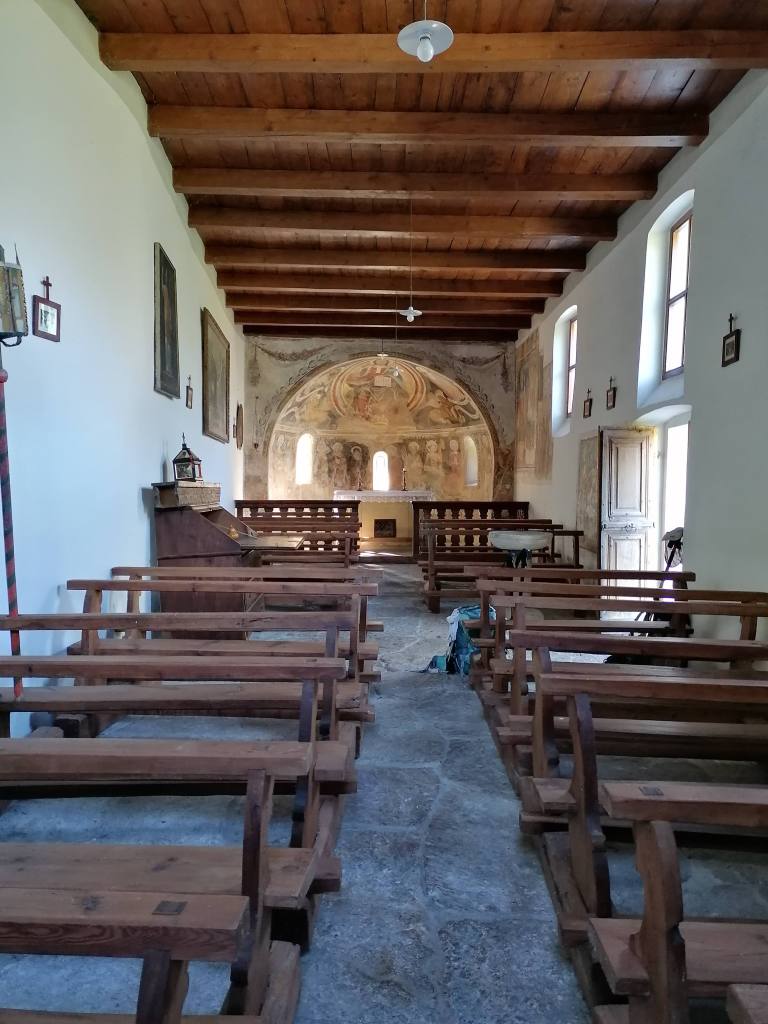
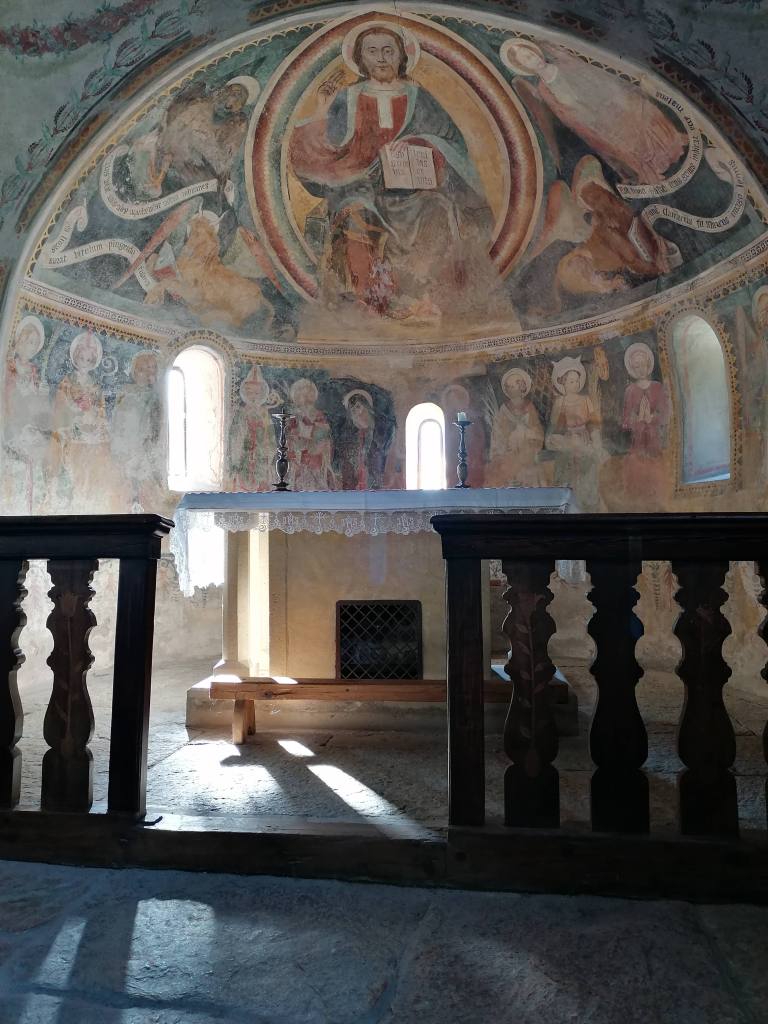
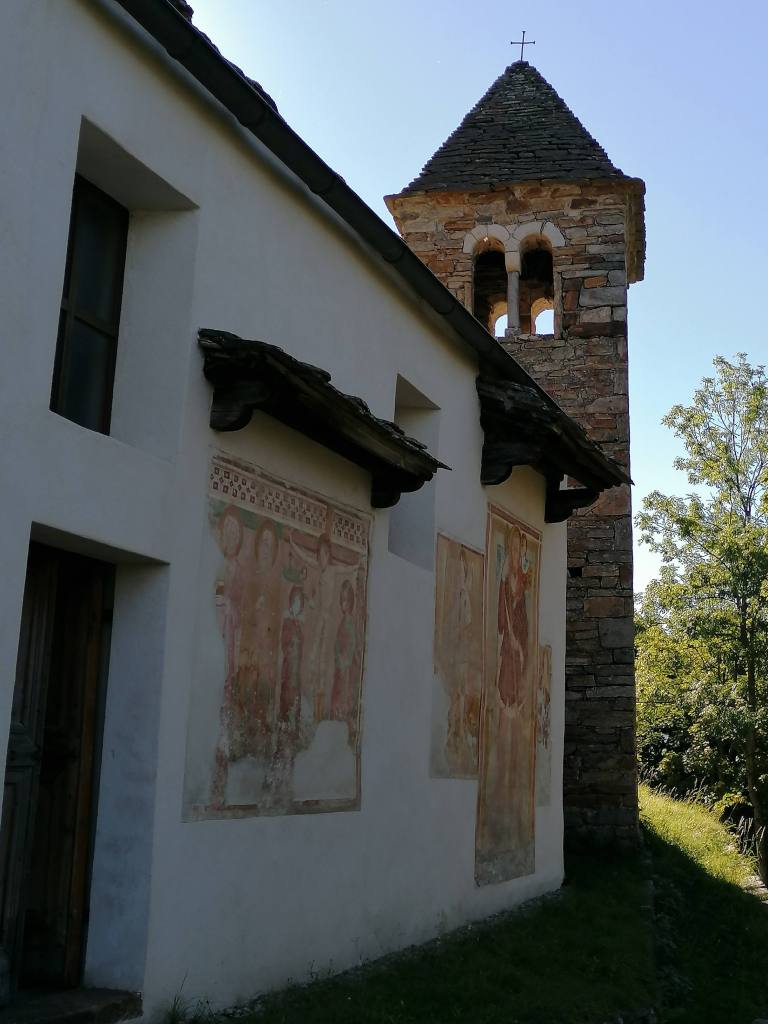
The day started well with the visit of the beautiful oratory of Sant’ Ambrogio on the outskirts of the hamlet of Cavagnago. The mountain road circles around it nowadays. The different parts of the building date back to the 13th and 15th centuries. Restorations took place in 1931 and 2003-04.
La journée a bien commencé avec la visite de l’oratoire Sant’Ambrogio un peu avant d’arriver au hameau de Cavagnago. La route de montagne en lacets encercle cette petite église. Les différentes parties datent des XIIIe et XVe siècles. Des restaurations ont eu lieu en 1931 et 2003/04.
_________
The end of this stage is supposed to be at Biasca but after the steep drop to Pollegio, we found ourselves in a very flat and busy area. The next day from Biasca to Bellinzona did not appeal to us as it is completely flat and is too close to the freeway for our taste.
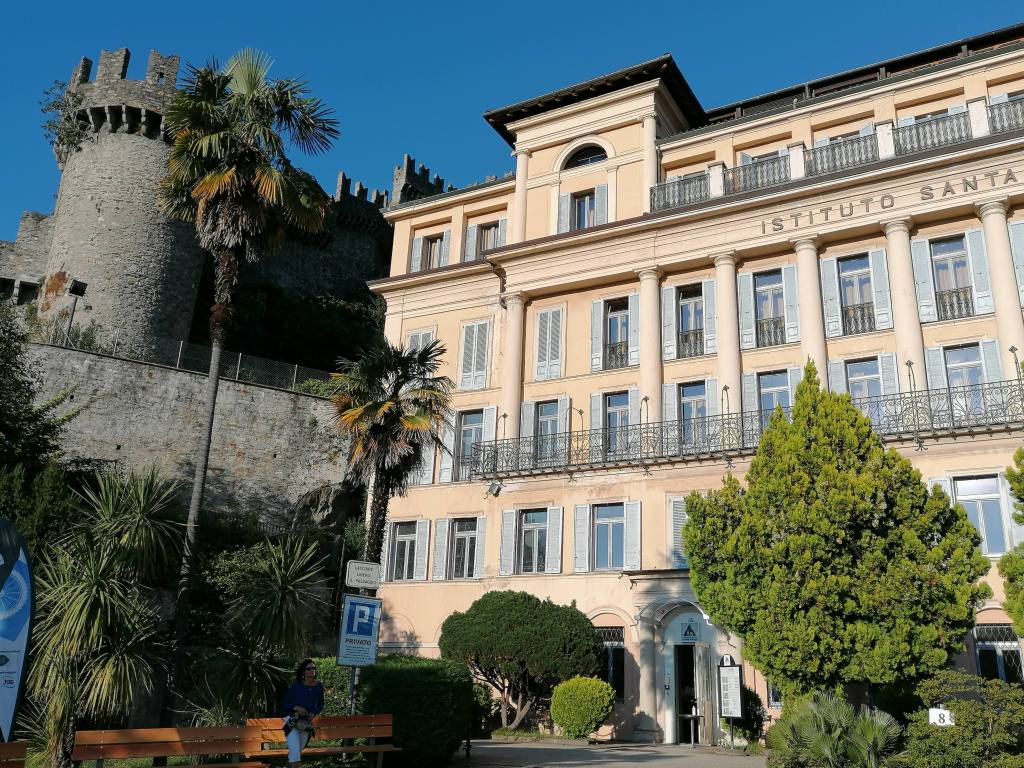
So, we took the train straight to Bellinzona and stayed at the youth hostel in a magnificent old building at the foot of Castello Montebello, one of the impressive fortress which is classed as a World Heritage site. The building started as the post office before becoming a private school and boarding school for girls until the early 1990s. These days primary and secondary school pupils enter and leave the building alongside the guests.
La fin de cette étape nous amène à Biasca mais après la descente raide vers Pollegio, à quelques kilomètres, nous nous sommes retrouvés en terrain plat et densifié. Le jour suivant, de Biasca à Bellinzone ne nous attirait pas car il suit le cours de la rivière Ticino et reste proche de l’autoroute.
Nous avons donc pris le bus puis le train pour Bellinzone. L’auberge de jeunesse se trouve dans un bel édifice au pied du château Montebello, l’un des trois qui forment l’impressionnante forteresse inscrite au Patrimoine mondial. Ce bâtiment a d’abord servi de poste avant de devenir une école et internat pour filles jusqu’au début des années 90. Des classes primaires et secondaires partagent maintenant les lieux avec les hôtes de l’auberge.
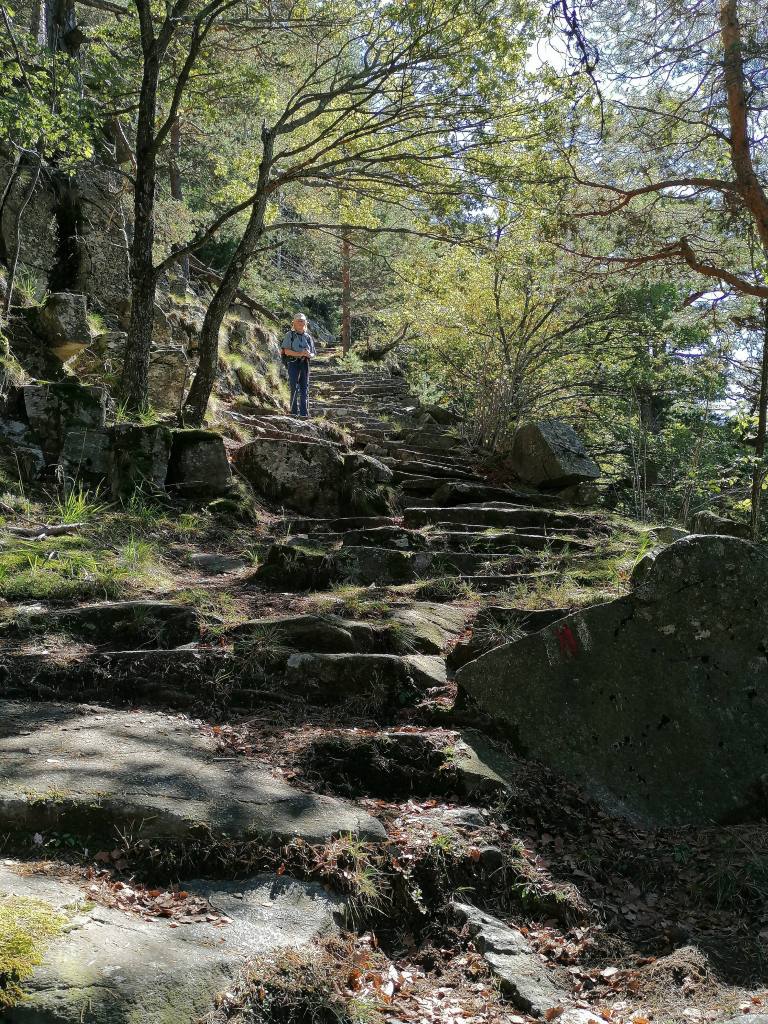
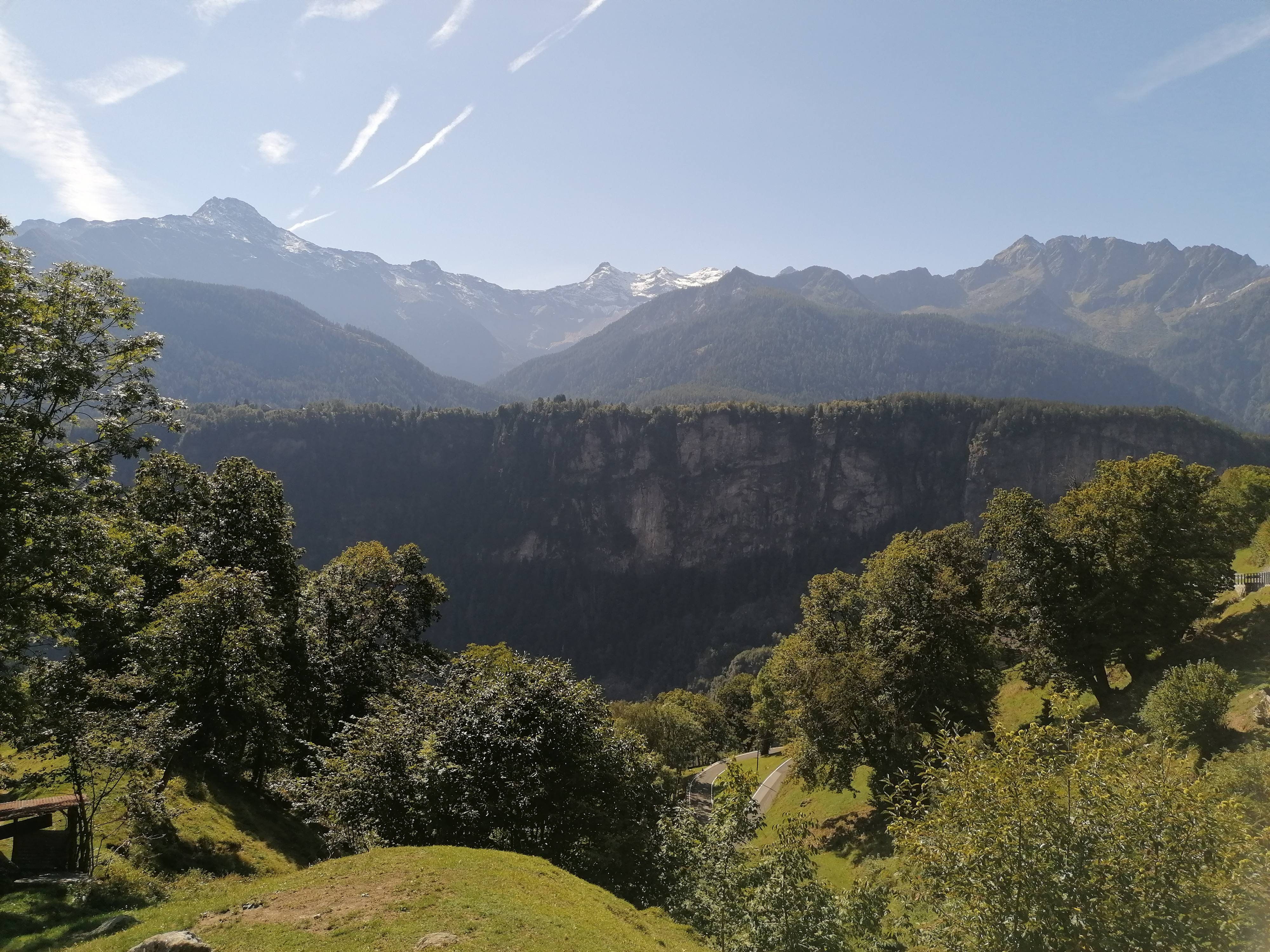
We took the train and postal bus back to where we had left the Strada Alta one year ago. We got there in the early afternoon and had plenty of time, walking through hamlets, past waterfalls and chestnut trees, to reach the little village of Anzonico and settle in the local osteria for the night.
L’église sur la colline
Nous avons pris le train et le bus postal pour retourner à Osco, sur la Strada Alta, que nous avions quitté il y a un an.. Nous y sommes arrivés en début d’après-midi, largement assez tôt pour arriver à Anzonico où nous nous sommes installés à l’osteria pour la nuit.




















 J and J on the move