Towns of Extremadura

Leaving Madrid, we went back to our original plan of visiting Extremadura.

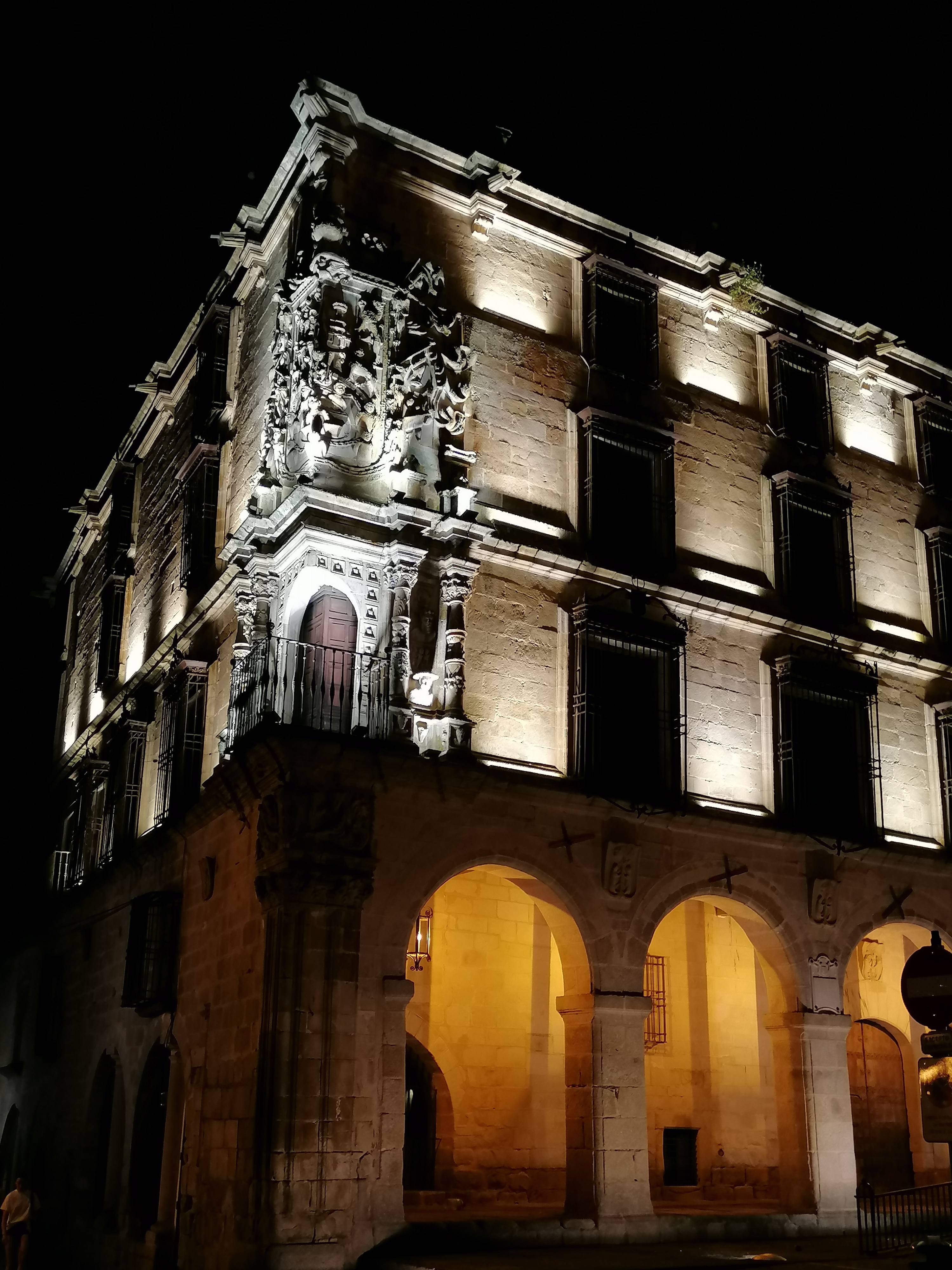
Our first stop was Trujillo, the birthplace of brutal conquistador of Peru, Francisco Pizarro. The town is filled with 16th century palaces built by the many conquistadores originating from here. However, unusually for Spain, several of the buildings are quite decrepit and standing empty.

The town hosts, however, Spain’s most important cheese competition, in early May, which draws huge crowds. We arrived as they were packing up the installations on Plaza Mayor. As everywhere in Extremadura, there are many storks nests on church spires and chimneys.

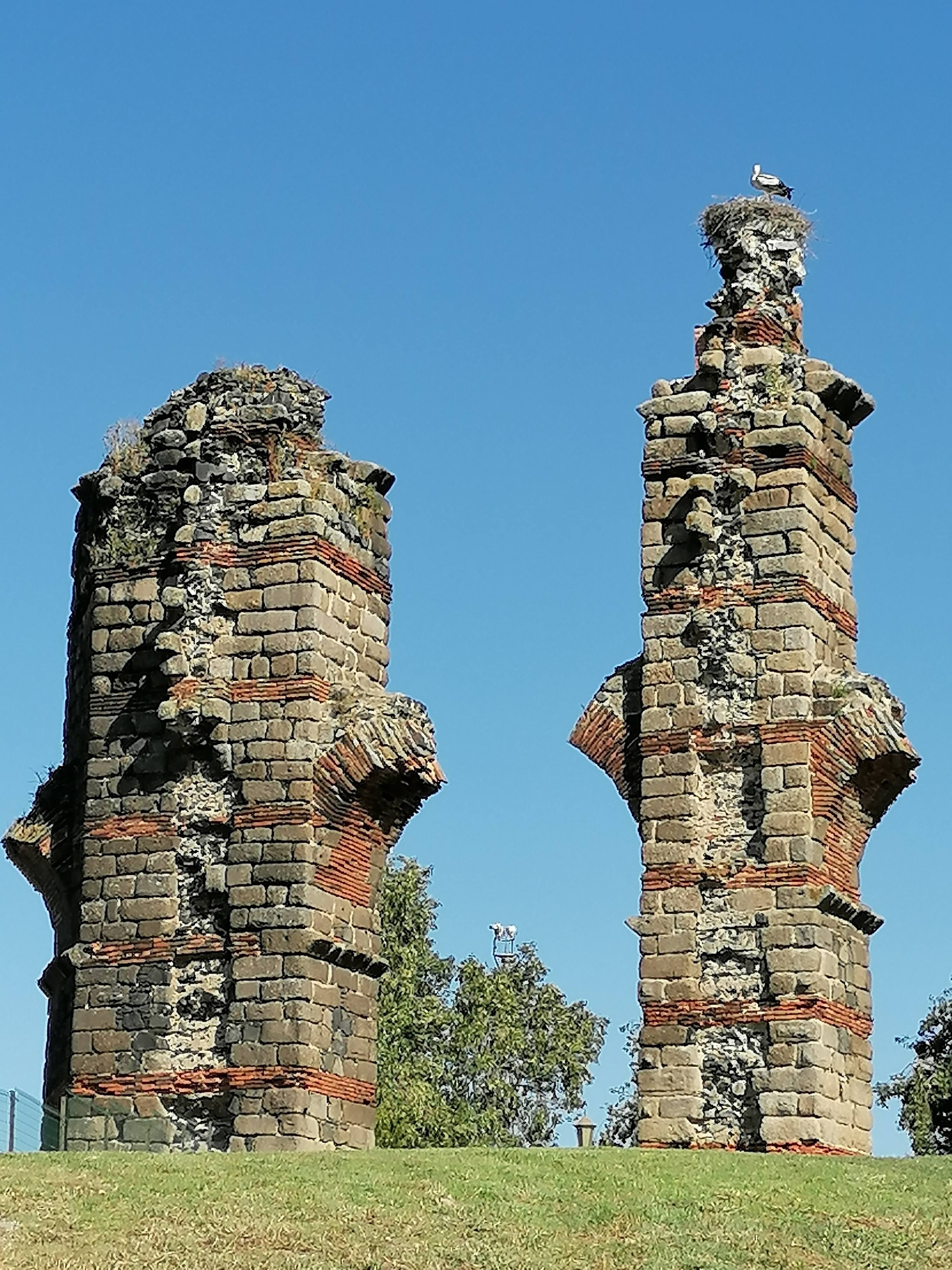
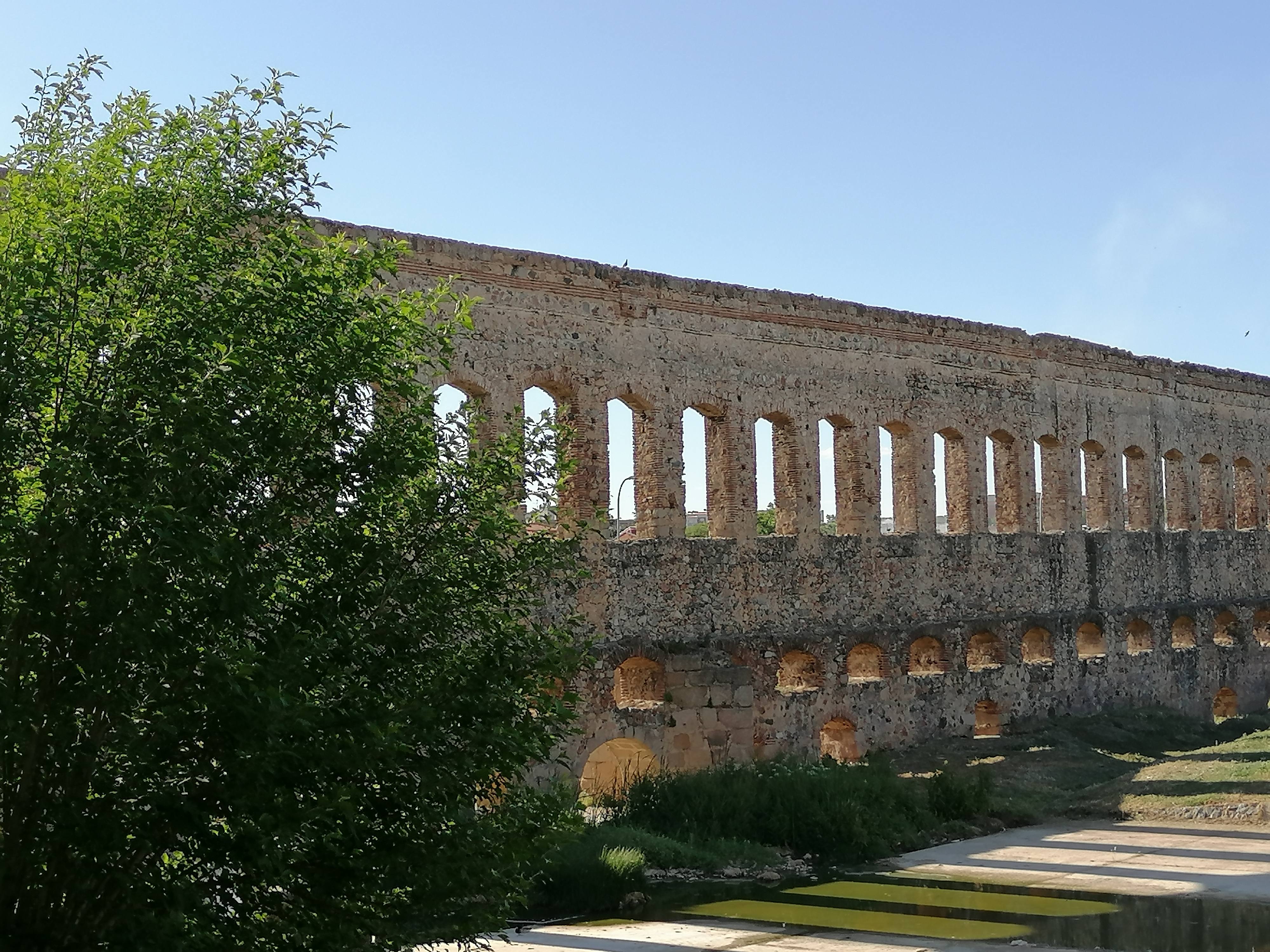
On to MĂ©rida, Spain’s most important city of the Roman empire, whose ruins are listed on Unesco World Heritage List (and provide great nesting spots). It is also a stop on the Camino de la VĂ­a de la Plata, which goes from Sevilla to Santiago de Compostela. It is the least-frequented of all the caminos, representing only about 3% of arrivals in Compostela.

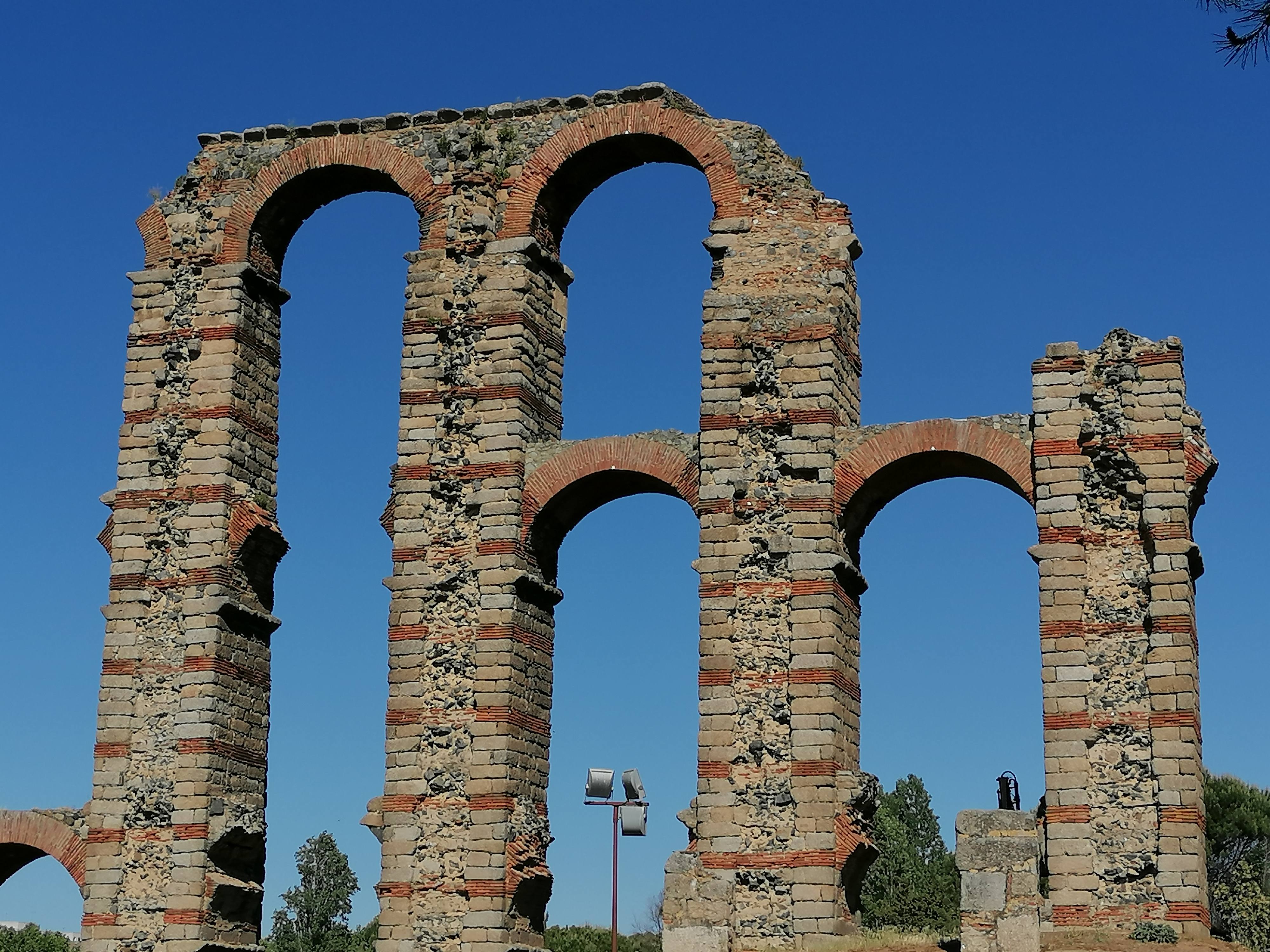
Interestingly, we learned that VĂ­a de la Plata has nothing to do with silver (translation of plata) but is close enough to an Arabic word for paved road (which had been built by Romans).

Villes d’EstrĂ©madure

En quittant Madrid, nous avons repris notre plan initial de visite de l’EstrĂ©madure.

Notre première étape a été Trujillo, la ville natale du brutal conquistador du Pérou, Francisco Pizarro. La ville regorge de palais du XVIe siècle construits par les nombreux conquistadores originaires de la région. Cependant, chose plutôt rare en Espagne, plusieurs de ces bâtiments sont décrépis et vides.

La ville accueille aussi le plus important concours de fromages d’Espagne, au dĂ©but du mois de mai, qui attire des foules considĂ©rables. Nous sommes arrivĂ©s alors que les installations de la Plaza Mayor Ă©taient en train d’ĂŞtre remballĂ©es. Comme partout en EstrĂ©madure, il y a de nombreux nids de cigognes sur les flèches des Ă©glises et les cheminĂ©es.

Nous nous sommes ensuite rendus Ă  MĂ©rida, la plus importante ville espagnole de l’empire romain, dont les ruines sont inscrites sur la liste du patrimoine mondial de l’Unesco (et constituent d’excellents sites de nidification). C’est aussi une Ă©tape du Camino de la VĂ­a de la Plata, qui va de SĂ©ville Ă  Saint-Jacques-de-Compostelle. C’est le moins frĂ©quentĂ© de tous les caminos, puisqu’il ne reprĂ©sente qu’environ 3 % des arrivĂ©es Ă  Compostelle.

Nous avons appris que la VĂ­a de la Plata n’avait rien Ă  voir avec l’argent (traduction de plata), mais qu’elle est assez proche d’un mot arabe dĂ©signant une route pavĂ©e (construite par les Romains).
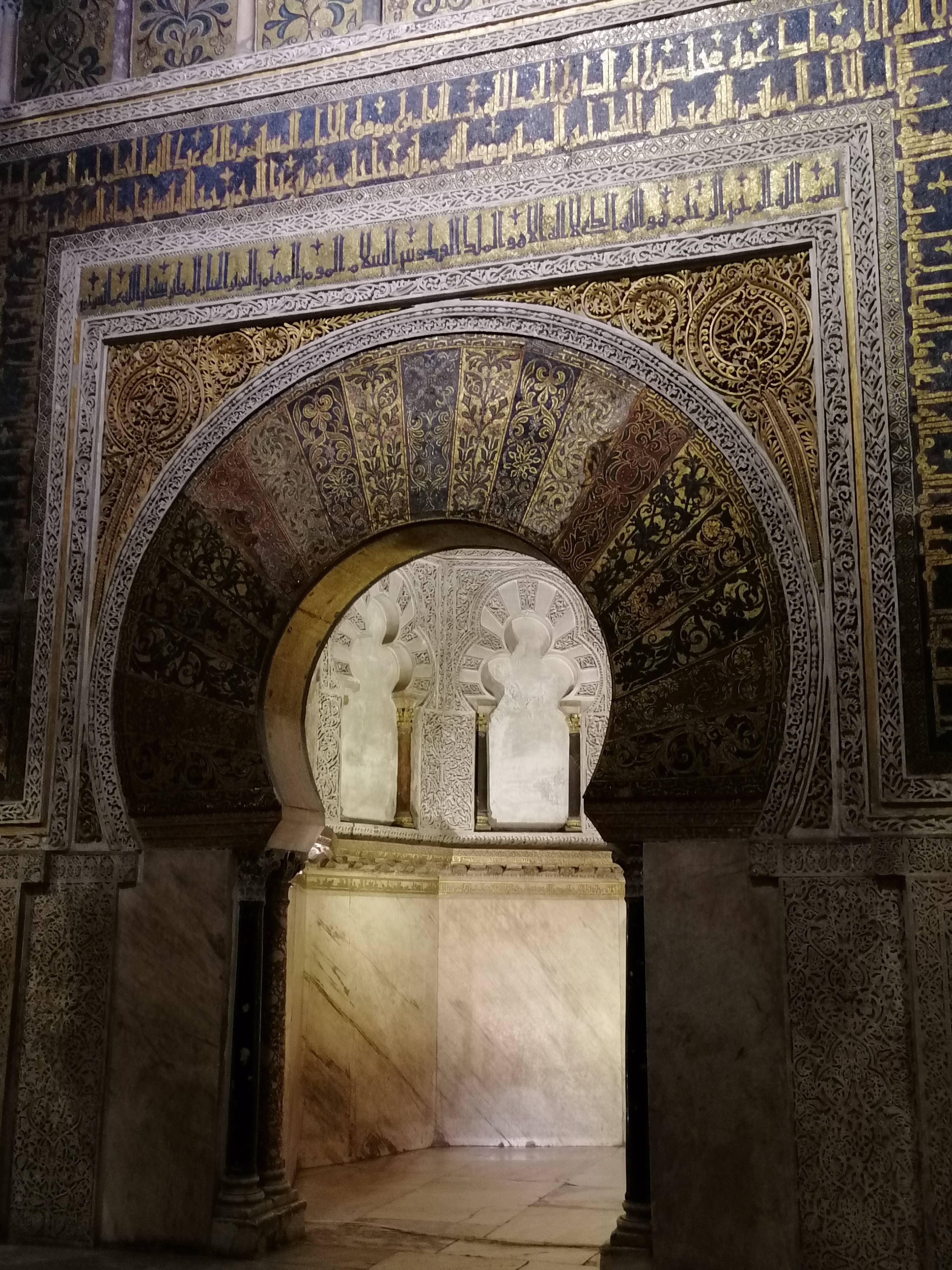
CĂłrdoba – the mosque-cathedral

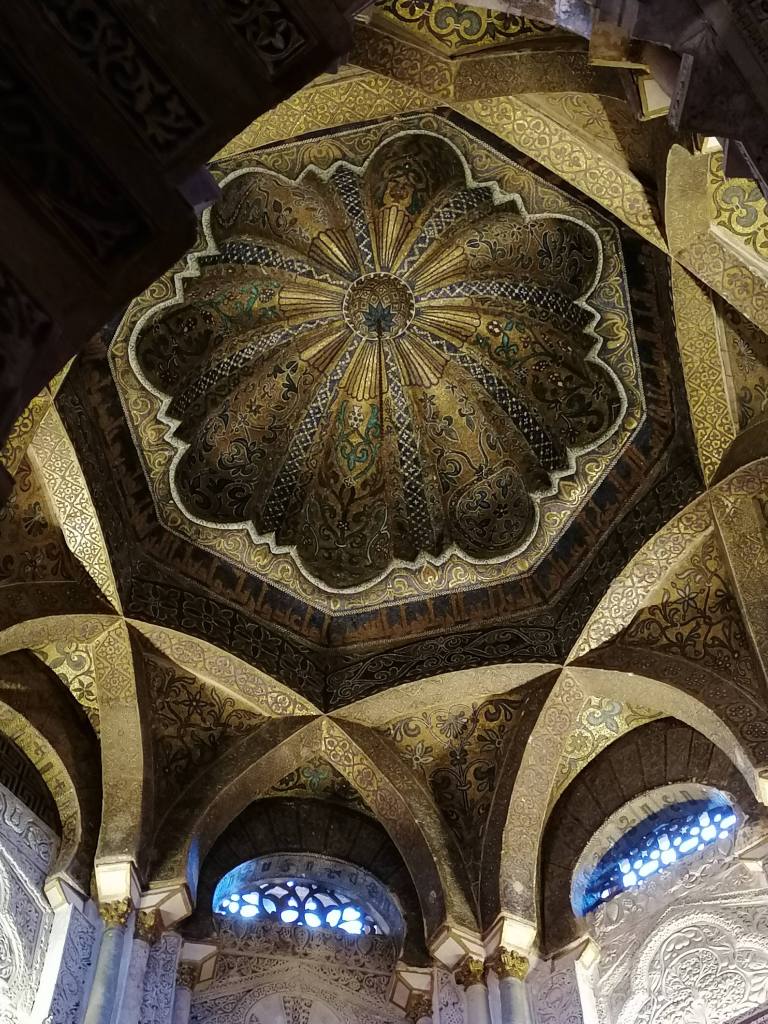
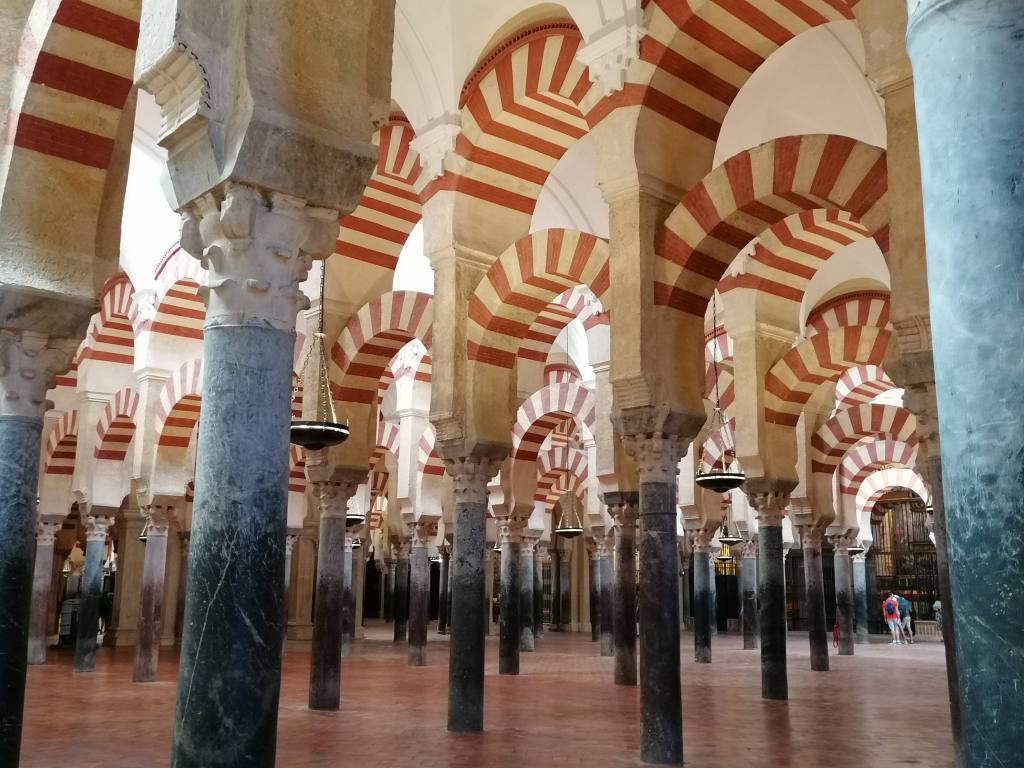
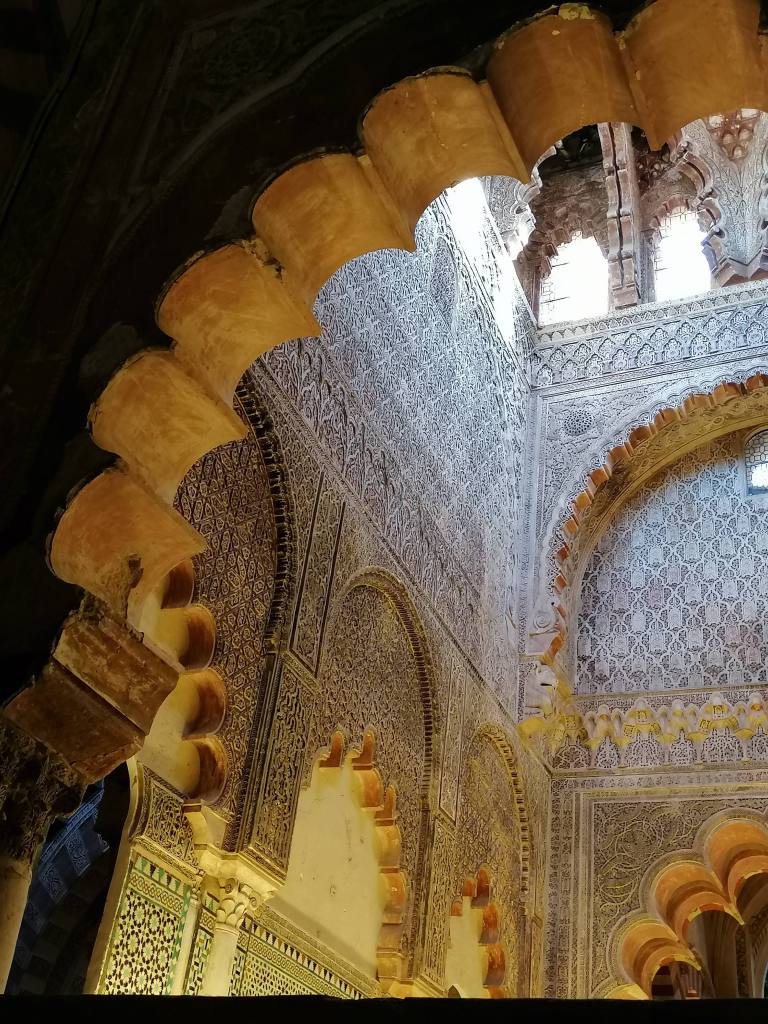
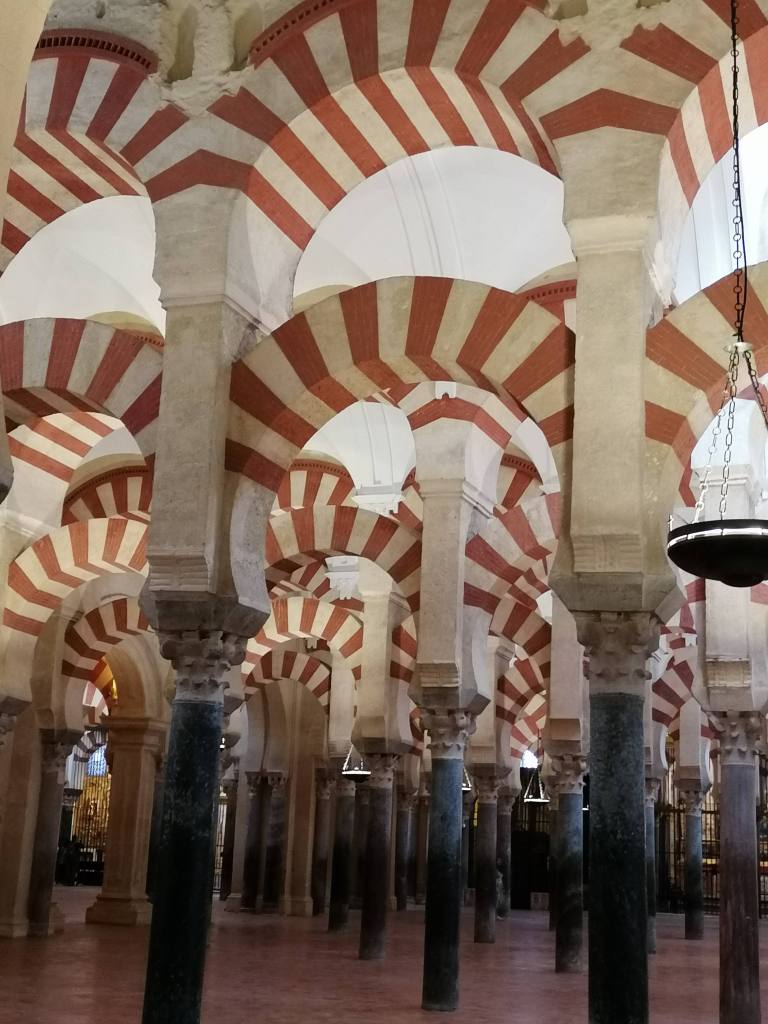
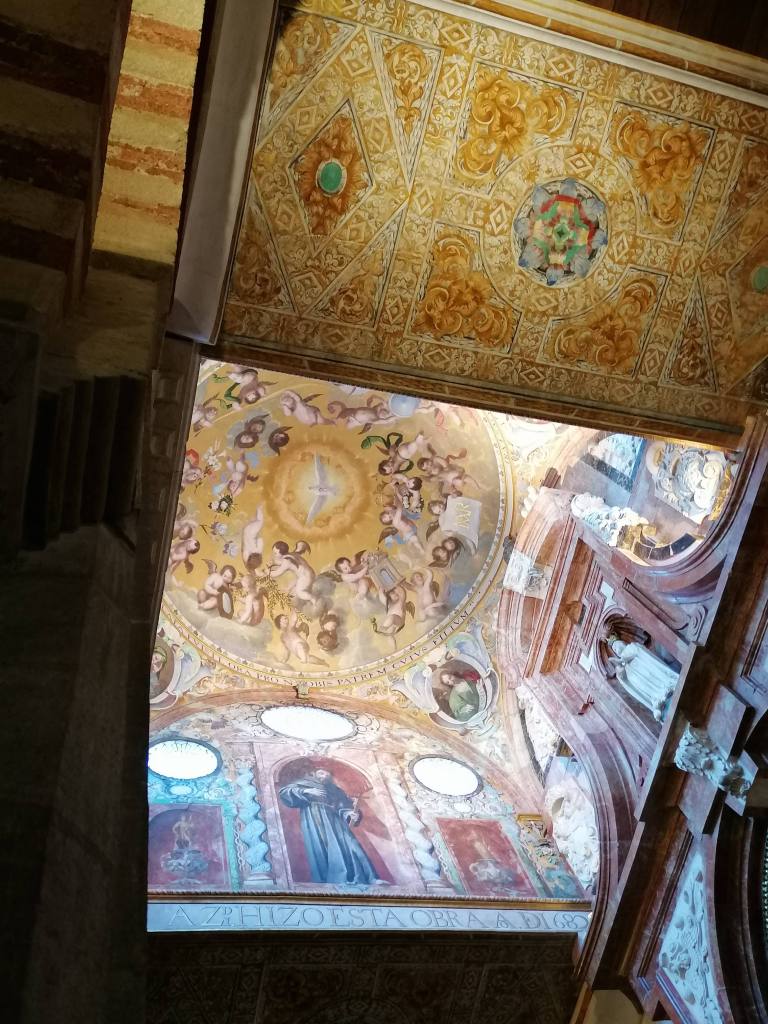
We had only previously gone to CĂłrdoba on a day trip from Sevilla and visited the Mezquita, the beautiful mosque-cathedral.  This time, we stayed 3.5 days, just as the south of Spain was hit by a heat wave.

This text is by Unesco : “The Great Mosque of Cordoba was inscribed on the World Heritage List in 1984 and the property was extended in 1994 to include part of the Historic Centre, the Alcázar (the fortress), and extending south to the banks of the River Guadalquivir, the Roman Bridge and the Calahorra Tower.

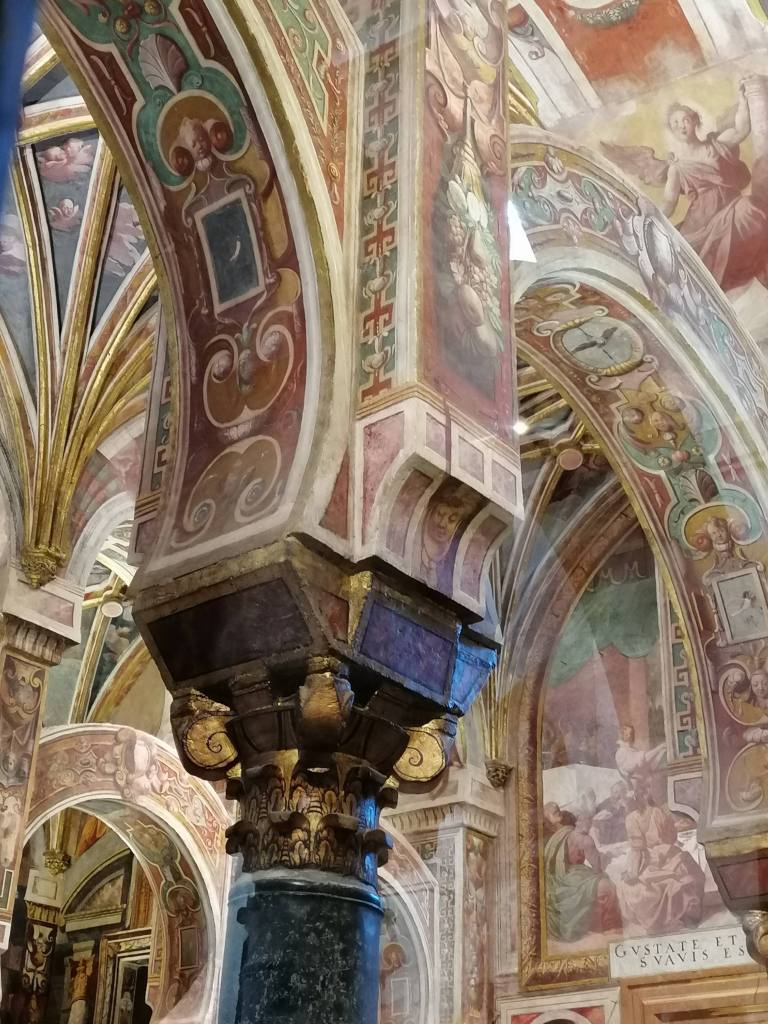
Cordoba’s period of greatest glory began in the 8th century after the Moorish conquest, when some 300 mosques and innumerable palaces and public buildings were built to rival the splendours of Constantinople, Damascus and Baghdad. In the 13th century, under Ferdinand III, the Saint, Cordoba’s Great Mosque was turned into a cathedral.

The Great Mosque of Cordoba, with its dimensions and the boldness of its interior elevation, which were never imitated, make it a unique artistic creation.”

Entry is free in the morning between 8.30 and 9.30.

Nous n’Ă©tions jusqu’ici allĂ©s Ă  CĂłrdoba que pour la journĂ©e, depuis SĂ©ville, et avions visitĂ© la Mezquita, la magnifique mosquĂ©e – cathĂ©drale.  Cette fois-ci, nous y sommes restĂ©s plus de 3 jours, juste quand une vague de chaleur estivale s’abattait sur le sud de l’Espagne.

Ce texte est celui de l’Unesco : “La Grande MosquĂ©e de Cordoue a Ă©tĂ© inscrite sur la Liste du patrimoine mondial en 1984 et le bien a Ă©tĂ© Ă©tendu en 1994 pour inclure une partie du Centre historique, l’Alcázar (la forteresse), et inclure vers le sud les rives du Guadalquivir, le pont romain et la tour de la Calahorra.

La pĂ©riode glorieuse de Cordoue a commencĂ© au VIIIe siècle quand elle a Ă©tĂ© conquise par les Maures et qu’ont Ă©tĂ© construits quelque 300 mosquĂ©es et d’innombrables palais et Ă©difices publics, rivalisant avec les splendeurs de Constantinople, Damas et Bagdad. Au XIIIe siècle, sous Ferdinand III le Saint, la Grande MosquĂ©e de Cordoue a Ă©tĂ© transformĂ©e en cathĂ©drale.

La Grande MosquĂ©e de Cordoue, par ses dimensions et l’audace d’une Ă©lĂ©vation intĂ©rieure qui n’ont pas fait Ă©cole, est une crĂ©ation artistique unique.”

L’entrĂ©e est gratuite le matin entre 8h30 et 9h30.

El Torcal de Antequera


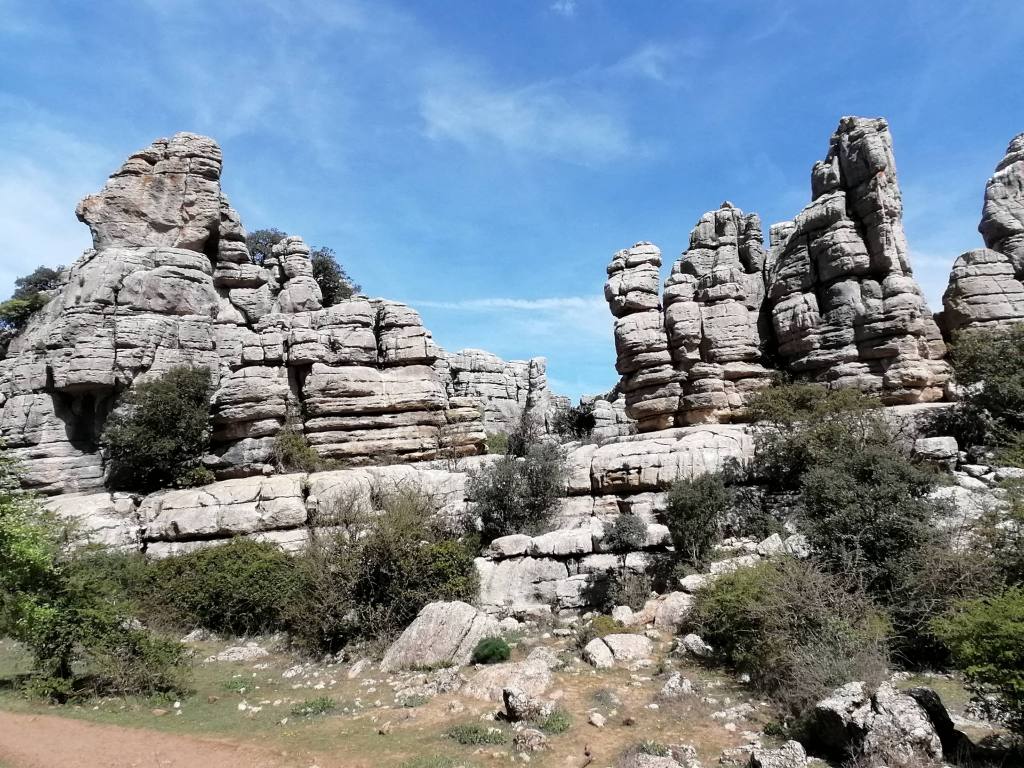
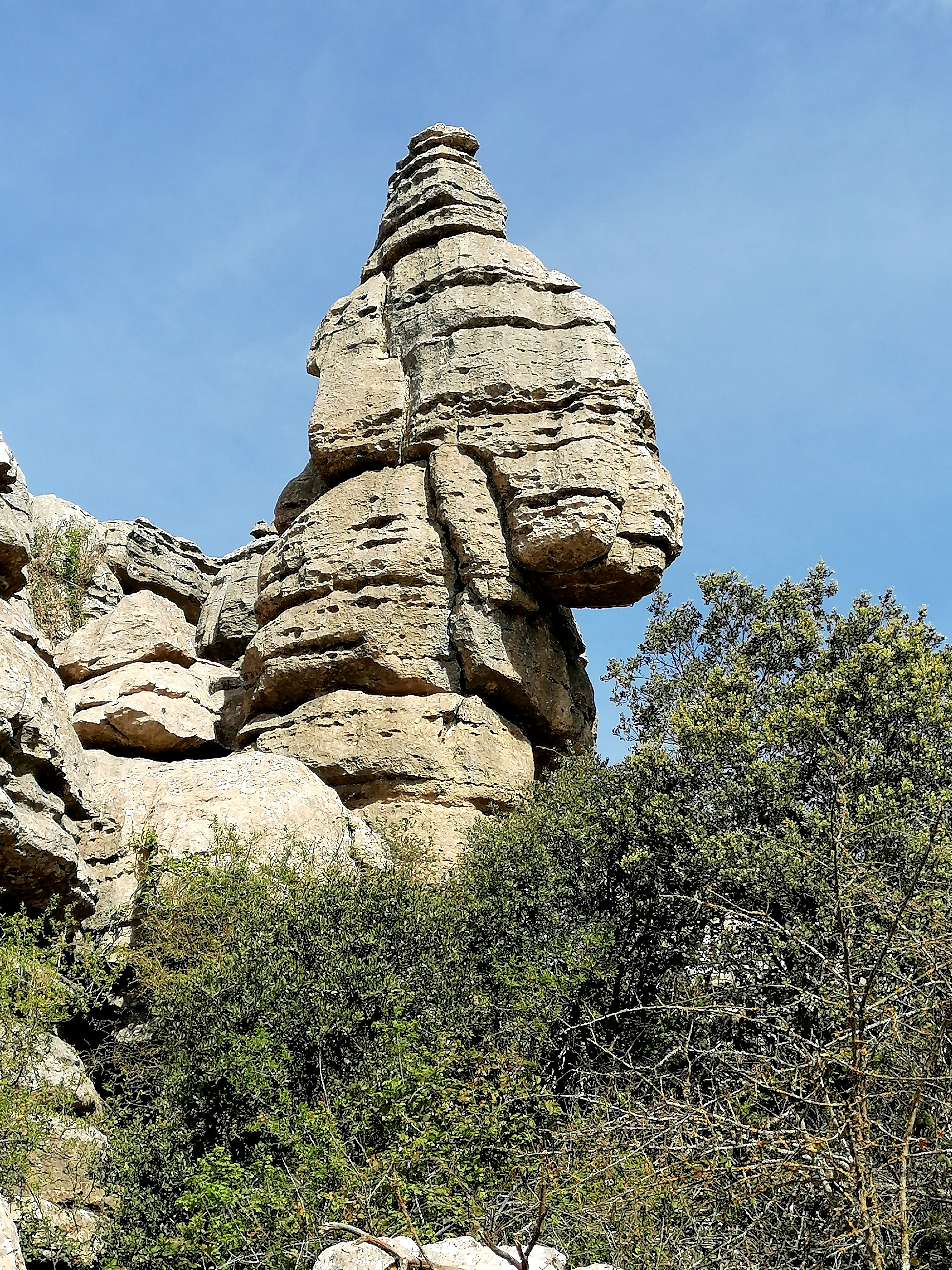
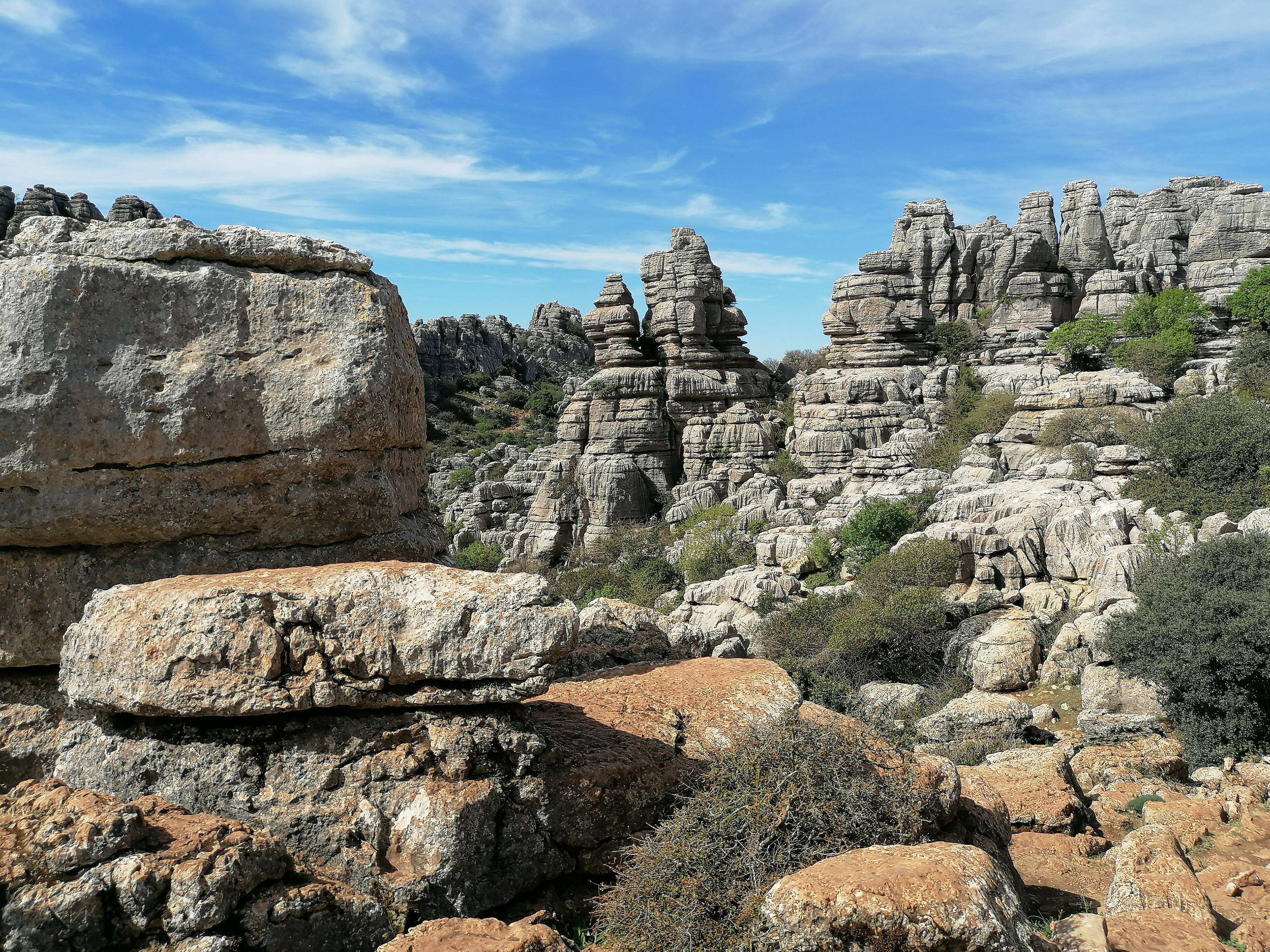
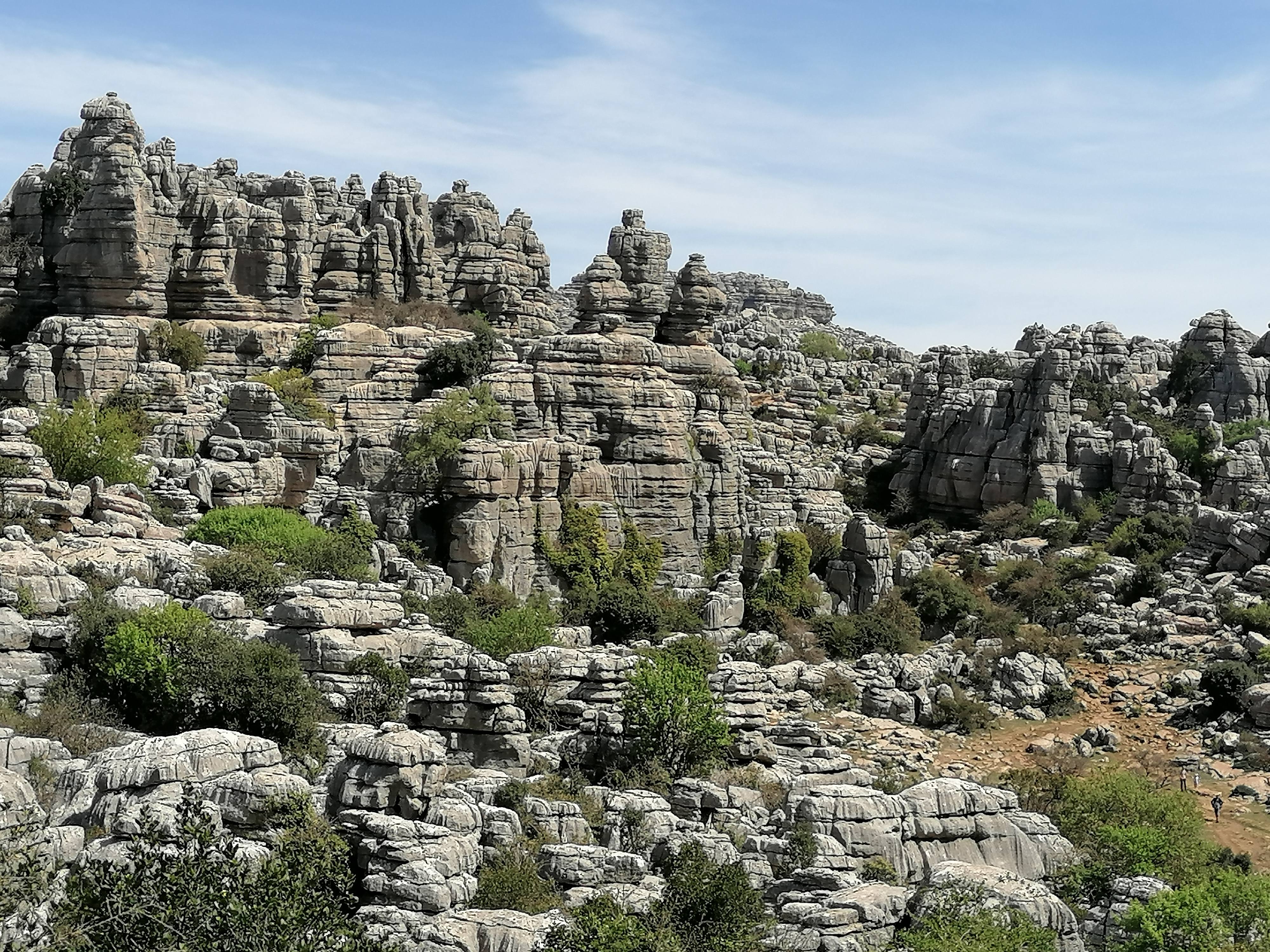
El Torcal de Antequera is a natural reserve in the mountain range located south of the city of Antequera, in the province of Málaga.  Its unusual landforms and impressive karst landscapes have seen it listed on the Unesco World Heritage Sites.

Situated at an altitude of 1100-1300m, it is not accesssible by public transport but there are tours organized from Antequera, about 10km away. There is a visitors’ centre, a carpark, restaurant, small museum and three trails, two of which are loops. The scenery is impressive and beautiful.

El Torcal de Antequera est une rĂ©serve naturelle dans la chaĂ®ne de montagnes au sud d’Antequera, dans la province de Málaga. Ses formes inhabituelles et son paysage karstique lui ont valu d’ĂŞtre inscrite au patrimoine mondial de l’Unesco.

SituĂ©e Ă  des altitudes entre 1100 et 1300 m, cette rĂ©serve n’est pas accessible en transports publics mais des tours sont organisĂ©s au dĂ©part d’Antequera. Il y a un centre d’informations pour les visiteurs, un parking, restaurant, petitmusĂ©e et trois sentiers dont deux forment une boucle.  Le paysage est très beau et particulier.

Christmas lights in Sevilla

We are spending one week in Sevilla, enjoying the mild temperatures (13-23°), the joyous atmosphere, the little bars, tapas and the beauty of the city.

Days are much longer this far west and south and it is not fully night until about 18h40. The lights are quite impressive here, each neighbourhood has its own decorations and the main shopping streets of the centre also have their own lights, no dimming either. A nice, warm winter break.

Lumières de Noël à Séville

Nous passons une semaine Ă  SĂ©ville profitant des tempĂ©ratures douces (13 Ă  23°), de l’atmosphère joyeuse, des petits bars, des tapas et de la beautĂ© de la ville.

La nuit arrive vers les 18h40, car la ville est situĂ©e bien Ă  l’ouest et au sud. Les lumières sont impressionnantes et chaque quartier a ses propres dĂ©corations. Les ruelles du centre sont aussi diffĂ©rentes et les lumières ne sont pas attĂ©nuĂ©es. Une belle pause hivernale.

Peñiscola

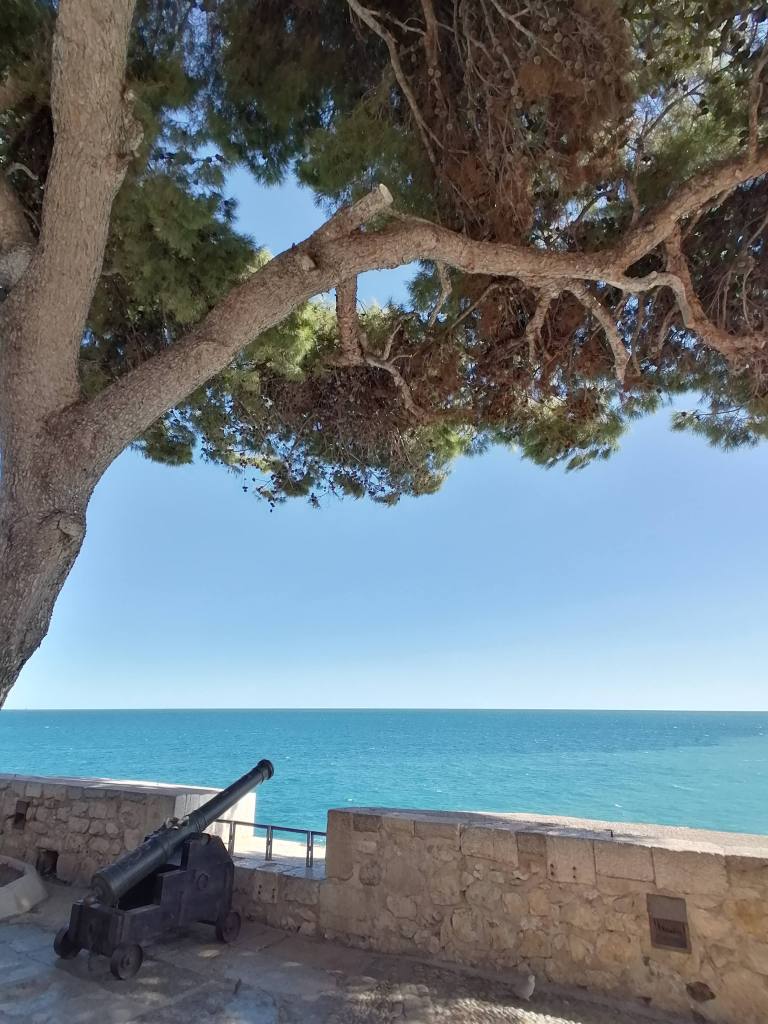
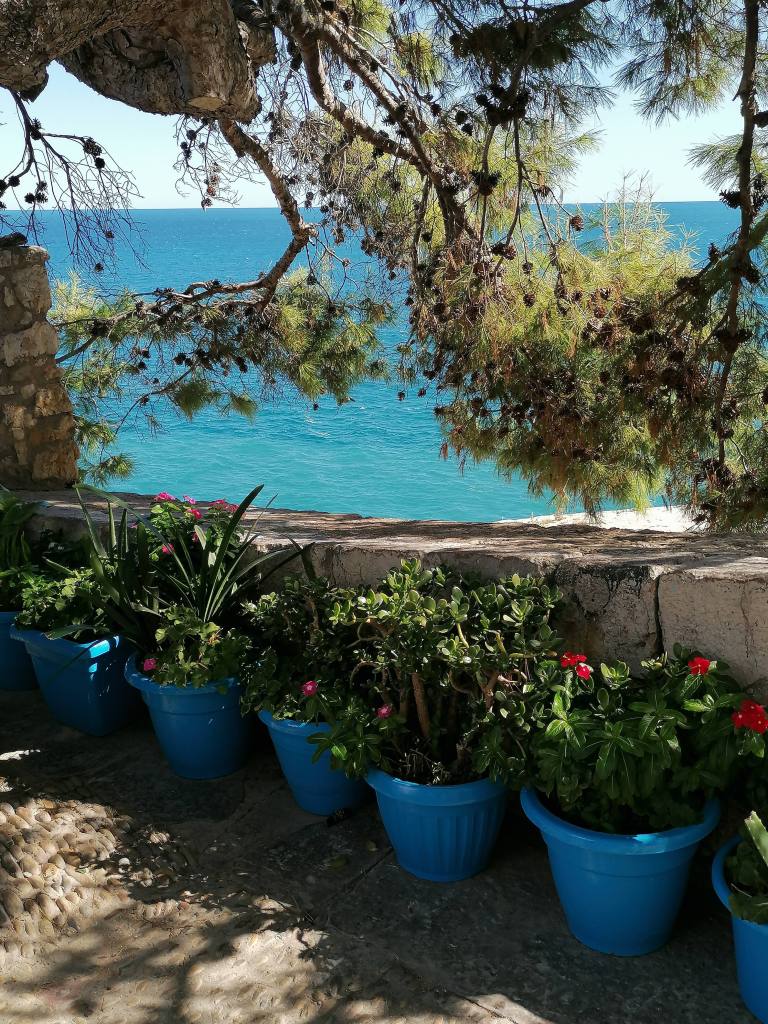
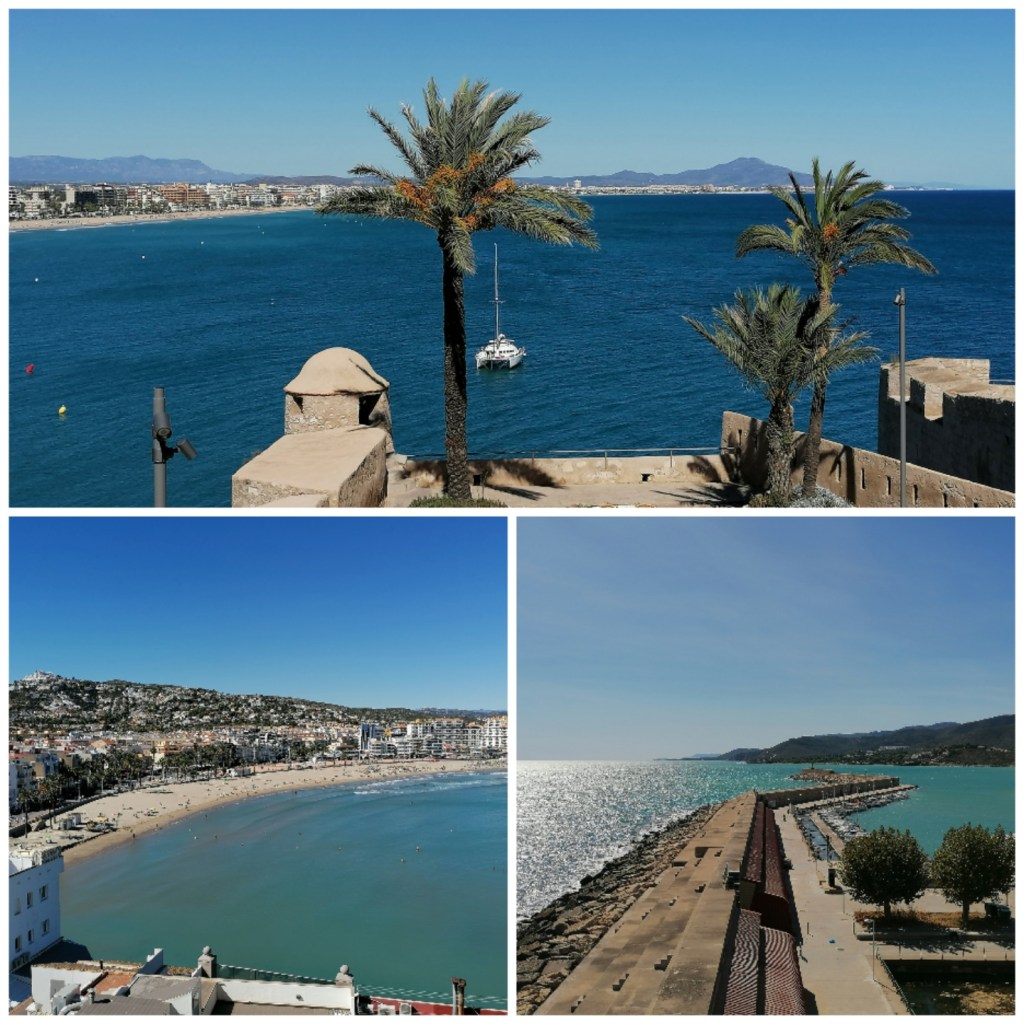
We stopped for a couple of days in Peñiscola on our way back up the coast and enjoyed our time there.

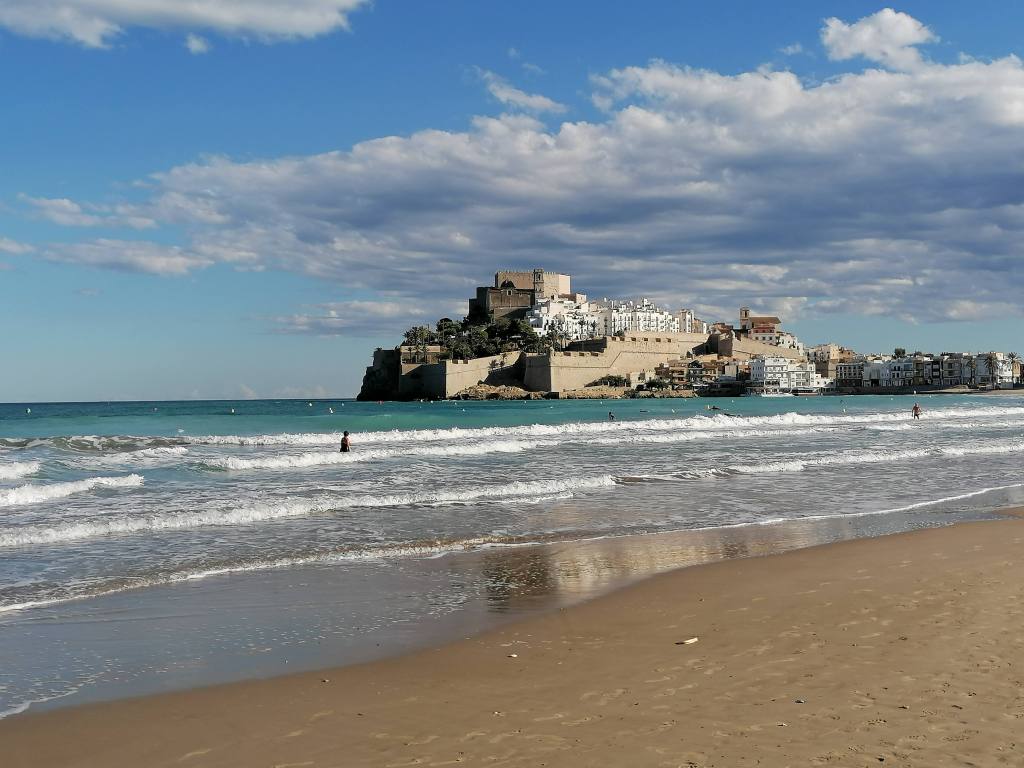
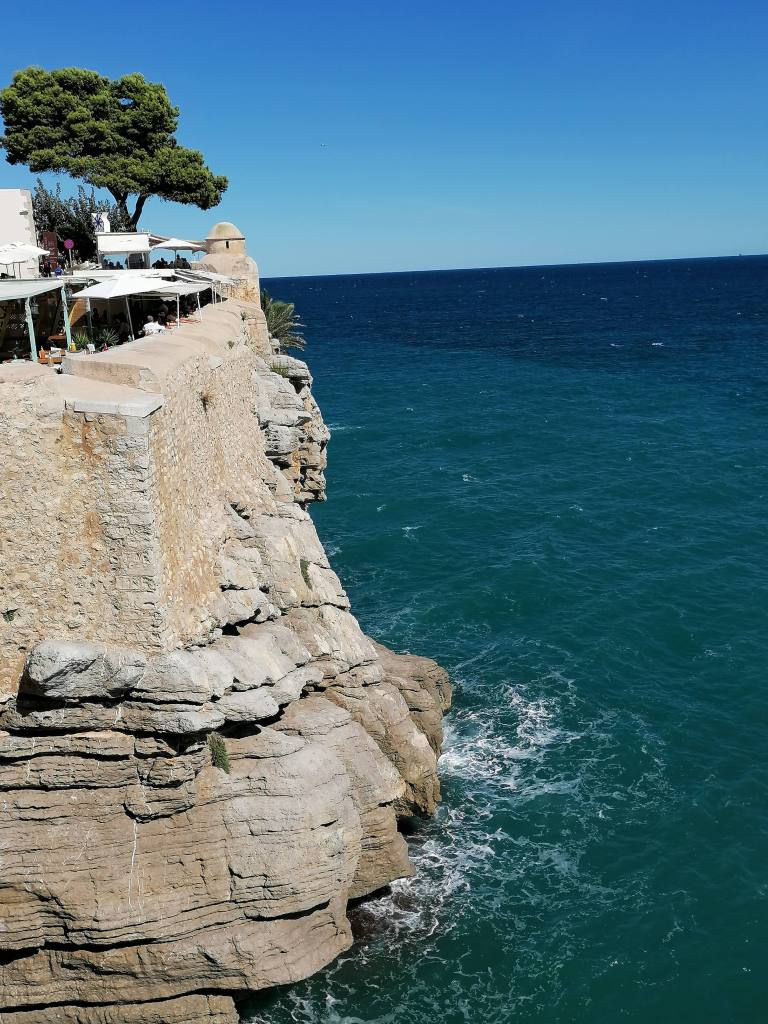
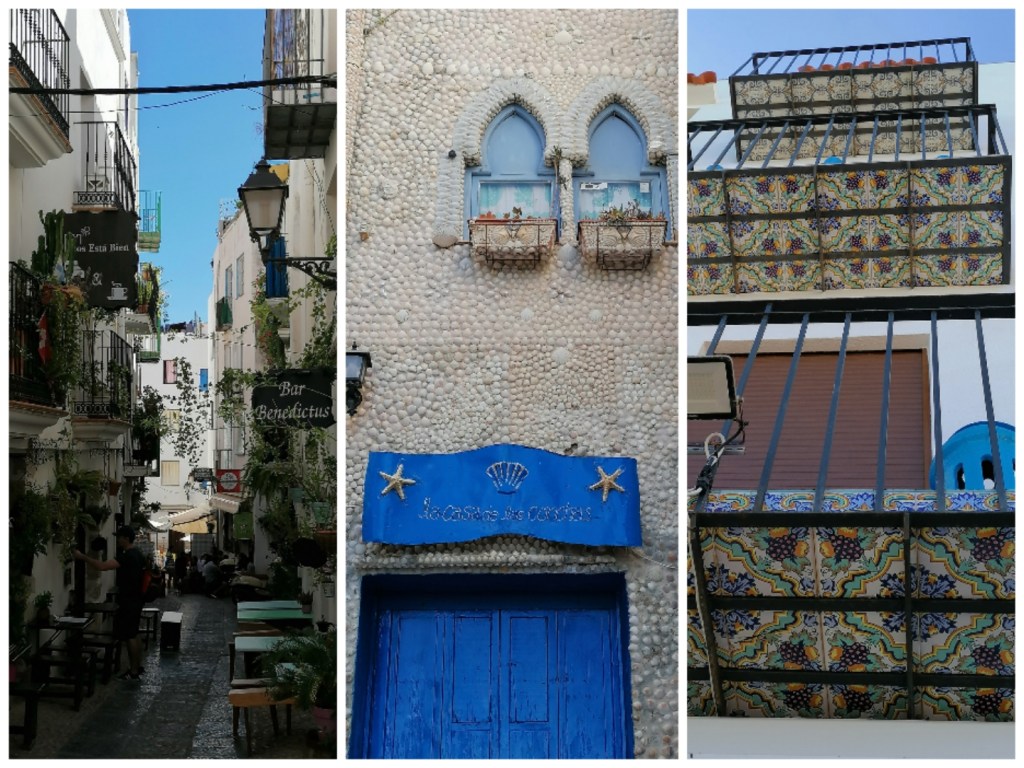
The old town is well preserved and has been the backdrop of many movies and, more recently, has appeared in season 6 of Game of Thrones.  The castle was built by the Templars on the remains of an Arabic fortress. It was used by three popes and Peñiscola became the third papal seat, together with Rome and Avignon.

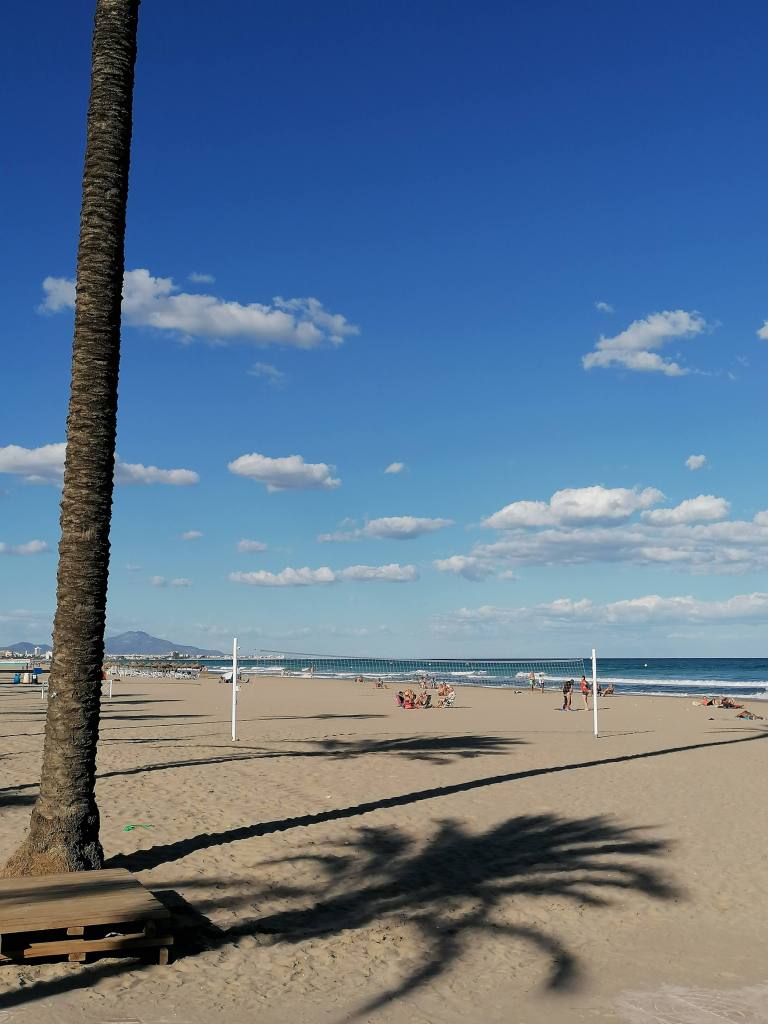
The beach stretches a long way across and the bay is lined with hotels but, at this season, the tourists were mostly local. The sea was still warm and we enjoyed going for swims, followed by long walks on the beach.

We stayed in a small pension in town, that happened to have one of the two top-rated restaurants, so we thought it was the place to taste a well-prepared paella. Also, while we ate our fish the first evening, the restaurant was filled with Spaniards eating paella or fiideuĂ , a good sign.

Nous avons passé deux nuits à Peñiscola et nous y sommes beaucoup plu.

La vieille ville est bien prĂ©servĂ©e et a servi de dĂ©cor Ă  plusieurs films et, plus rĂ©cemment, est apparue dans la sixième saison de Game of thrones. Le château a Ă©tĂ© construit par les Templiers sur les ruines d’une forteresse arabe. Elle a Ă©tĂ© le lieu de rĂ©sidence de trois papes, une Ă©poque oĂą Peñiscola devint le troisième siĂŞge papal avec Avignon et Rome.

La plage s’Ă©tend sur des kilomètres et la baie est bordĂ©e d’hĂ´tels mais, Ă  cette saison, le tourisme Ă©tait surtout local. La tempĂ©rature de l’eau Ă©tait encore agrĂ©able et nous avons pu profiter de baignades suivies de longues balades sur la plage.

Nous sommes restĂ©s dans une petite pension qui tenait l’un des deux meilleurs restaurants de la ville, l’endroit parfait pour dĂ©guster une paella prĂ©parĂ©e dans meilleures conditions. Le premier soir, alors que nous avions pris du poisson, le restaurant Ă©taient plein d’Espagnols venus se rĂ©galer de paella et fideuĂ , un bon signe.

A short stay in Valencia

We were not able to book more than two nights in Valencia, so we pretty much only had one full day in the city.

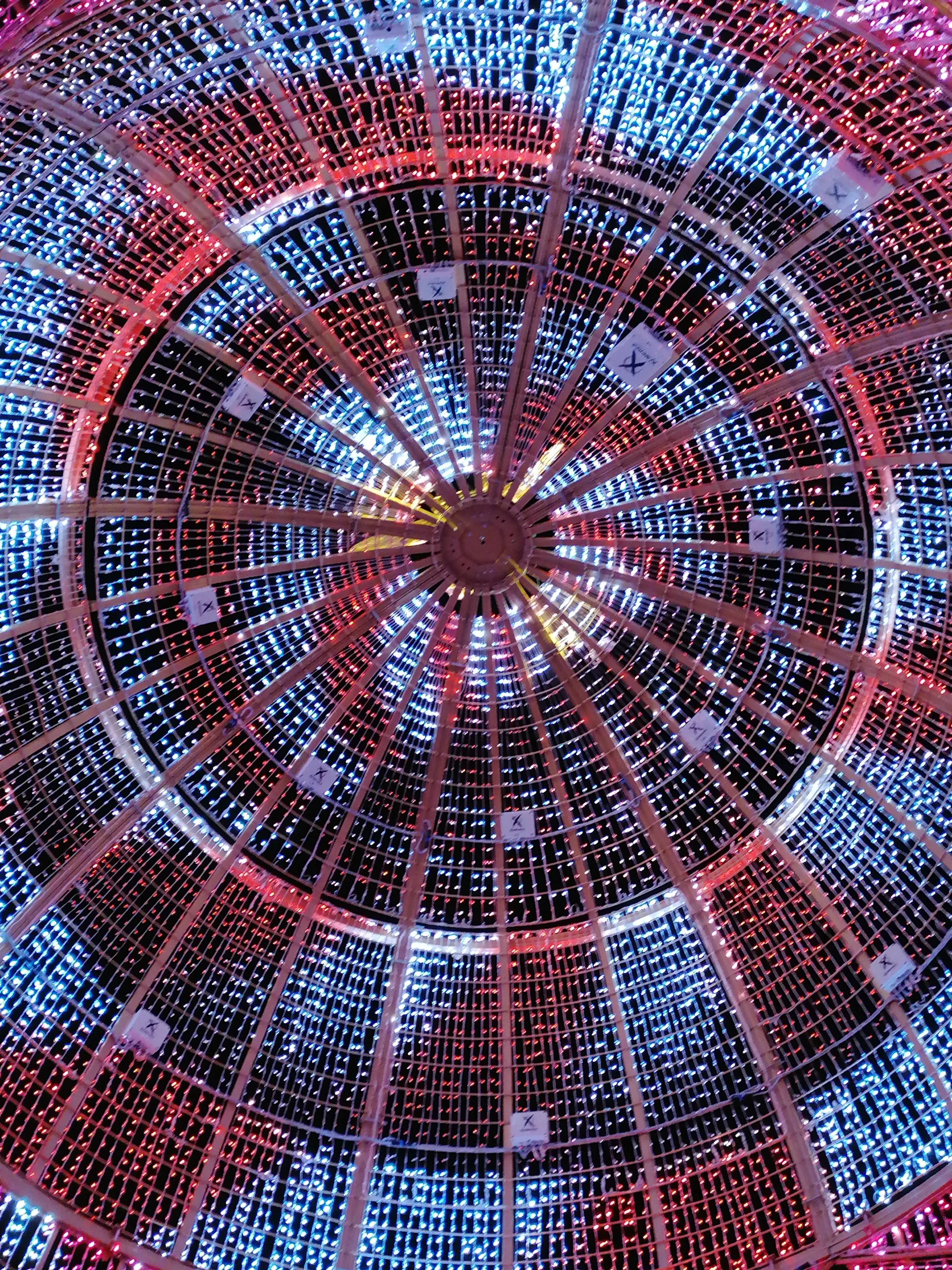
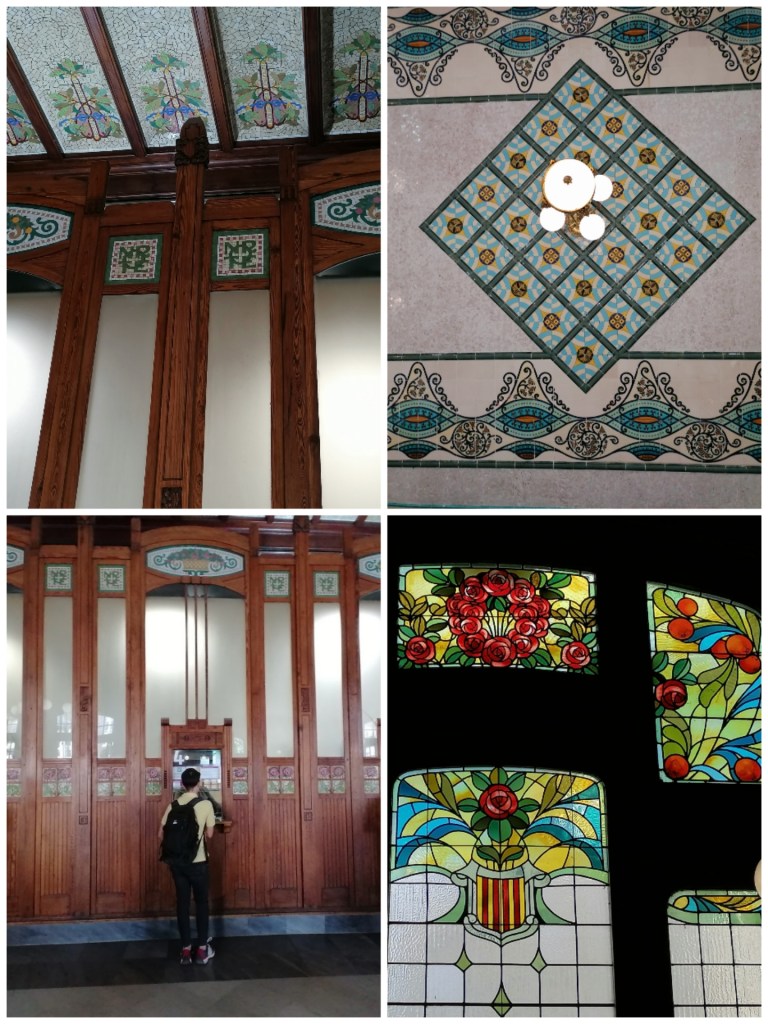
Still, we had time to stroll, visiting the World Heritage-listed old silk exchange and the central food market, which is still a fully functional and working market. We just took the one photo of the ceiling, so as not to disturb the locals going about their shopping. It almost felt like being in a cathedral dedicated to food, which was all fresh and appetizing. A bar on the outside had an interesting offer : buy your meat or fish from the market and they will cook it  for you (for a few euros), according to your preferences. We saw 5 blokes sharing a couple of big T-bone steaks, accompanied by vegetables, and washed down with a couple of bottles of red wine – and that was at 11 am.

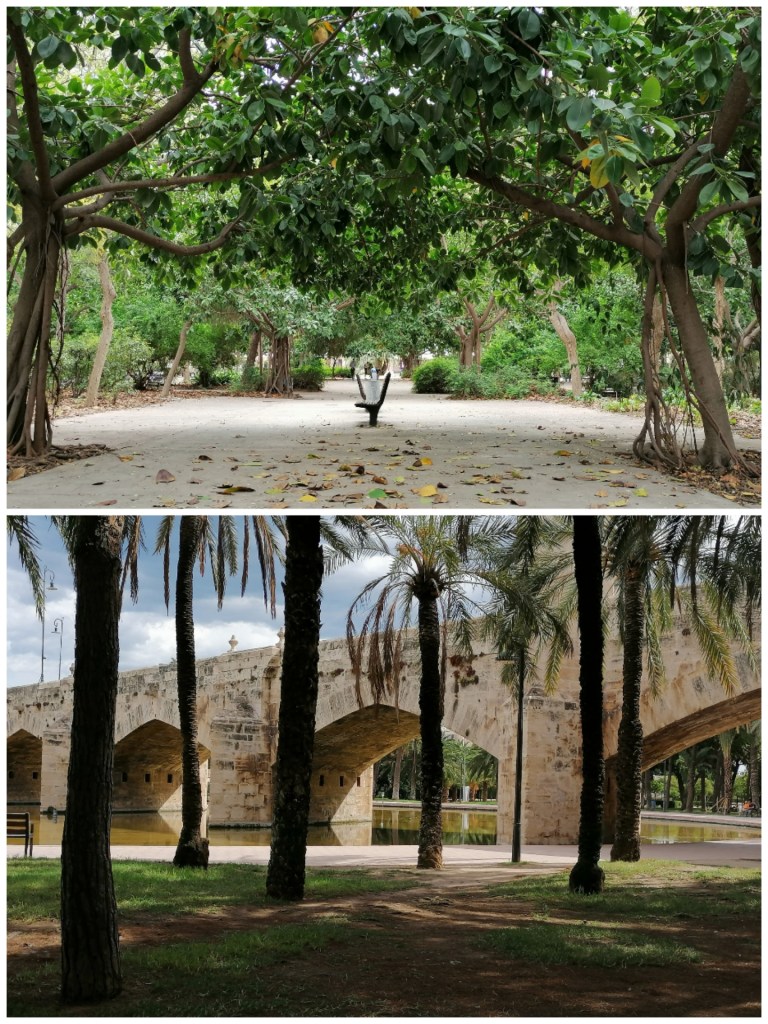
We also walked through a part of Turia Park (a 9-10 km long stretch of green going through the city where a river used to run – and sometimes come out of its bed).

We went to the gorgeous North Train Station to check the information that most trains were booked out. It was confirmed, so we decided to stick to regional trains and head back up the coast, going short distances.

Un court séjour à Valence

Nous n’avons pas pu rĂ©server plus de deux nuits Ă  Valence et notre sĂ©jour s’y est rĂ©duit Ă  un peu plus d’une journĂ©e complète.

Nous en avons profitĂ© pour nous balader, visiter la bourse de la soie (inscrite au patrimoine mondial de l’Unesco) et le marchĂ© central, qui est encore fonctionnel et axĂ© sur la population locale. C’est pour cette raison que nous n’avons pris qu’une photo du plafond, afin de ne pas dĂ©ranger les acheteurs et marchands. On se serait cru dans une cathĂ©drale dĂ©diĂ©e Ă  la nourriture, fraĂ®che et appĂ©tissante. Un bar Ă  l’extĂ©rieur du bâtiment proposait de cuisiner, pour quelques euros, les produits achetĂ©s (viande ou poisson) au marchĂ© (Ă  la plancha, rĂ©chauffĂ©s, Ă  la vapeur).  Nous avons vu 5 hommes se partager deux cĂ´tes de boeuf, accompagnĂ©s de lĂ©gumes et de deux bouteilles de vin rouge – Ă  11 heures.

Nous nous sommes aussi promenés dans une partie du parc Turia, un poumon vert qui traverse la ville sur une dizaine de kilomètres. La rivière Turia y coulait encore il y a quelques décennies et y sortait parfois de son lit. Elle a été redirigée et ce parc est rapidement devenu très populaire.

Finalement, nous nous sommes rendus dans la magnifique Gare du nord pour vérifier que tous les trains vers les villes étaient bien complets. Ceci nous a été confirmé et nous avons alors décidé de prendre des trains régionaux pour remonter la côte.

Alberobello and Locorotondo

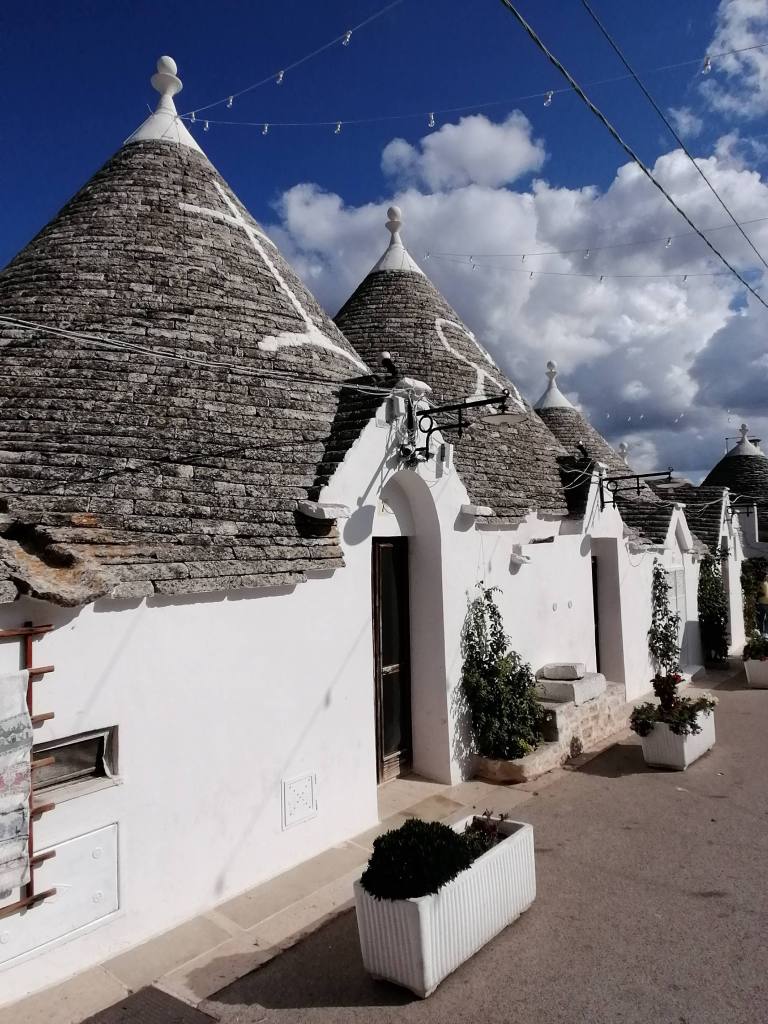
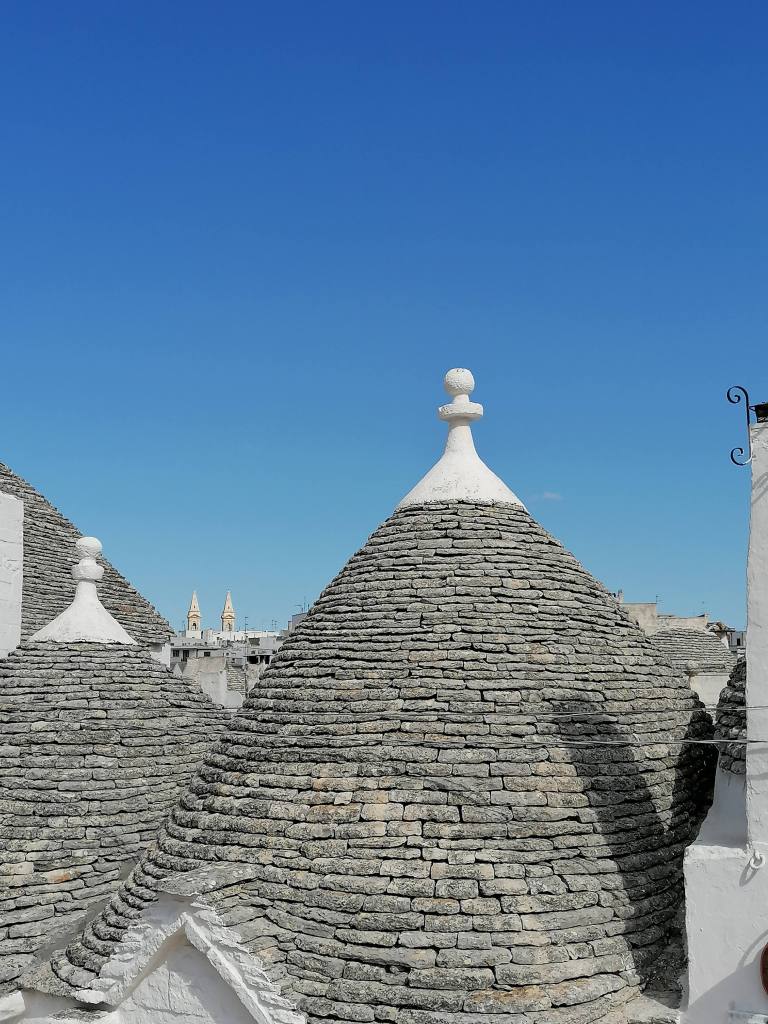
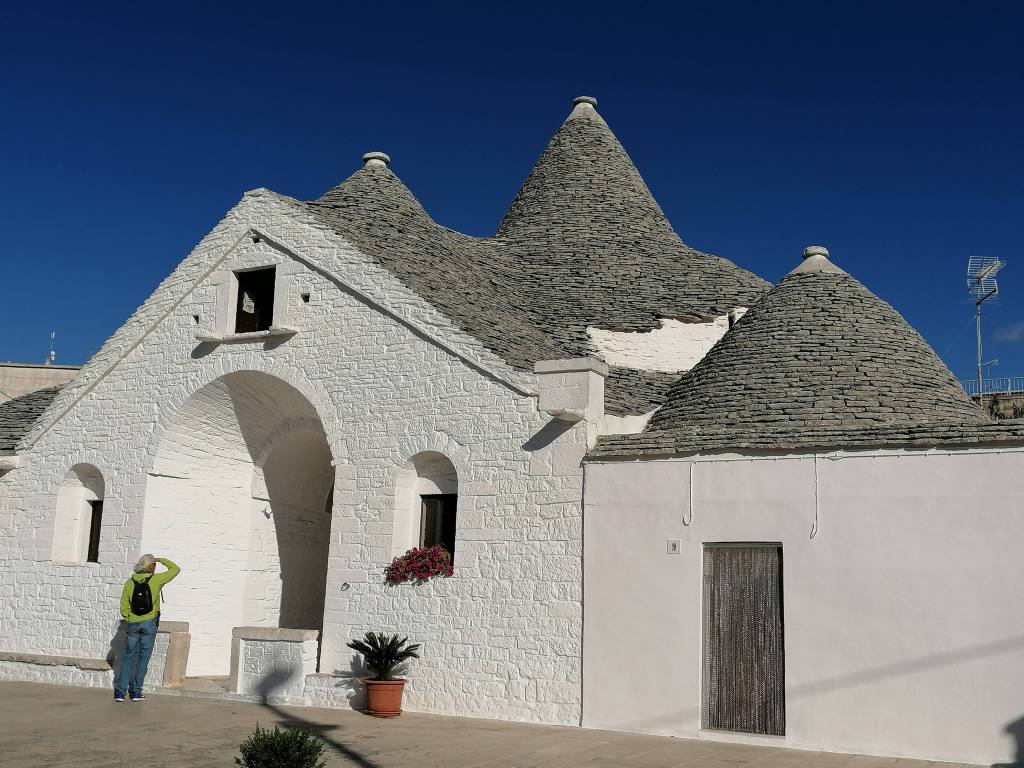
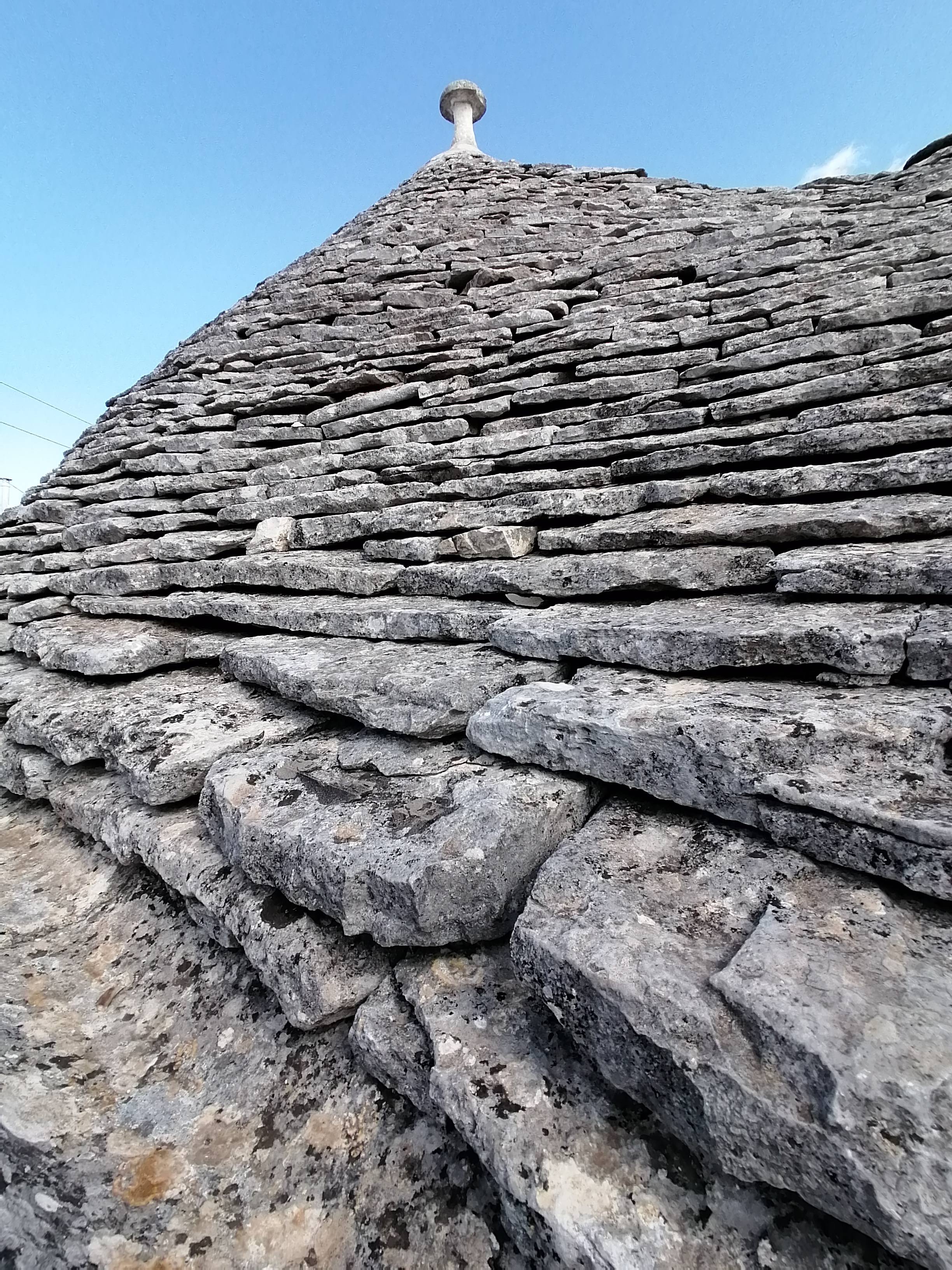
Alberobello is world-famous for its trulli and the town has been listed on the Unesco World Heritage.  Trulli can be found everywhere dotted about in the countryside, and in towns, of the Valle d’Itria.  They come in all kinds of sizes, uses and states of renovation or disrepair.

To learn more about the history and the use of trulli, the Unesco website (https://whc.unesco.org/en/list/787) gives a lot of information.

We were there around 9 am and it was not crowded. Tour buses started arriving around 10:30. We were surprised to see that a large number of the trulli had been turned into tourist shops in the area of the largest concentration of them. Perhaps naively, we had thought that the status of heritage list would prevent shops being established right there.  In other parts of town, however, trulli are inhabited.  Still, we are glad to have visited the town, they truly (:)) ) are amazing constructions.

Locorotondo is a much smaller, whitewashed  town perched on a hill and  pleasant.

Alberobello est connue dans le monde entier pour ses trulli et la ville est inscrite au patrimoine mondial de l’humanitĂ© de l’Unesco.  On peut voir les trulli dans toute la vallĂ©e d’Itria, dans les campagnes comme dans les petites villes.  Elles sont de formes diffĂ©rentes, beaucoup sont transformĂ©es en maisons de vacances ou hĂ´tels et elles vont d’entièrement rĂ©novĂ©es Ă  totalement en ruines.

Pour  en savoir plus sur leurs histoire et usages, le site de l’Unesco (https://whc.unesco.org/fr/list/787) est instructif.

Nous sommes arrivĂ©s Ă  Alberobello avant 9h du matin et avons pu nous promener dans de bonnes conditions. C’est vers 10h30 que des bus ont dĂ©versĂ© de nombreux visiteurs.  Nous avons Ă©tĂ© surpris de voir que beaucoup de trulli dans le quartier Ă  la plus grande concentration Ă©taient des magasins pour touristes. Nous avions, naĂŻvement sans doute, pensĂ© que l’inscription Ă  l’Unesco empĂŞcherait l’Ă©tablissement de commerces Ă  cet endroit particulier.  Dans le reste de la ville, des trulli sont Ă©parpillĂ©s et habitĂ©s.
Nous sommes contents d’avoir visitĂ© la ville car ces constructions sont incroyables.

Locorotondo est une plus petite ville, aux maisons blanches et perchĂ©e sur une colline et il est plaisant de s’y balader.


A couple of days in the Ruhr

We spent a few days in the Ruhr visiting friends, on our way to Rotterdam.

Ina and Jo took us to MĂĽnster, on walks up the coal waste “mountains”, which have been turned into recreation area that offer views over the Ruhr and the lock of Henrichenburg.

This construction has been transformed into a museum, describing the unusual technique applied here. Instead of the lock filling entirely with water, the boat slides onto a platform with little water and is lowered or raised to the required level.

This technique costs three times as much and is more complex to build as a standard lock but is valuable in the long run, as the loading of boats is twice as fast and uses about 150 times less water.

It was built to enable waterway traffic to negotiate a 14-metre-high section of the canal, and was in operation for over 60 years.

Quelques jours dans la Ruhr

En route pour Rotterdam, nous avons passé quelques jours dans la Ruhr chez nos amis Ina et Jo.

Ils nous ont emmenĂ©s Ă  MĂĽnster, en balade sur l’un des nombreux terrils de la rĂ©gion, transformĂ©s en lieux de promenade et donnant  un aperçu de la rĂ©gion et de son histoire et l’Ă©cluse d’Henrichenburg.

Celle-ci a Ă©tĂ© transformĂ©e en musĂ©e et dĂ©montre la technique inhabituelle appliquĂ©e ici. En effet, au lieu de remplir l’Ă©cluse, le bateau glisse sur une plateforme avec très peu d’eau et est montĂ© ou abaissĂ© sur ce monte-charge.

Cette technique coĂ»te trois fois plus cher et est plus complexe Ă  construire mais se rĂ©vèle avantageuse Ă  long  terme car les bateaux sont transfĂ©rĂ©s deux fois plus vite et on utilise 150  fois moins d”eau.

Elle a Ă©tĂ© dĂ©veloppĂ©e pour permettre au trafic fluvial de franchir ce canal d’ une hauteur de 14 mètres et a Ă©tĂ© en opĂ©ration pendant plus de 60 ans.

Sant’ Ambrogio

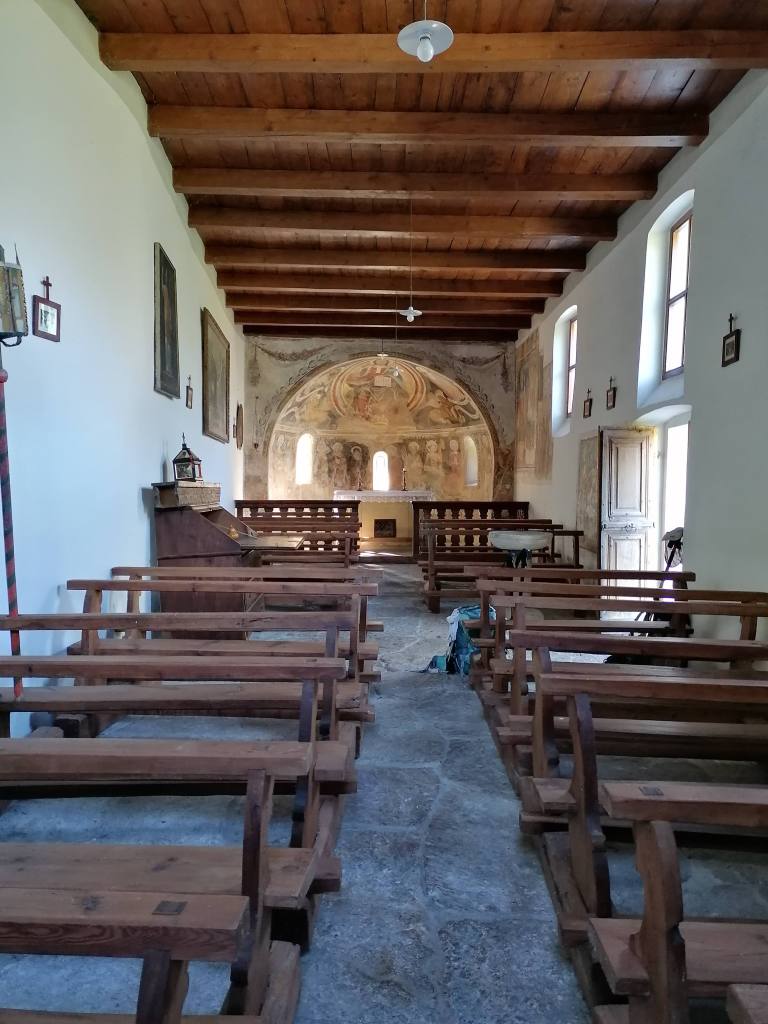
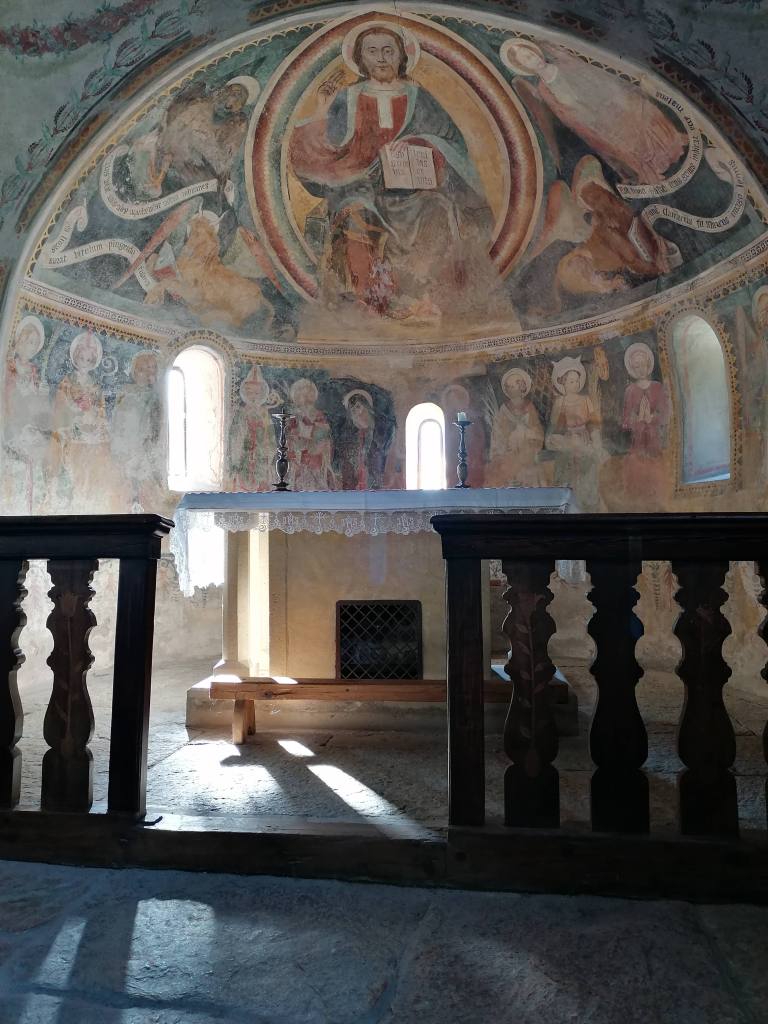
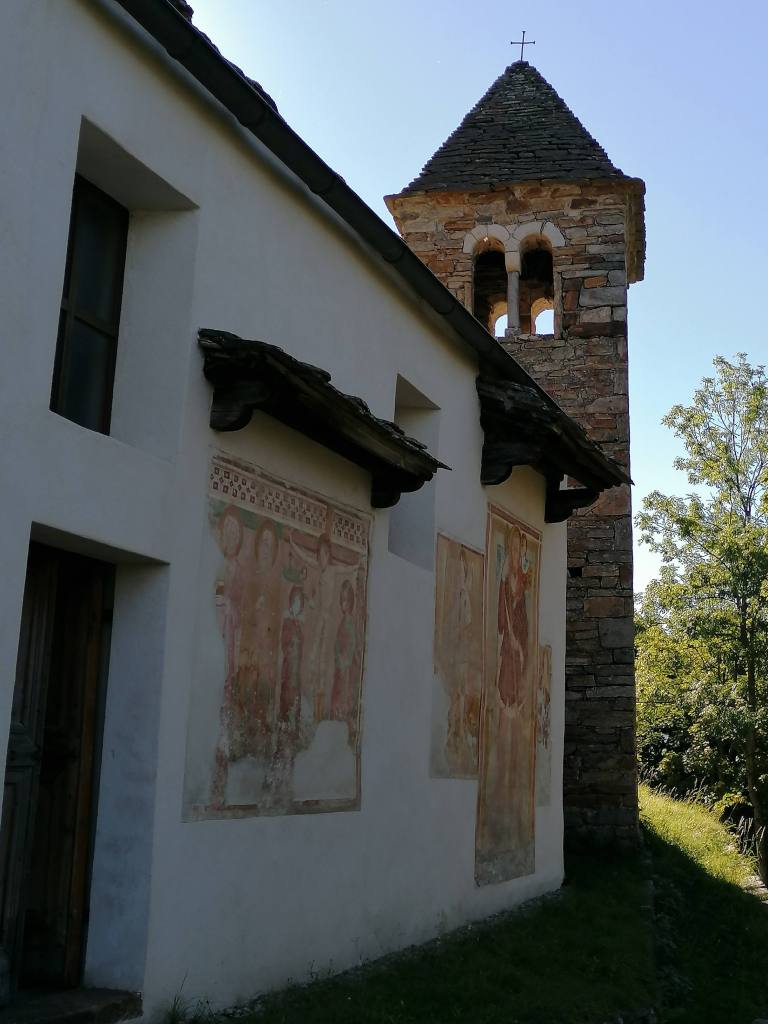
The day started well with the visit of the beautiful oratory of Sant’ Ambrogio on the outskirts of the hamlet of Cavagnago. The mountain road circles around it nowadays. The different parts of the building date back to the 13th and 15th centuries. Restorations took place in 1931 and 2003-04.

La journĂ©e a bien commencĂ© avec la visite de l’oratoire Sant’Ambrogio un peu avant d’arriver au hameau de Cavagnago. La route de montagne en lacets encercle cette petite Ă©glise. Les diffĂ©rentes parties datent des XIIIe et XVe siècles. Des restaurations ont eu lieu en 1931 et 2003/04.

_________

The end of this stage is supposed to be at Biasca but after the steep drop to Pollegio, we found ourselves in a very flat and busy area. The next day from Biasca to Bellinzona did not appeal to us as it is completely flat and is too close to the freeway for our taste.

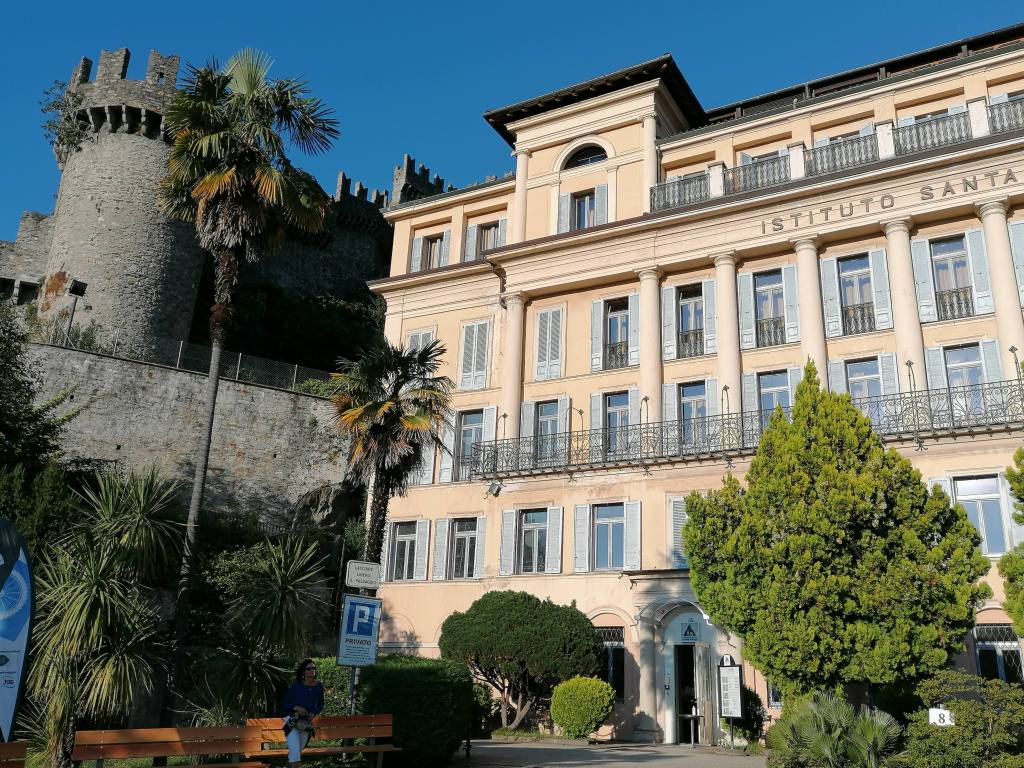
So, we took the train straight to Bellinzona and stayed at the youth hostel in a magnificent old building at the foot of Castello Montebello, one of the impressive fortress which is classed as a World Heritage site. The building started as the post office before becoming a private school and boarding school for girls until the early 1990s. These days primary and secondary school pupils enter and leave the building alongside the guests.

La fin de cette Ă©tape nous amène Ă  Biasca mais après la descente raide vers Pollegio, Ă  quelques kilomètres, nous nous sommes retrouvĂ©s en terrain plat et densifiĂ©. Le jour suivant, de Biasca Ă  Bellinzone ne nous attirait pas car il suit le cours de la rivière Ticino et reste proche de l’autoroute.

Nous avons donc pris le bus puis le train pour Bellinzone. L’auberge de jeunesse se trouve dans un bel Ă©difice au pied du château Montebello, l’un des trois qui forment l’impressionnante forteresse inscrite au Patrimoine mondial.
Ce bâtiment a d’abord servi de poste avant de devenir une Ă©cole et internat pour filles jusqu’au dĂ©but des annĂ©es 90. Des classes primaires et secondaires partagent maintenant les lieux avec les hĂ´tes de l’auberge.

LĂĽbeck

We took advantage of a clear day to go on a day-trip to LĂĽbeck and visit this old Hanseatic League city, which is listed on the UNESCO World Heritage list.

We strolled through its lovely medieval streets and its Christmas market and tasted the specialty of the town, marzipan. Writers Heinrich and Thomas Mann and Willy Brandt, former mayor of West Berlin and chancellor of the Federal Republic of Germany were natives of LĂĽbeck. GĂĽnter Grass lived a few kilometres out of town and kept an office/secretariat in the old town which can be visited.


Nous avons profitĂ© d’une journĂ©e ensoleillĂ©e pour visiter la ville hansĂ©atique de LĂĽbeck, inscrite au patrimoine mondial de l’humanitĂ©.

Nous avons déambulé dans ses ruelles médiévales, visité son marché de Noël et goûté la spécialité de la ville, le massepain.
Les Ă©crivains Heinrich et Thomas Mann ainsi que l’ancien maire de Berlin-Ouest et chancelier de la RĂ©publique fĂ©dĂ©rale d’Allemagne Willy Brandt Ă©taient natifs de LĂĽbeck. GĂĽnter Grass a vĂ©cu Ă  quelques kilomètres de la ville mais y avait son bureau qui peut ĂŞtre visitĂ©.