Berliner Höhenweg day three: Friesenberghaus to Furtschaglhaus

Doors, windows and other details, Regensburg


Ratisbonne, détails sous toutes les formes
Portes, fenêtres et autres détails, Ratisbonne
____________________________
In town, there is a Parisian-style French café, the Orphée. As I was passing by, I caught a glimpse of a poster in the corridor, on the side. This is what it says: “Orphée 40, Charles 94”
“Since the Orphée opened 40 years ago, the songs of Charles Aznavour have accompanied us in French and German. He enjoys a special veneration in this house.”

En ville, il y a un café français de style parisien, l’Orphée. Comme je passais, j’ai aperçu un poster dans le corridor, par une porte latérale. Voici ce qu’il y est écrit : “Orphée 40, Charles 94”
“Depuis l’ouverture de l’Orphée, il y a 40 ans, les chansons de Charles Aznavour nous ont accompagnés en français et en allemand. Il bénéficie ici d’une vénération particulière.”
_______________________________
If you fancy going local, be warned, the complete outfit will set you back €700-2,000 (from head to toes). There is the cheaper option of checking the second-hand shops, where you can pick up bargains at around €60-80 a piece.


Si un costume national vous tente, sachez qu’il faudra y mettre le prix, ces Trachten et autres Dirndl vous coûteront de 700 à 2’000 euros (des pieds à la tête). Heureusement, il y a de nombreux magasins d’occasion où chaque pièce coûtera (tout de même) autour des 60-80 euros.
________________________
And, finally, the cover of Der Spiegel this week : “What it means for Germany to be the enemy of Donald Trump”

Finalement, le Spiegel de la semaine : “Ce que cela signifie pour l’Allemagne d’être l’ennemi de Donald Trump”
Regensburg is a magnificent city with warm tones and a southern feel.
It was an important transition point on continental trade routes to Italy, Bohemia, Russia and Byzance.
It has been a real pleasure to stroll through its narrow streets and to see many different architectural styles form a very harmonious ensemble.


Ratisbonne est une ville magnifique aux tons chauds et à l’ambiance méditerranéenne.
Elle a été un point de passage important entre les routes commerciales continentales en direction de l’Italie, la Bohême, la Russie et Byzance.
Cela a été un vrai plaisir de déambuler dans ses ruelles et de voir des styles architecturaux différents former un tout harmonieux.
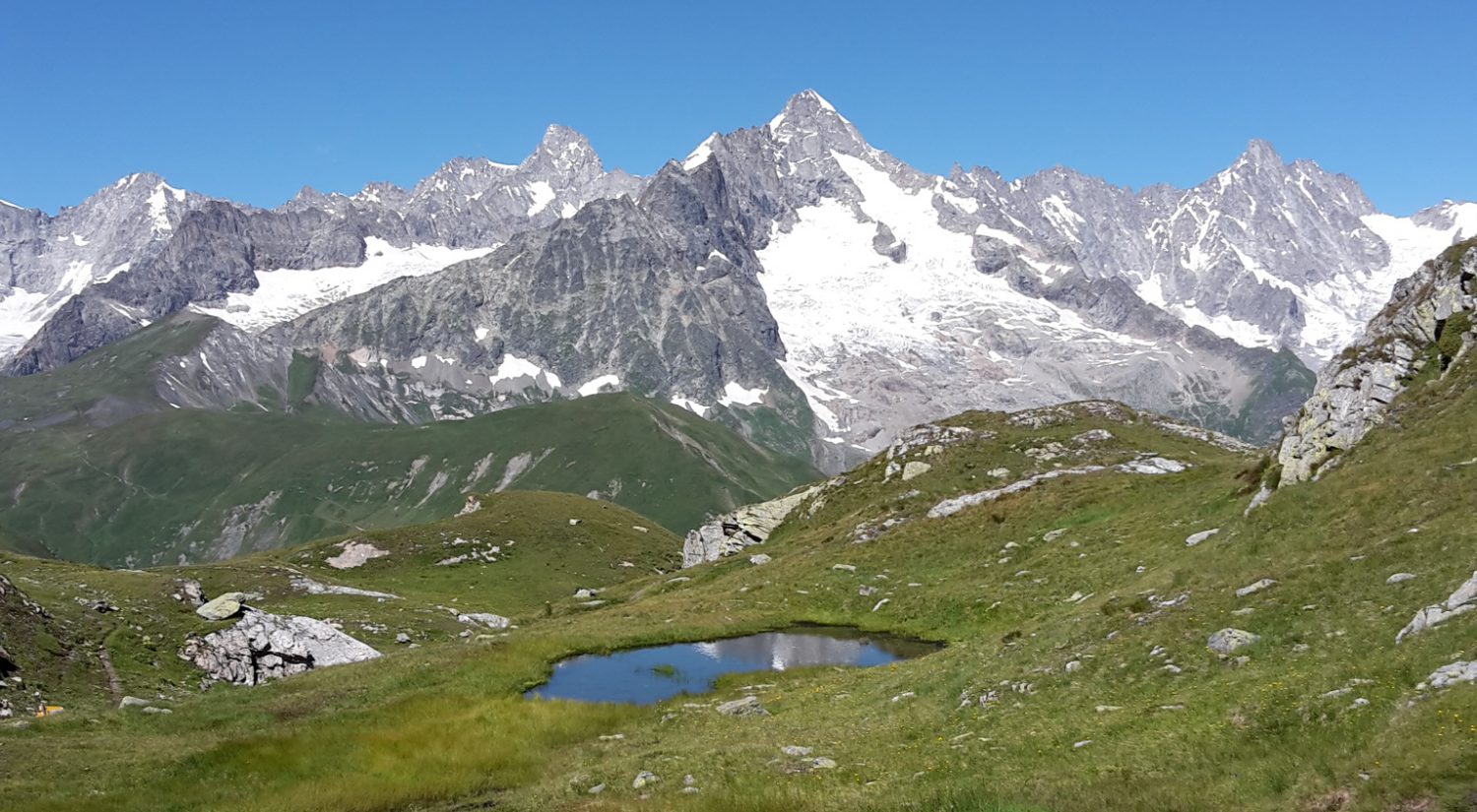
This was to be a long nine hours hike, and the forecast was for storms in the afternoon. Based on my first-day pace, I anticipated hiking ten hours. Everyone left early.
All morning I walked through cloud and did not take my camera out. The storms arrived and the rain and wind were cold. During a break in the rain I put on my warmest clothes.
I use a stop-watch to keep track of time. At seven hours hiking, expecting ten hours total, with the weather turning cold, wet and windy, I started looking for possible spots to shelter. However there are few flat spots and it is all boulders and rocks. Putting up a tent was not possible.
What a relief to see a sign indicating the hut was 30 minutes ahead. I walked it in 8 1/4 hours.
I was put in one of the “winter” shelters. These are left unlocked all winter for hikers and skiers. There I met a young man from Colorado who is studying biology and thinking of becoming a vet. Two days earlier I had been chatting with a young man from Ohio who is studying biology and thinking of becoming a vet. The contrast between the two men was stark.


On the train connecting the two paths, I chatted with a woman who spoke to me of the importance of ketones, the benefits of coconut oil and several other aspects of diet. She was trim, healthy and 80. I was surprised as I have been discovering these things over the past year; she is years ahead of me. I was pleased to able to have such a conversation in German.
Leaving Finkenberg, you pass an old wooden bridge. I also saw an old racing car someone had hauled from the Netherlands
The first day is an easy, though steep, three hours up to the Gämshütte. I had been been keeping good time on the Adlerweg, but decided to go somewhat slower pace. On the way about a dozen people all passed me in a hurry to get there.
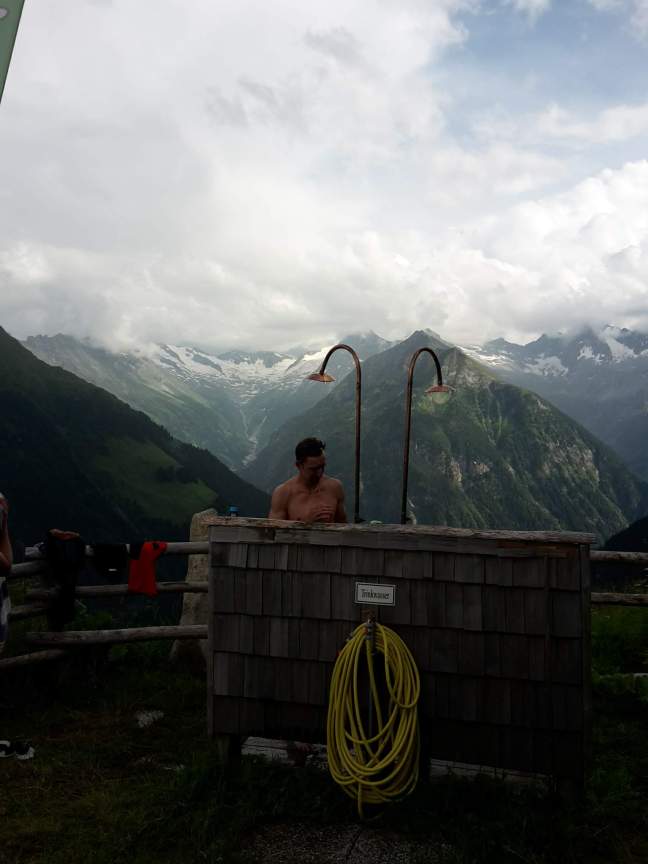
The atmosphere was friendly and welcoming, more what I had been looking for. The showers were outside with a stunning view and cold water. (thanks Saval for introducing me to Wim)
I was glad to be above the tree-line.


I cycled some more through small Bavarian towns, more fields and felt the need for a change, so I took the train to the beautiful, Unesco World Heritage-listed, town of Regensburg.
I booked two nights in a hostel, giving me time to visit and my body a rest after the (too) long rides of the previous days.
The street names are written in the Gothic letterings and I had to go through the “Joyous Turks Street” to reach my destination.


Visites de petites villes bavaroises, champs cultivés à perte de vue, j’ai eu besoin de changement et pris le train pour la belle ville de Regensburg dont la vieille ville est inscrite au patrimoine de l’humanité.
J’ai réservé deux nuits dans un hostel ce qui me donne le temps de visiter tranquillement et permet à mon corps de se reposer après les (trop) longues journées précédentes.
Les noms de rue sont écrits en lettres gothiques et j’ai dû passer par la “rue des joyeux Turcs”pour arriver à ma destination.
The small village of Zell, in Baden-Württemberg has a very similar flag to the one of Geneva
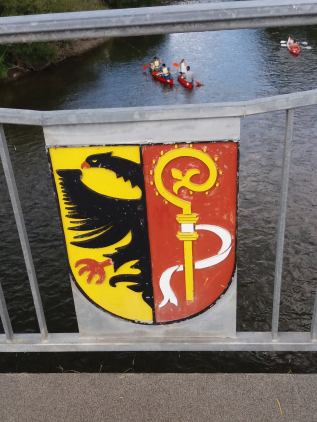

Zell, petit village du Bade-Wurtemberg a un drapeau qui rappelle celui de Genève
Most small towns I passed through offer free wifi in the centre, there are plenty of shops, bakeries, a weekly market; always a pleasant stop.


The second full day of cycling was less interesting, as it was crossing an agricultural region with field after field of wheat, corn, barley, rape, hops, many tractors (adding another layer of dust) and big farms. Only before Riedlingen was there a more natural landscape.
The camping sites towards the end of the day were unappealing so I ended up cycling more than expected and reached Ulm after a 100+km day.
Ulm is known for its cathedral spire, the tallest in the world, and being the city of birth of Albert Einstein. The town was festive and crowded as it was the last week-end of the bi-annual “International Danube Festival”.
For ten days, every two years, artists and guests from all ten countries along the Danube come together and present the diversity of cultures, music, dance, crafts, food and lifestyles along the river.
Ulm and Neu-Ulm are situated on both sides of the river, which marks the “border” between Baden-Würtemberg and Bavaria.


Champs à perte de vue
Deuxième journée moins intéressante car passée à travers de grosses cultures de blé, maïs, orge, colza, beaucoup de tracteurs (qui rajoutent une couche de poussière) et de grosses fermes. Seule une petite réserve naturelle avant à Riedlingen a offert un répit.
Les lieux de camping plus tard dans la journée étant peu attrayants, j’ai continué ma route et suis arrivée à Ulm, après 100km de route.
Ulm est connue pour la flèche de sa cathédrale, la plus haute au monde, et comme ville de naissance d’Albert Einstein. La ville était en fête et bondée car c’était le dernier week-end du “Festival international du Danube” qui a lieu tous les deux ans.
Pendant dix jours, des artistes et visiteurs des dix pays bordant le fleuve se retrouvent ici et présentent la diversité des cultures, musiques, danses, artisanats, cuisines et styles de vie des pays traversés par le Danube.
Ulm et Neu-Ulm sont situées sur les deux rives du Danube, qui marque la “frontière” entre le Bade-Wurtemberg et la Bavière.
The valley of the Upper Danube is a natural reserve and is quite pretty; a good part of the cycle was through forests or on the south (shaded) side (29°).
There were more ups and downs than I had expected and a lot of gravel roads, so the bike and I were covered in dust as we arrived in Sigmaringen, towered by the Hohenzollern castle, 70km downstream.


La vallée du Haut-Danube est classée réserve naturelle et est une jolie région; une bonne partie du parcours est en forêt ou sur la rive sud, donc à l’ombre (et par 29°, agréable).
Je ne m’étais pas attendue à autant de montées et descentes; les chemins de graviers ont fait que le vélo et moi sommes arrivés à Sigmaringen, dominée par le château des Hohenzollern, couverts de poussière après 70km de route.
This day I was planning on combining two days, but that would have made nine hours hiking, with a steep ascent in the middle. So I skipped the first day, and went to Kufstein, a pretty little village.
A short train ride took me to me to the beginning of the walk. The start was a pleasant ascent through forest where someone has installed a chair and water fountain.
Then the hike continued along the edge of cliffs over-looking the Inn valley. The highest point of the day was at Hundsalmjoch Col, 1,637 m.
At the end I realised this was not the hike I was expecting and decided to change paths to the Berliner Höhenweg the next day.
John


 J and J on the move