Fruit, vegetables, and plastic

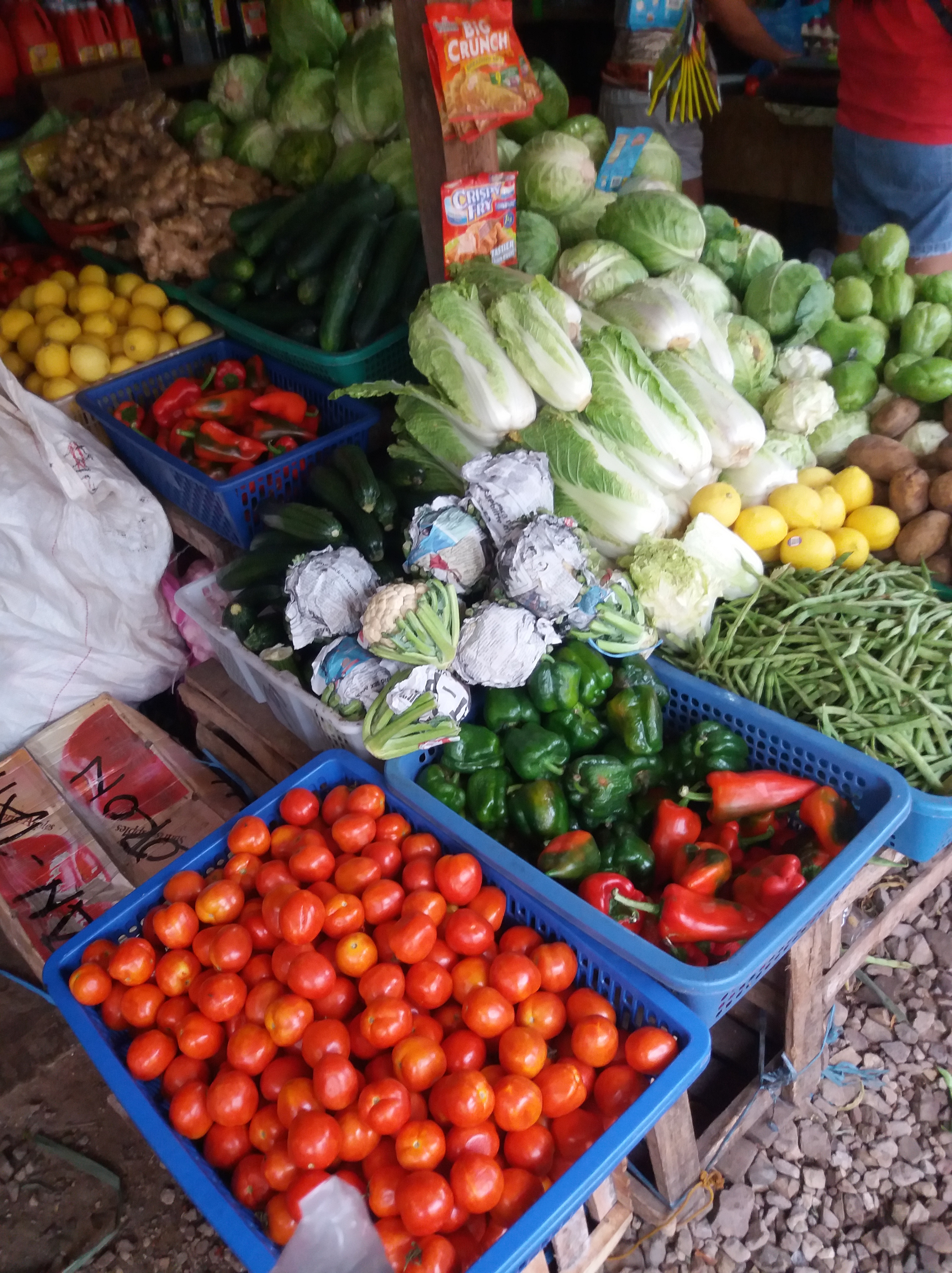
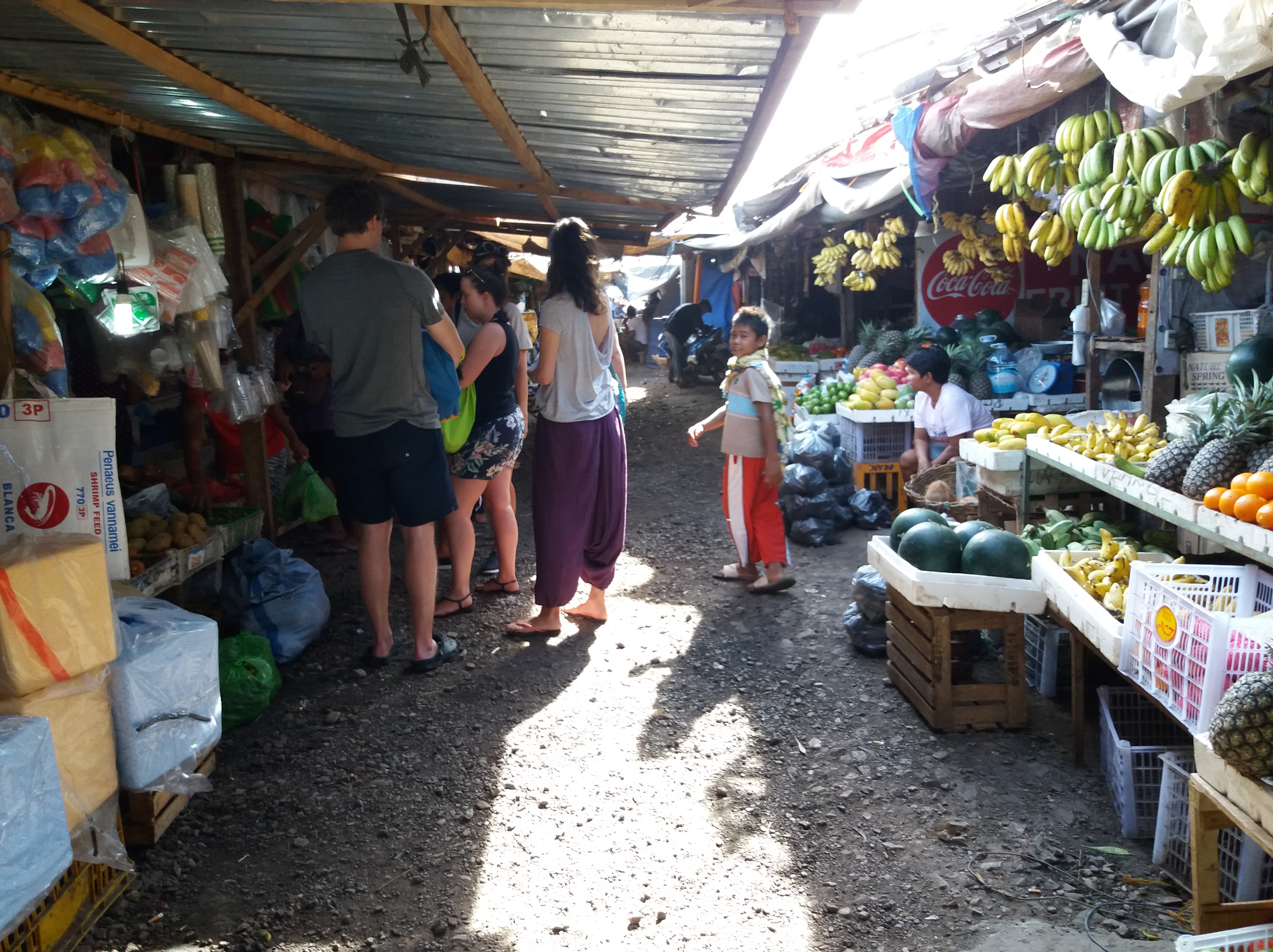
Thankfully we are in full mango season and we are eating 4-6 each every day. We carry small day packs for our shopping but plastic bags are everywhere and of poor quality; so, even when re-used, they only last a day.

We go to local markets but, while in Manila, we went to a supermarket and saw many silly use of plastic: pomelos, potatoes, carrots: fruit and vegetables that come with their own natural “wrapping” packaged in solid plastic.

Fruits, légumes et plastique

Nous sommes heureusement en pleine saison des mangues et en mangeons de 4 à 6 chacun chaque jour. Nous utilisons nos petits sacs à dos mais les sachets en plastique sont partout et de mauvaises qualité si bien que même si l’on veut les réutiliser, ils cassent au deuxième usage.


Nous nous rendons dans les marchés locaux mais à Manille, dans un supermarché, nous avons vu des usages abusifs de plastique: des fruits et légumes possédant leur “emballage” naturel (pomelos, pommes de terre, carottes) brillants sous leur habillage de plastique solide.

Roosters everywhere

We have reunited and, after a few days in Manila, used a variety of public transportation means to reach the island of Mindoro.

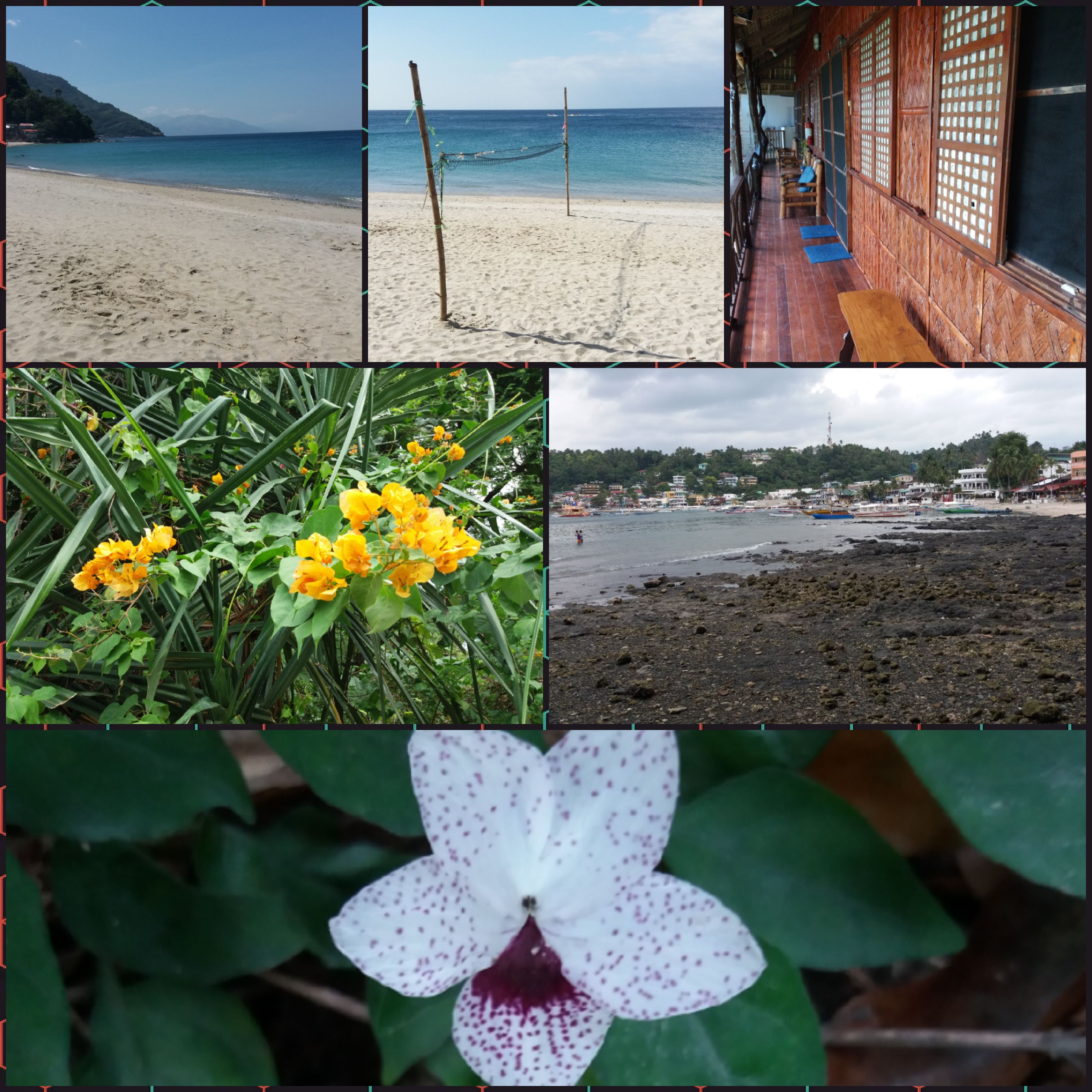
We settled in a pleasant and quiet little hotel five minutes out of the town of Puerto Galera for three nights.

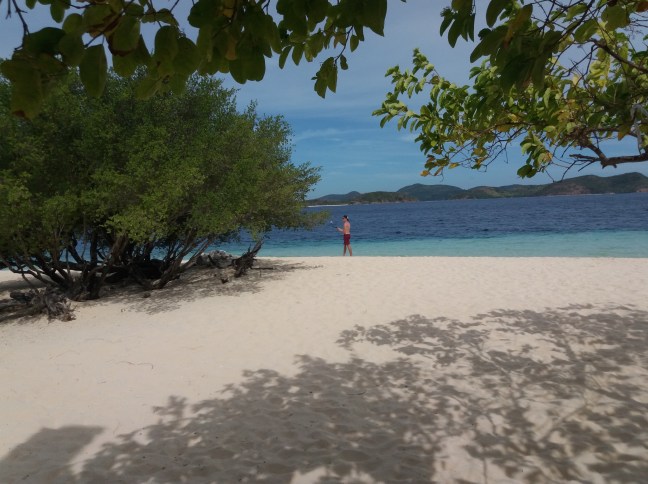
Our first trip was to the public White Beach, it was surprisingly quiet, apart from sellers of necklaces and bracelets every few minutes.

Sabang beach is an unattractive place and we can easily imagine the disappointment of people who discover it, having booked online. The only thing then is to take a boat out to diving spots, although it is also possible from other places.

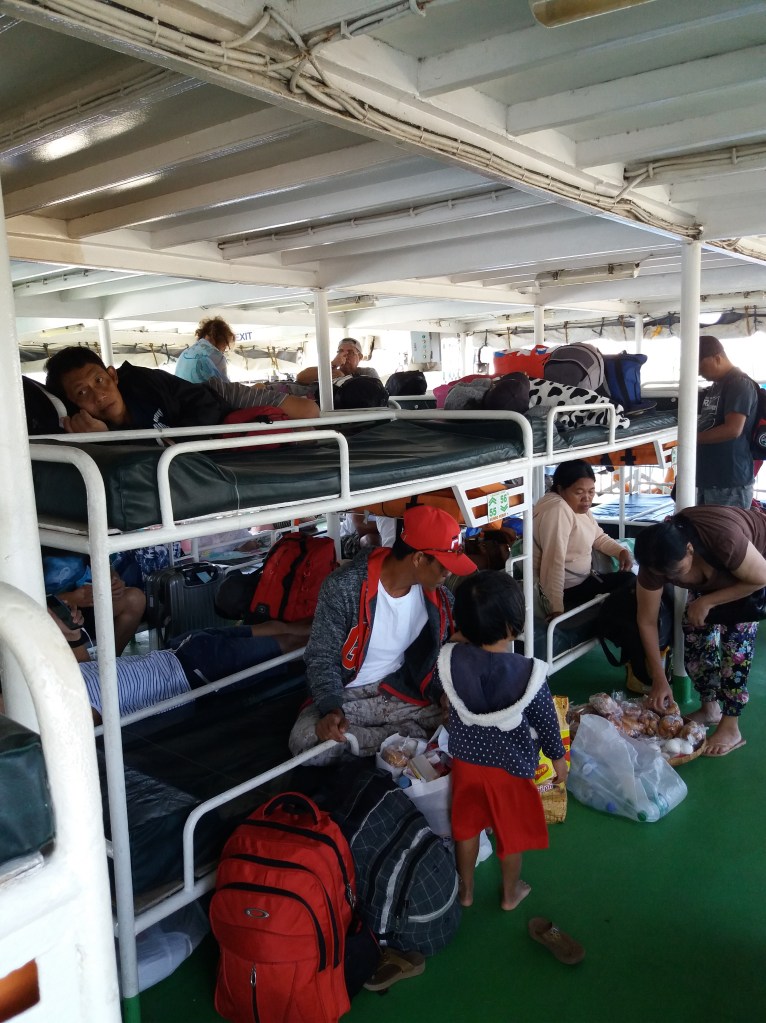
A six-hour jeepney/mini-vans trip got us to the island’s capital, San José, in the evening. We took a ferry the next morning; it was slow (7 hours) but we could lie down. There were a lot of roosters onboard, albeit on another deck.

Cockfights are an institution in the Philippines which is one of the few countries where they are legal. While driving across the land, we saw big fields where roosters were tied by one leg to its cabin, about 2m apart. We hear they are well-fed and get vitamines. It is estimated that 30 million roosters are killed in combats every year. Tradition calls for the loser to be eaten at the end and the name of the dish is “talunang manok” which means losing rooster. Obviously, we did not want to see any such fight.


Des coqs partout
Nous nous sommes retrouvés à Manille d’où nous avons emprunté divers moyens de locomotion pour nous rendre sur l’île de Mindoro.

Un séjour dans un joli petit hôtel à 5 minutes du port de Puerto Galera nous a permis d’explorer les lieux.

Nous nous sommes d’abord rendus à la plage publique White Beach, tranquille mais les vendeurs de bracelets et colliers nous interrompaient constamment

On peut aisément imaginer la déception des vacanciers ayant réservé leur logement à Sabang beach… la ville et la plage aucun intérêt. On peut bien sûr y emprunter des bateaux pour aller faire de la plongée mais c’est possible depuis beaucoup d’endroits.

Le voyage en jeepneys et mini-vans jusqu’à San José, la capitale de l’île a duré six heures. Le lendemain matin, nous avons pris le bateau pour Coron; il a pris 7 h mais nous avons pu nous allonger. Il y avait beaucoup de coqs à bord.

Les combats de coqs sont une institution aux Philippines qui est l’un des rares pays où ils sont légaux. En traversant le pays, on peut voir d’immenses terrains où les coqs sont attachés par une patte à leur poulailler avec une envergure d’environ 2m. Ils sont bien nourris et reçoivent des vitamines.
On estime à 30 millions le nombre de coqs tués dans ces combats chaque année. La tradition veut que le perdant soit mangé à la fin du combat. Le nom du plat est “talunang manok” qui signifie “coq perdant”. Nous n’avons pas voulu voir de tels combats.

Thaipusam, first evening

The first day is about hauling the chariots from the temples in Georgetown to the Muragan temple on the hill, allowing for many stops for offerings on the way. This is the largest built (so excluding caves) Hindu temple outside India.

Georgetown has a very active Couch Surfing group who organise weekly meetings and activities linked to local events. Respect. The organisers put in a lot of effort to keep the group alive.

I joined the couchsurfing group at the approach to the temple. Together, as a loose-knit group, we walked along the road. At the foot of the stairs we removed our sandals, then climbed.

Devotees carry urns of milk and honey on their heads on the long path to the temple. In an inner sanctuary stands a statue of the god Muragan. Attendants take the urns of offered milk and pour it over the statue.

The milk is now blessed. Outside it is recovered and anyone may drink the milk. Some take a bottle home.

We sat on the floor of the temple to absorb its energy.

Back down on the road, the gold chariot was approaching. Piles of coconuts line the road. Companies and familes have them delivered.

As the chariot approaches they smash the coconuts on the road. This purifies the road for the chariot.

It also allows the person throwing the coconut to unburden themselves of their bad deeds, to pay penitence.

The chariot drew abreast, the music throbbed, offerings were made. And it was gone.

Thaipusam, first morning

At 5:15 I rose, showered and was gone.

Forty minutes later I arrived at Lorong Kulit, main centre for piercing of devotees.

Nobody, just a few food market stalls setting up.

“Where are the kavadi?”

“Haha, not before 8am.”

Back in Little India I was on time to see the departure of the Silver Chariot. It was crowded, yet fluid. Moving within the crowd was easy.

Anticipation was in the air; 7 am and already hot.

An unseen signal and devotees raised their hands above their heads, palms together, in prayer. The troop ahead of the chariot, wearing elaborate headgear featuring bundles of peacock feathers, moved.

People who had been close to the chariot started streaming in the direction of travel.

The chariot advanced, I think pulled by devotees. It moved rapidly, turned a corner and stopped.

Thus began the offerings. Bowls with banannas and burning coconuts and flower garlands were passed up to the men on the chariot.

And it advanced again, perhaps 100 metres.

The crowd dispersed behind the chariot. The flottila of cleaning trucks flowed behind the chariot.

Breakfast was offered to all.

One woman was holding a devotional bowl, another was feeding her. She caught my eye so I complimented them on their skill eating wth their fingers. “It’s a mother daughter thing.” she laughed. We chatted, they offered me a second breakfast, then the family of four left with waves.

So many casual, friendly meetings, yet I will not see them again. No exchange of FB nor emails. Gone.

Back at my guest house the other, golden chariot had just arrived.

Bowls of offerings were passed up to the chariot.

“Vel!, Vel!” chanted those pulling the chariot. It advanced, stopped, accepted more offerings.

When it had passed, I returned to bed.

Thaipusam Eve

“Surrender to India”

Recently I was talking with an Indian friend who told me, if you want to visit India, you have to surrender to India.

Georgetown, Malaysia, has its “Little India” which organises the Thaipusam celebrations.

Thaipusam is a Hindi festival mostly celebrated by the Tamil community.

It is celebrated in the Tamil month of “Thai” whilst “pusam” refers to a star which is at its highest point during the festival. The festival commemorates both the birth of the Hindu god Muragan, son of Shiva and Parvati, and the occasion when Parvati gave Murugan a vel (lance) so he could vanquish the evil demon Soorapadman. You hear the devotees chanting “Vel, Vel”. Source: Penang Tourist Office brochure.

On the eve of the celebrations I walked into Little India to have dinner.

The atmosphere was already warming up. Long queues of Hindus waiting to enter the main temple to pray. Women in beautiful saris everywhere.

Gold shops were full of people. They have elaborate, chrome-plated grills to prevent theft. They buy and sell more elaborate jewelry. Shops selling smaller gold jewelry were packed.

As I wandered through the streets I was drawn to an open-fronted store with men in long white sarongs at the entrance.

“Come in, share our food!” I approached to see better. “Should I take my shoes off?” I asked. “No, it doesn’t matter.” A magnet of hospitality drew me in.

Surrender to India.

As I sat on a stool people smiled at me, made small conversation, asked me where I am from, gave me more special food, complimented me on my skill eating with my fingers. I felt welcome.

Surrender to India.

After my meal, I walked back to Chettiar Temple where the silver chariot was outside waiting to be drawn through town tomorrow.

A dance of two big puppets (one person inside each) and a fire-eater was enacted. The musicans played drums and cymbals to rythms I do not know, but I lost myself in them.

Surrender to India.

Back near my guest-house was a display of Chinese Dragon dancers. I asked somone, “Why are the Chinese celebrating Thaipusam?”.

” They worship some of the same gods, and in Malaysia we are united.” Great answer.

They performed different dances with different dragons. The last was a long, thin, yellow and green dragon manipulated by seven men. The dragon whirled in circles and then undulated so the middle five men had to jump over the body.

They played drums. Then they were gone.

Church 2.0

Dwindling church attendance has forced the clergy in much of Europe to confront the question of what to do with their churches, chapels and monasteries that have become redundant and require small fortunes to keep up

Disused churches can be found in northern Europe and many are simply closed; German churches are supported by tax revenues and French ones are municipal properties, all of which can help with maintenance costs.

In the Netherlands though, many churches have been sold and found a new life as cultural centres or mosques. More unusually, we have seen them transformed into apartments (in the centre of Utrecht), a bookshop, a student cafeteria and a hotel/restaurant/bar in Maastricht.

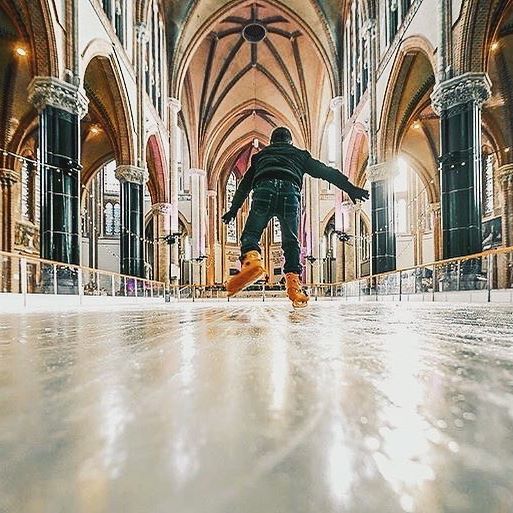
A temporary ice-skating rink was recently installed in a church in the small town of Gouda to keep the locals entertained until the more traditional skating rink circling the city hall opens today (photo from Gouda tourist office).

45308671_2161237374138094_5135004737075686461_n

La baisse de fréquentation des églises en Europe a forcé le clergé à se poser la question: que faire de ses églises, chapelles et monastères vides qui coûtent des fortunes à entretenir.

Beaucoup d’églises ne sont plus utilisées dans le nord de l’Europe et sont fermées; en Allemagne et en France, elles reçoivent des fonds publics (impôt ecclésiastique) ce qui couvrent une partie de leur entretien.

Aux Pays-bas toutefois, de nombreuses églises ont été vendues et se sont réinventées en centres culturels ou mosquées. De manière plus inhabituelle nous les avons vues transformées en appartements (dans le centre d’Utrecht), en librairie, en cafétéria universitaire et en hôtel/bar/restaurant (Maastricht).

Une patinoire temporaire a récemment été installée dans une église de la petite ville de Gouda permettant à ses habitants de s’amuser en attendant que la plus traditionnelle patinoire faisant le tour de l’hôtel-de-ville n’ouvre aujourd’hui (photo de l’office du tourisme de Gouda).

Budapest, Hungary, and cinema

Budapest and Hungary have had a very big influence on Hollywood, from the beginning of the 20th century to this day.

Adolph Zukor was the founder of Paramount Pictures and William Fox created the 20th Century Fox studios.
Bela Lugosi, the original Count Dracula, was Hungarian as were Leslie Howard (Ashley in Gone with the Wind), Peter Lorre and the head waiter in Casablanca, S.Z. Sakall.

20181126_090920

Casablanca was directed by Michael Curtiz, who migrated to the US in 1925. George Cukor and Alexander Korda, both directors, were also Hungarian.

Tony Curtis (Some like it Hot) was born in New York of Hungarian immigrants and did not speak English until age 5.

20181126_111244

Many other actors have Hungarian parents, grandparents or ancestry: Peter Falk (Columbo), Rachel Weisz, Adrien Brody, Drew Barrymore, Goldie Hawn, Steven Spielberg and Paul Newman, to name a few.

Budapest has provided a backdrop for many big budget films, including Blade Runner 2049, Evita, Atomic Blonde, Tinker Tailor Soldier Spy (in Pariszi udvar, currently under renovation, where real-life spies met during the Cold War), The Martian (NASA headquarters, filmed in the Bálna building) and there is even more to come, season 3 of Berlin Station, for example.


In the early 2010s, Hungarian-born producer Andy Vajna, the man behind Terminator and Rambo, helped Hungary break into the modern movie business when he took over as the country’s film commissioner.
The Hungarian National Film Fund also started an education and trainee program to strengthen the Hungarian film industry.

This means that, not only are big budget films being shot throughout Hungary and Budapest, the country is also building its very own flourishing film industry — evident in the Oscar and Golden Globe-winning production “Son of Saul” as well as Golden Bear winner “On Body and Soul”.
________________

Budapest et la Hongrie ont eu une énorme influence sur Hollywood du début du 20e siècle à aujourd’hui.

Adolph Zukor a fondé Paramount Pictures et William Fox les studios 20th Century Fox.
Bela Lugosi, le comte Dracula d’origine, était Hongrois tout comme Leslie Howard (Ashley dans Autant en emporte le vent), Peter Lorre et le maître d’hôtel de Casablanca, S.Z. Sakall.

Le réalisateur de Casablanca, Michael Curtiz, avait émigré aux Etats-Unis en 1925. Les réalisateurs George Cukor et Alexander Korda, étaient eux aussi Hongrois.

Tony Curtis (Certains l’aiment chaud) est né à New York de parents hongrois et n’a appris à parler l’anglais qu’à l’âge de 5 ans.
De nombreux autres acteurs ont des parents ou ancêtres hongrois : Peter Falk (Columbo), Rachel Weisz, Adrien Brody, Drew Barrymore, Goldie Hawn, Steven Spielberg et Paul Newman entre autres.

Budapest est le décor de nombreux films à gros budgets : Blade Runner 2049, Evita, Atomic Blonde, Tinker Tailor Soldier Spy (dans le passage Pariszi udvar, actuellement en rénovation, où les vrais espions se rencontraient pendant la Guerre Froide), The Martian (la NASA, filmé dans le bâtiment Bálna) et d’autres sont en production comme la saison 3 de Berlin Station..

Au début des années 2010, Andy Vajna, le producteur de Terminator et Rambo, né en Hongrie, a aidé son pays d’origine à se profiler sur la scène mondiale quand il est devenu commissaire du cinéma.
Le fonds du film national hongrois a également commencé un programme d’éducation et de formation pour renforcer l’industrie du cinéma.

Grâce à cela, non seulement des films étrangers à gros budgets sont filmés à Budapest et en Hongrie, mais le pays est en train de créer une industrie du cinéma florissante. Ceci est évident avec le film “Le fils de Saul”, gagnant des Golden Globes et Oscar du meilleur film étranger et “Corps et âme”, Ours d’or à Berlin.

96

This number is important in Hungary: it is in 896 that the Magyars settled in this area and Arpad was crowned as the first king of the Hungarian people.

Budapest’s metro, the oldest in continental Europe, was built on the country’s millennial anniversary in 1896.

By law, buildings in Budapest must not exceed 96 metres and both the Parliament and St Stephen’s basilica reach this exact height.

The Hungarian national anthem should also be sung in 96 seconds – if done at the proper tempo.

________

Ce chiffre est important en Hongrie : c’est en l’an 896 que les Magyars se sont établis dans la région et qu’Arpad a été couronné premier roi des Hongrois.

Le métro de Budapest, le plus ancien d’Europe coninentale a été inauguré en 1896 pour le premier millénaire du pays.

La loi indique qu’à Budapest aucun bâtiment ne peut excéder 96m, seuls la basilique St-Etienne et le parlement atteignent cette hauteur.

L’hymne national devrait être joué en 96 secondes, si le tempo est exact.

Wanderings in Budapest and around

After our stay at the end of August, we are back in Budapest for a couple of weeks and have enjoyed the sunny and mild weather, strolled through its streets and along the Danube.

Après notre séjour à la fin du mois d’août, nous sommes de retour à Budapest pour une quinzaine de jours. Nous avons profité des températures douces pour déambuler sous le soleil dans ses rues et le long du Danube.


It gets darker around 4pm and by about 4.30, night has fallen. In the morning, however, we have not seen the break of day; our early morning photos were taken at 6.45am.

Il commence à faire sombre vers 16 heures et la nuit tombe une trentaine de minutes plus tard. Par contre, la lumière revient tôt et à 6h45 le jour est déjà bien levé.


The pretty small town of Szentendre is only a 40-minute suburban train ride away.

La jolie petite ville de Szentendre ne se trouve qu’à 40 minutes de RER.


Le Marche

Our two weeks housesit in San Ginesio in Le Marche has come to an end.
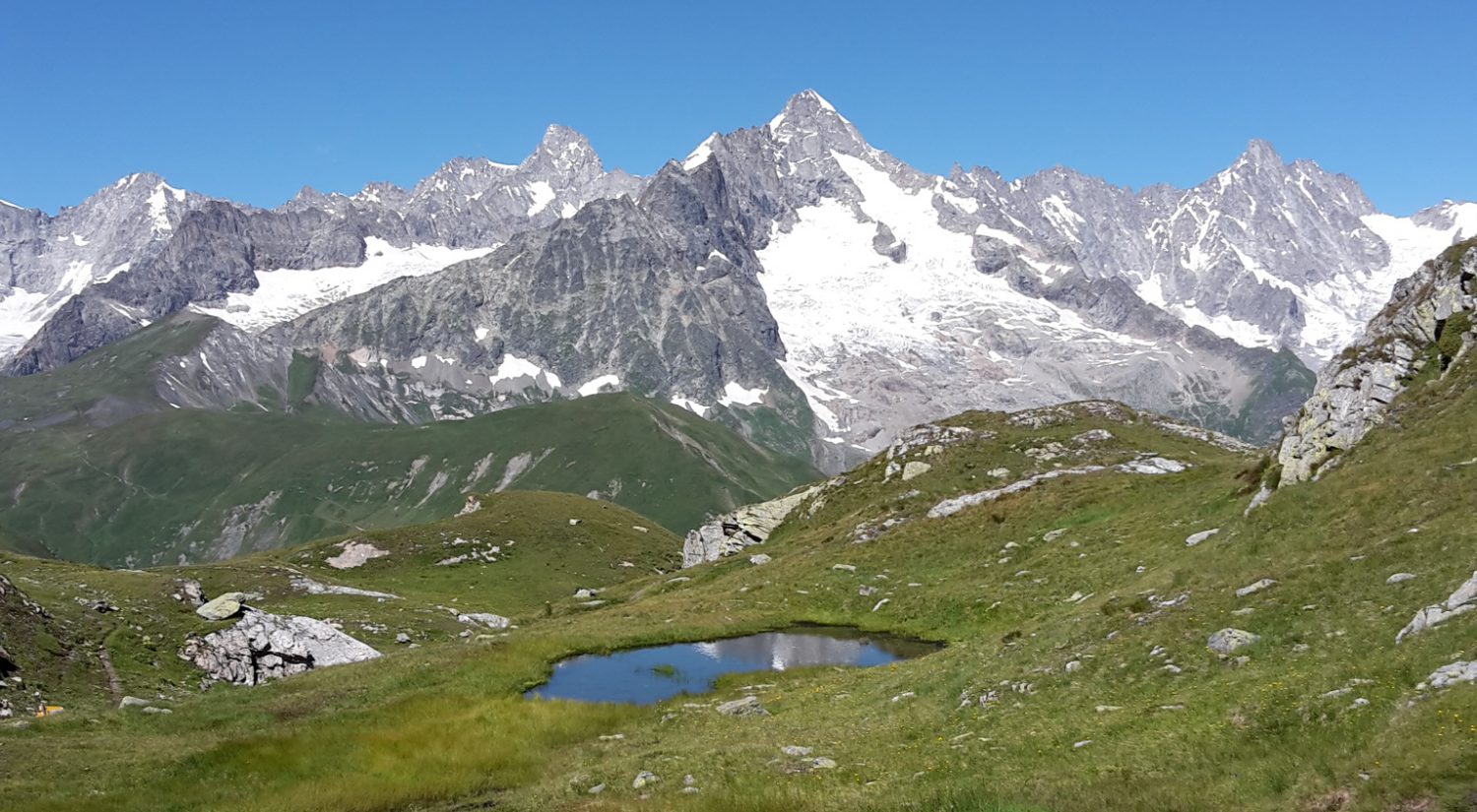
We went on many shortish walks in the area, with and without Maggie and Monty, the two great Rhodesian ridgebacks we were happy to look after again. Here are some impressions:

Notre housesit de deux semaines à San Ginesio, Le Marche est arrivé à sa fin.

Nous avons fait de nombreuses courtes balades avec ou sans Maggie et Monty, les deux Rhodesian ridgebacks que nous avons eu beaucoup de plaisir à retrouver. Voici quelques impressions: