


Since 1934, every year, the “Christmas Cup” takes place in Geneva. The lake water temperature is typically between 5 and 10°C and people have to swim a distance of 120m, as the saying goes “40m pain, 40m acceptance and 40m bliss”. The atmosphere is festive and there were 1885 participants this year, going by teams (competition, men, women, med students, fake women etc.) – you name it…
A hot sweet tea, a medal and a hot wood-fire jacuzzi await the brave swimmers (and the option of a cheese fondue..).


Depuis 1934, chaque année a lieu la Coupe de Noël. La température de l’eau du lac varie entre 5 et 10°c et le parcours est de 120m, soit “40m de souffrance, 40m d’acceptation et 40m de bonheur”. L’atmosphère est bon enfant et, cette année, il y avait 1885 participants, s’élançant par équipes (compétition, hommes, femmes, étudiants en médecine, déguisements – femmes, cygnes, pères Noël etc) – tout est permis.
Un thé sucré, une médaille commémorative et un jacuzzi chauffé au feu de bois attendent les courageux nageurs à l’arrivée (et fondue au fromage en option).


In Lisbon, a room with a view …


A Lisbonne, une chambre avec vue …..
Along the Tagus river at sunset


Coucher de soleil au bord du Tage
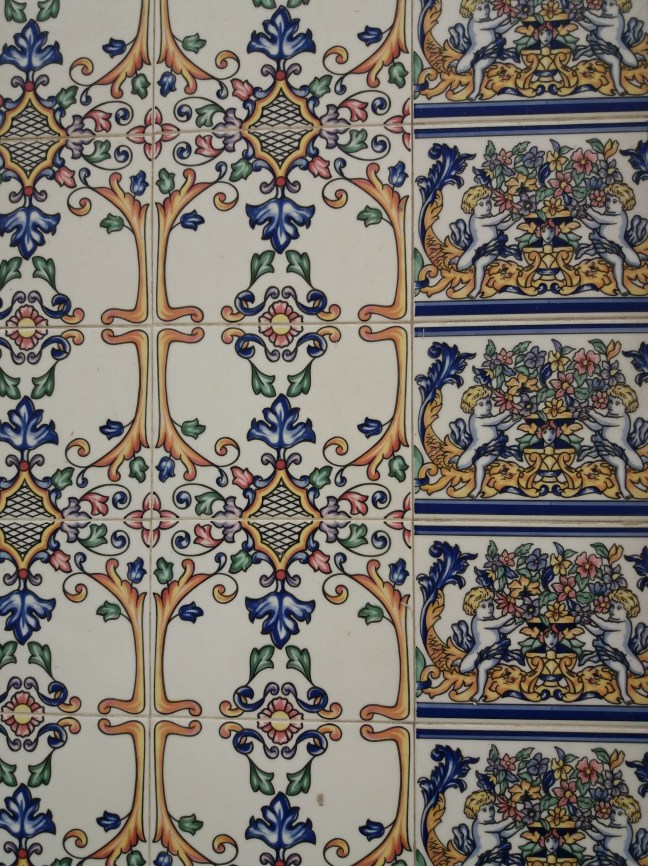
Typical of Portugal, the ceramic tiles (azulejos) are omnipresent in and on many buildings. There are azulejos protection groups, as many were stolen off buildings to be sold on markets, mostly to tourists, at high prices.


While they come in many colours, blue is very predominant.


Typiques du Portugal, les carreaux de faïence (azulejos) sont omniprésents sur et dans de nombreux bâtiments. Il existe des groupes de protection des azulejos car de nombreux vols ont eu lieu (des pans entiers de vieux bâtiments manquent), les carreaux étant vendus aux touristes sur les marchés à prix d’or.
Bien que le choix de couleurs soit large, le bleu domine nettement.
The shabby, industrial eastern part of Lisbon was rebuilt from scratch for the 1998 World Fair Exhibition and now hosts about 25,000 inhabitants, businesses, concert halls, the aquarium and the science museum.
Its train station was designed by famous architect Santiago Calatrava.


La partie orientale de Lisbonne, miteuse et industrielle a été entièrement reconstruite pour l’Exposition Universelle de 1998. Elle abrite environ 25.000 habitants, des bureaux, salles de concerts, l’aquarium et le musée des sciences.
Sa gare a été conçue par le célèbre architecte Santiago Calatrava.
We spent 6 days cat- and house-sitting in Antwerp.
Carillions in Flanders and the Netherlands, lengthily play all kinds of melodies.
In Antwerp, besides “If you go away” and “The old lovers” by Belgian icon, Jacques Brel, we were quite startled to hear David Bowie’s “Life on Mars”…..


Nous avons passé 6 jours à Anvers à nous occuper d’un chat.
Les carillons, en Flandres et aux Pays-Bas, jouent longuement toutes sortes de mélodies.
A Anvers, à part “Ne me quitte pas” et “Les vieux amants” de l’icône nationale Jacques Brel, nous avons eu la surprise d’entendre “Life on Mars”…..
Being back in Oslo meant the end of our Norwegian trip.
The newly-built opera house is becoming a symbol of the city. The ramps on its sides plunge into the fjord and represent a glacier; they also lead up to the roof for views of the city. On the inside, wood and glass dominate, taking advantage of natural light. From September to June, there are operas, theatre plays or ballets every night.


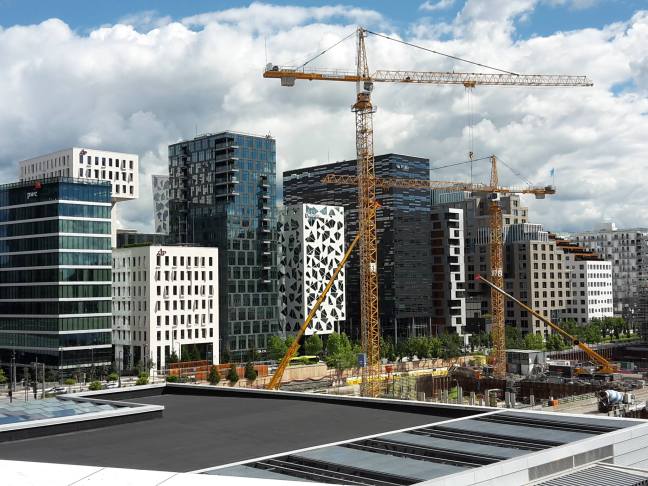
Oslo is re-inventing itself: the docks have been moved a little further out of the city centre, the semi-freeway roads along the port have been buried and the new opera house is the first of many buildings to be built in this area.
By 2020, the new Munch museum, the public library and other buildings will be finished. There are tens of cranes in this area alone. On the other side of the street are many new office and living buildings, known as “the barcode”.
New public access to the fjord has been opened, with a sandy beach, decks, an 8-lane 50m long pool (fjord water, currently at 17 degrees..), showers, restaurants, terraces, parks and apartments.
______________


Oslo est en pleine (r)évolution : les docks ont été déplacés hors du centre ville, les semi-autoroutes qui longeaient le port sont maintenant souterraines et l’opéra est le premier des nouveaux bâtiments qui vont être construits ici.
De nouveaux accès au fjord ont été ouverts avec plage de sable, pontons, douches, piscine de 50m (eau du fjord à 17 en ce moment), restaurants, terrasses, parcs et appartements.
 J and J on the move