
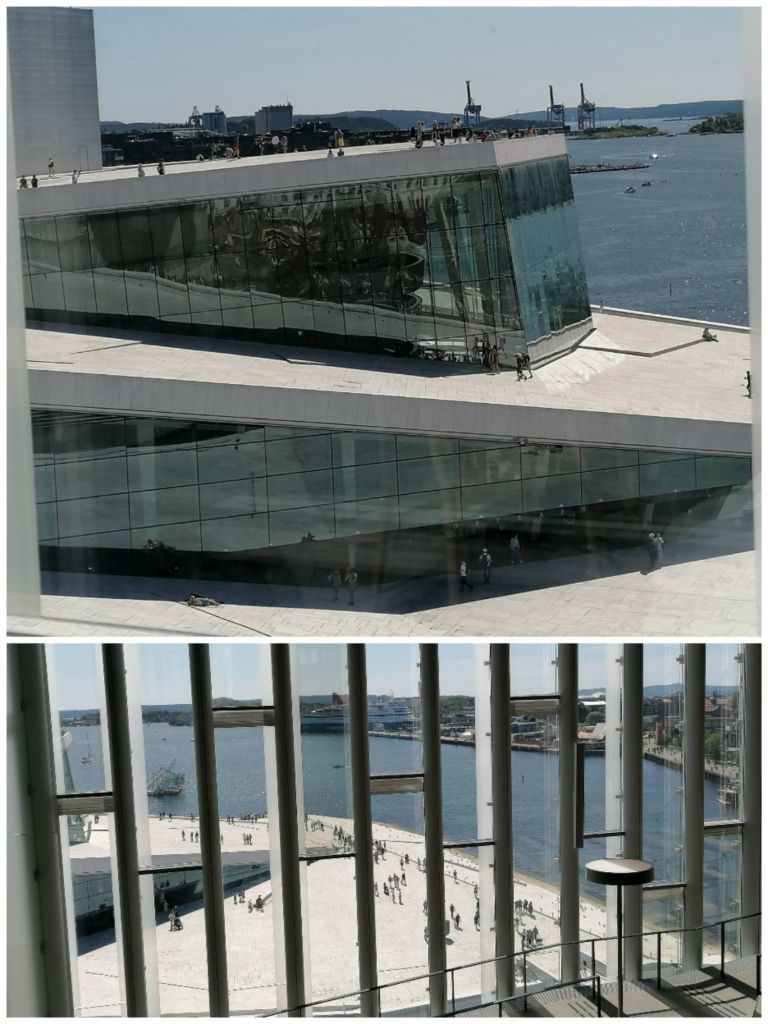
Eight years ago, the opera was the only building in the water. The high-rise buildings along the road, known as the barcode, had an unobstructed view of the bay. There were decks for people to suntan and go for a swim. We knew there were plans to erect several public buildings, such as the Munch museum, the public library. See our post : https://jjonthemove.com/2017/07/14/oslo-re-invented/
We have gone back. The library is wonderful and has many great design touches, in typical Nordic style.

It is situated across from the opera.
We did not particularly like the look of the Munch museum. As there was a major exhibition of Northern Lights in the Beyeler Foundation in Basel, we thought many of his works may not be back on display but we learned that he had donated 26,000 artwork pieces (including his private collections and photographs) to the city : so there is plenty of margin.
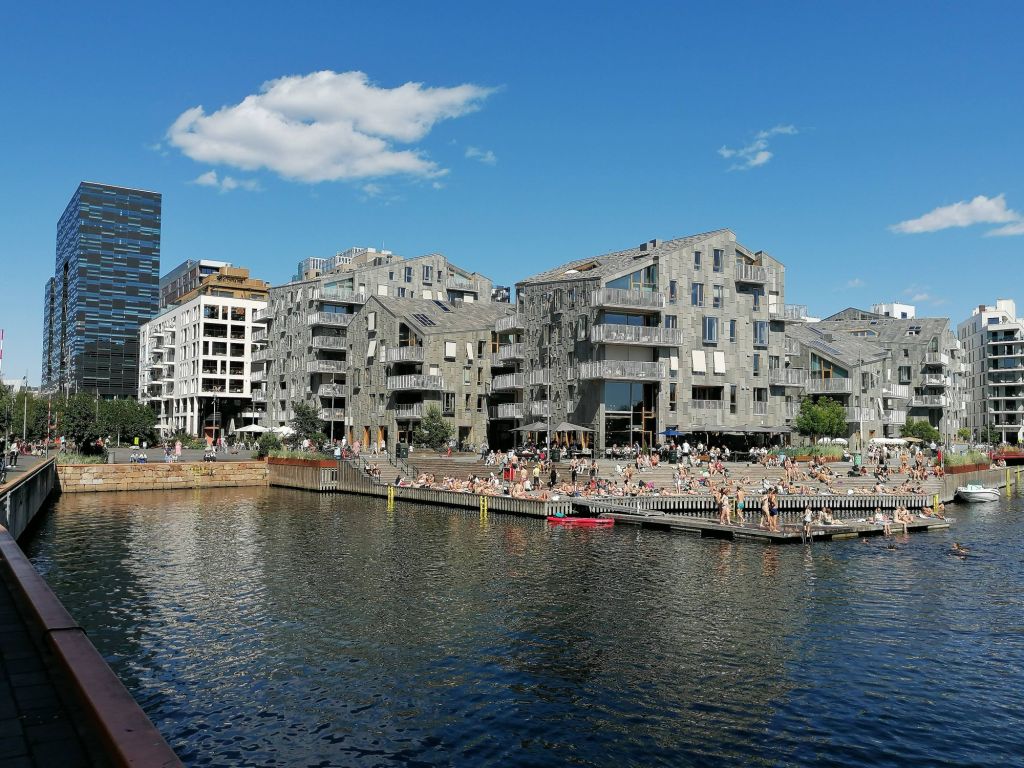
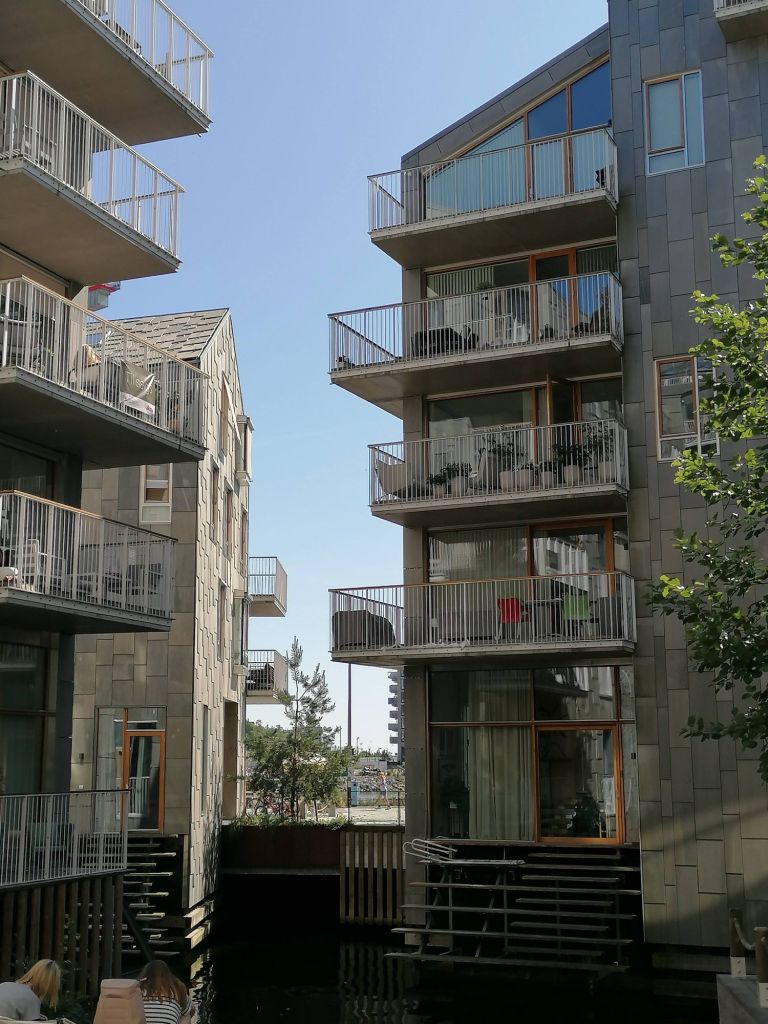
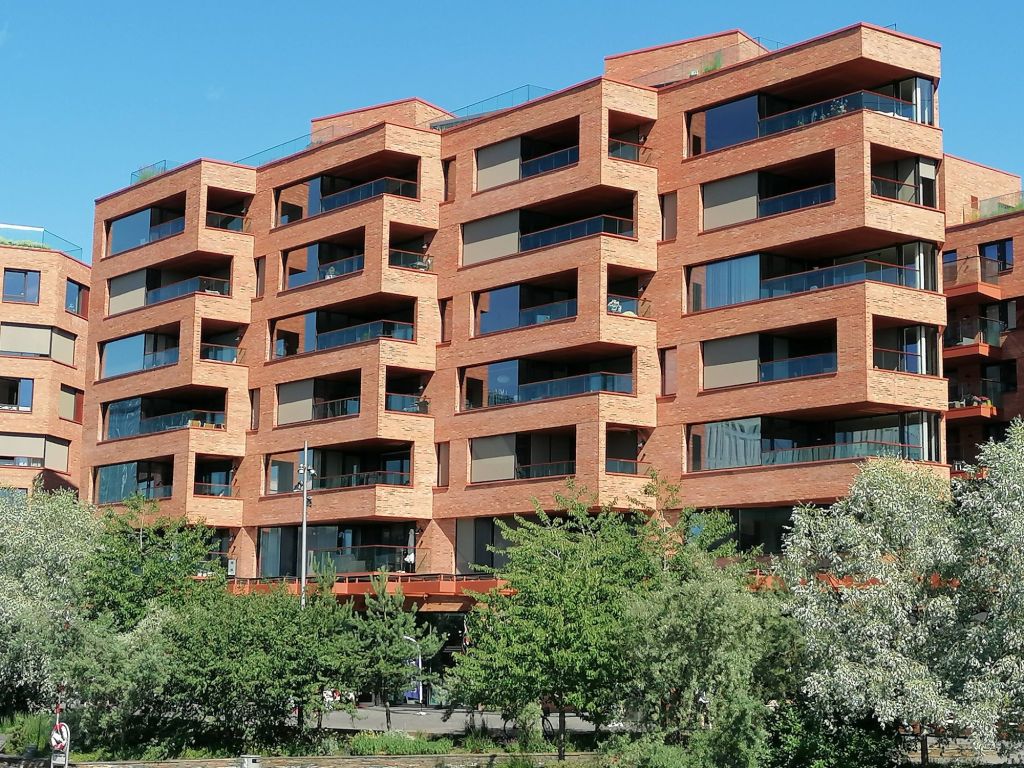
What surprised and shocked us the most though, is how much of the water has been reclaimed and built on. While the new apartment blocks are mostly lower than the barcode, they really obstruct their view now and these high-rises are no longer waterfront properties but are about 6 to 8 blocks behind. The new neighbourhood is highly densified and there are several more projects under way, which will add hundreds more apartments. A beach has been created and seems popular. There are still some docks here and there but the atmosphere is entirely different. We found it was not for us and we were glad to be back to our lovely older part of Oslo.
Oslo réinventé – huit ans plus tard
Il y a huit ans, l’opéra était le seul bâtiment dans l’eau. Les gratte-ciel le long de la route, connus sous le nom de code-barres, avaient une vue imprenable sur la baie. Il y avait des terrasses pour que les gens puissent bronzer et se baigner. Nous savions qu’il était prévu d’ériger plusieurs bâtiments publics, tels que le musée Munch, la bibliothèque municipale. Voir notre article : https://jjonthemove.com/2017/07/14/oslo-re-invented/
Nous y sommes retournés. La bibliothèque est magnifique et a beaucoup de touches design, dans un style typiquement nordique. Il est situé en face de l’opéra. Nous n’avons pas particulièrement aimé l’architecture du musée Munch. Comme il y avait une grande exposition (Lumières nordiques) à la Fondation Beyeler à Bâle, nous pensions que beaucoup de ses œuvres ne seraient peut-être pas à nouveau exposées, mais nous avons appris qu’il avait fait don de 26 000 œuvres d’art (y compris ses collections privées et ses photographies) à la ville : il y a donc beaucoup de marge.

Ce qui nous a le plus surpris et choqué, c’est le nombre de nouvelles constructions sur ce qui était le fjord. Bien que les nouveaux immeubles d’appartements soient pour la plupart plus bas que le code-barres, ils obstruent vraiment leur vue maintenant et ces gratte-ciel ne sont plus des propriétés pieds dans l’eau, mais ont maintenant environ 6 à 8 pâtés de maisons devant eux. Le nouveau quartier est très densifié et plusieurs autres projets sont en cours, ce qui ajoutera des centaines d’appartements supplémentaires. Une plage a été créée et semble populaire. Il y a encore quelques quais ici et là mais l’ambiance est totalement différente. Nous avons découvert que ce n’était pas pour nous et nous étions heureux d’être de retour dans notre charmant vieux quartier d’Oslo.

 J and J on the move